As the F&B market in Hai Phong becomes increasingly competitive, traditional beer restaurants are gradually showing their limitations in terms of experience and differentiation. Customers today are no longer looking for a place just to drink beer. They expect a space that is large, open, emotionally engaging and suitable for social gatherings, entertainment and shared experiences.
From this demand, the Xap Xinh Beer Garden project was developed as a major design and operational challenge: how to create a large-scale food and entertainment complex of over 1,700m² that balances a relaxed garden atmosphere with the energy required for DJ performances, live stages and vibrant nightlife, while still remaining appropriate for an urban setting surrounded by residential areas. As the design consultant, Ken Design approached this project not merely from an aesthetic perspective, but from a comprehensive understanding of the business model, customer behavior and long-term operational efficiency.
1. The Investor’s Core Challenge
Hai Phong’s beer restaurant scene has grown rapidly over the years, yet most venues remain within the framework of conventional pubs or mid-scale beer restaurants. The investor behind Xap Xinh identified a clear gap in the market: the absence of a true beer garden, where drinking beer is not just about consumption, but about atmosphere, music and collective emotion.
The challenge was complex. The investor aimed to develop a large-scale beer garden capable of hosting DJ shows, live performances and events, while still maintaining a chill, open and comfortable environment. The space needed to stand out strongly, yet avoid becoming chaotic or disruptive, especially given its proximity to residential areas. In addition, the project had to operate flexibly throughout the day, serving as a lively beer garden in the evening and a comfortable office lunch destination during daytime hours.
Xap Xinh’s target audience is broad, ranging from young customers seeking music-driven nightlife, to large social groups, as well as office workers looking for a relaxed and airy lunch environment. The core concern was how to integrate all these needs into a single site, without compromising operational efficiency or long-term profitability. This required a design strategy rooted in business logic and behavioral insight, rather than purely visual appeal.
2. Site Condition Assessment
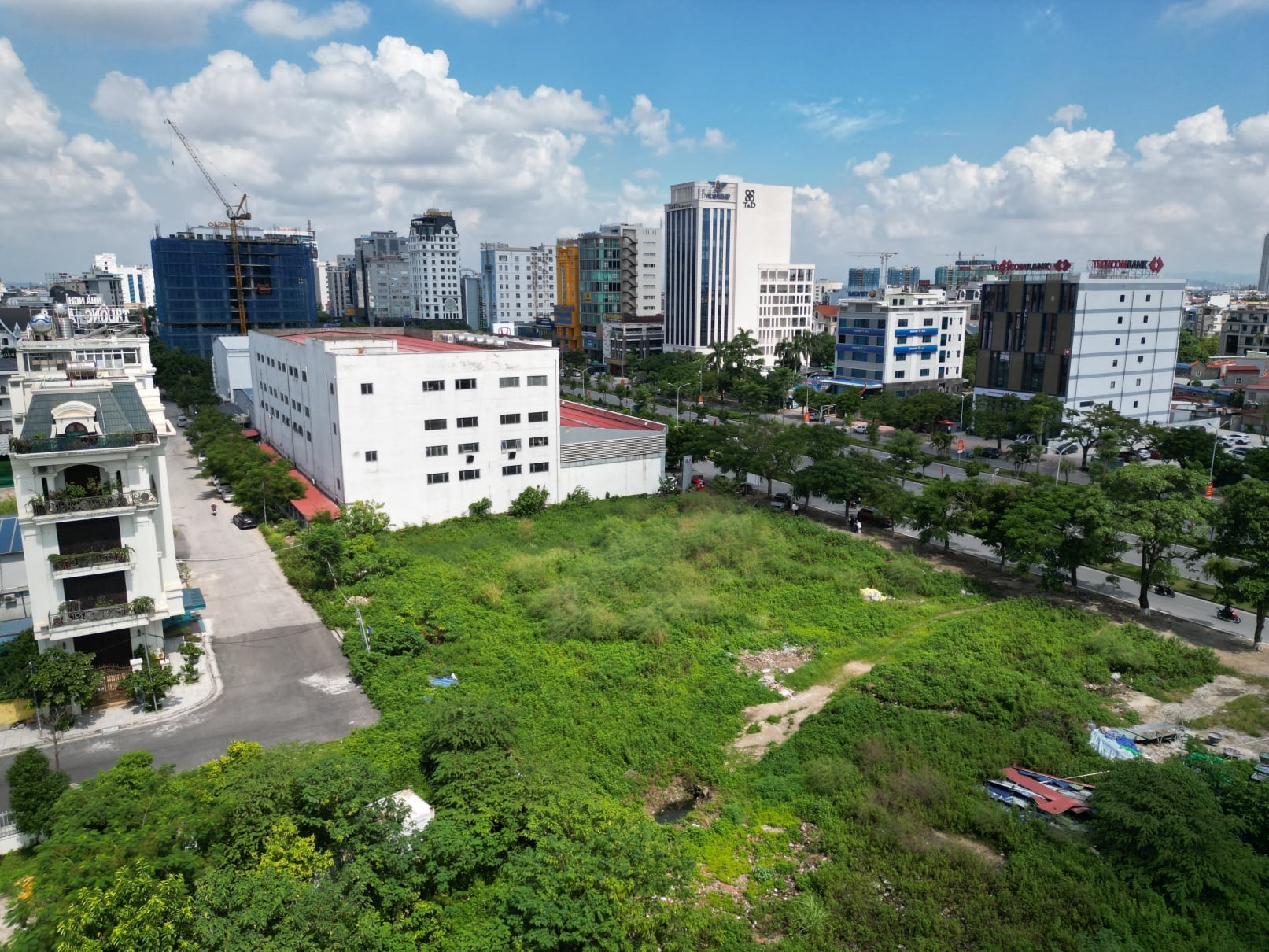
The project site is a large vacant plot, allowing the development of approximately 1,700m² across two floors. This presented a significant advantage, as both the investor and design team could freely organize the space without being constrained by existing structures.
The site also benefits from convenient access from both the front and rear roads, improving customer approach and supporting operational activities such as logistics and event organization.
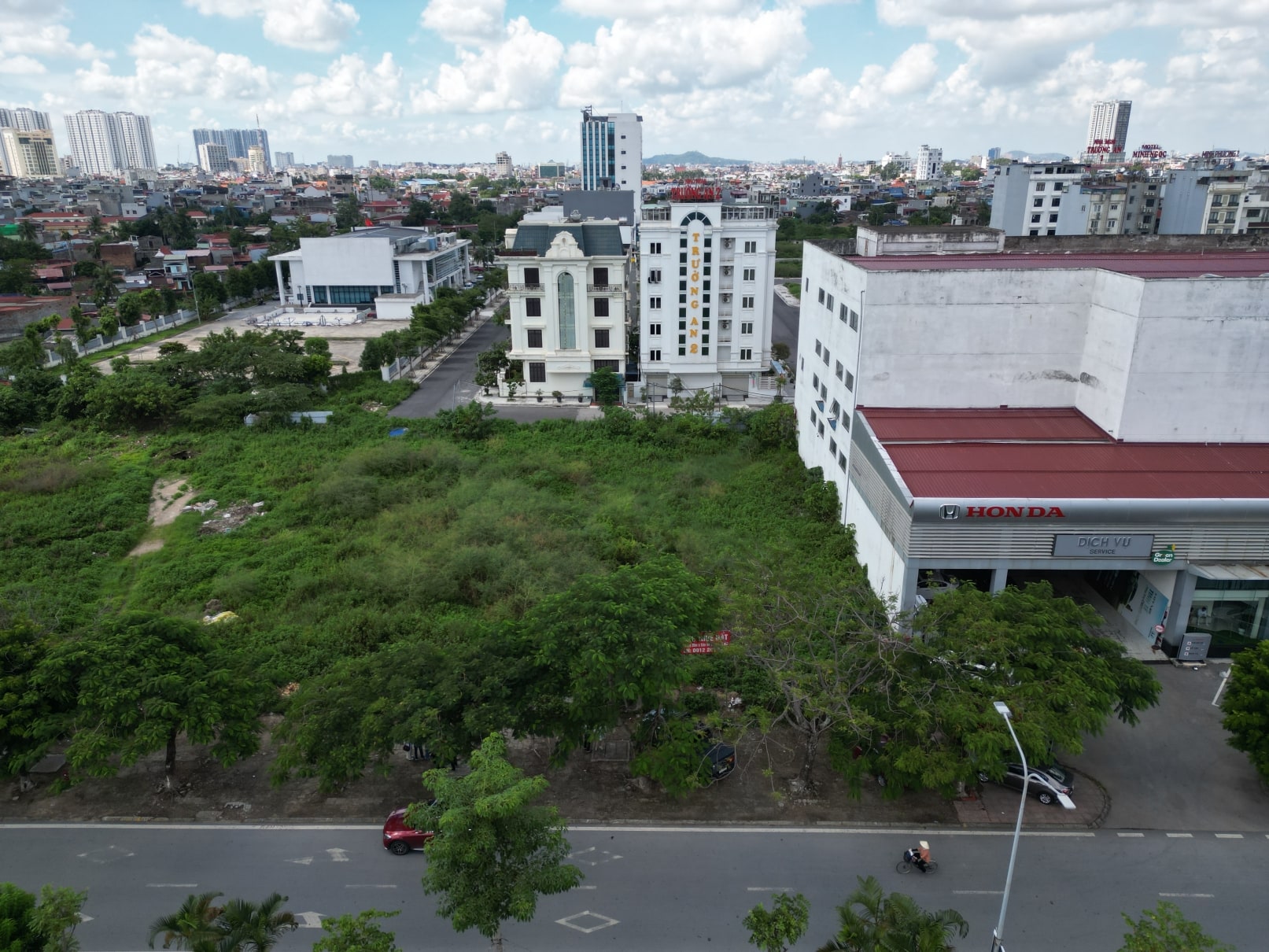
However, the main challenges stem from the project’s scale and location. A large beer garden with DJ performances and live music can easily cause noise-related issues if not carefully planned. Additionally, managing open spaces, large roofing systems, greenery and customer circulation during peak hours requires an integrated design approach from the outset.
3. Design Concept and Style
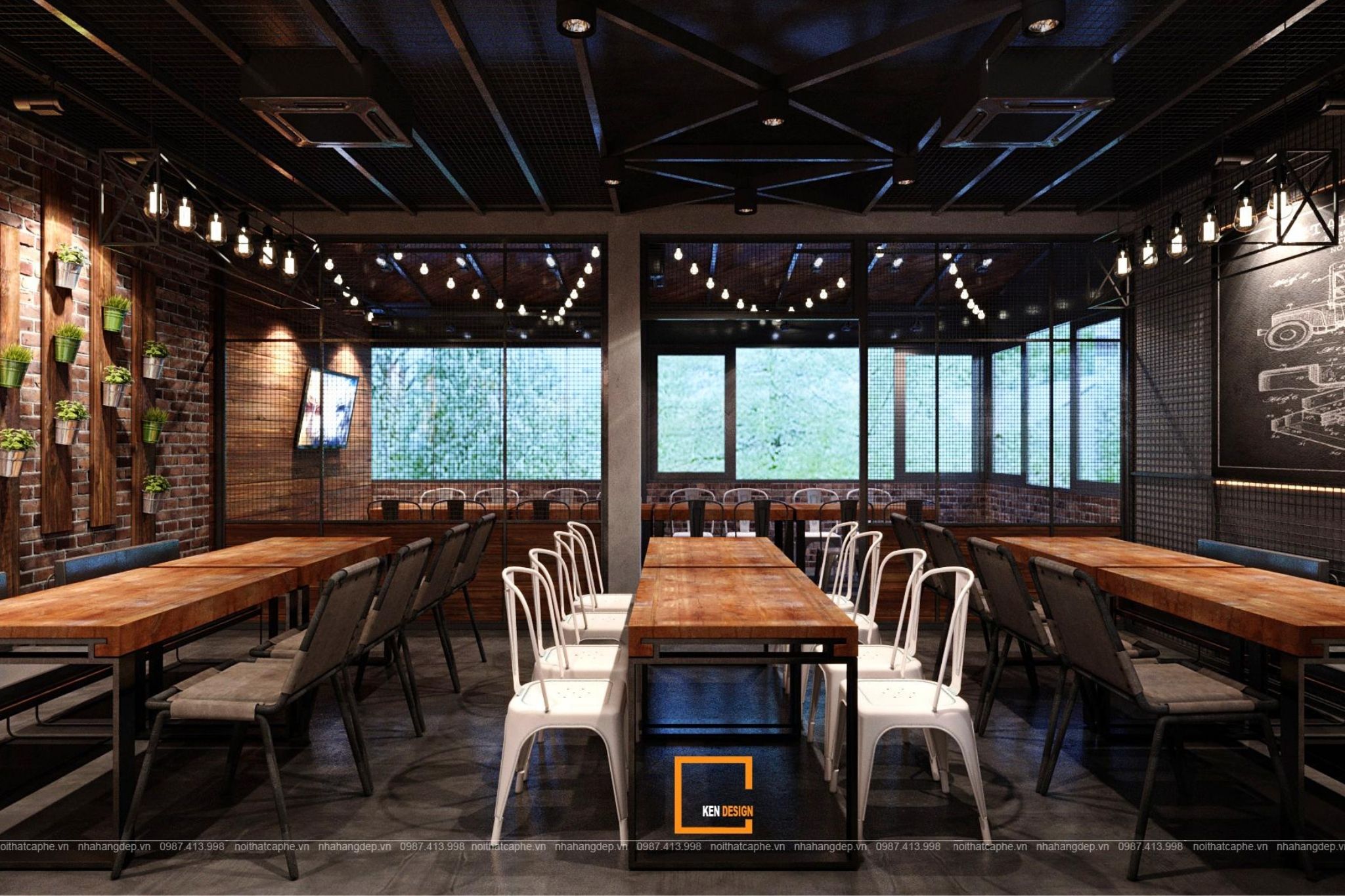
Based on the business model analysis and site conditions, KenDesign developed a beer garden concept combining Tropical and Industrial styles as the main design language. This approach was not trend-driven, but problem-driven.
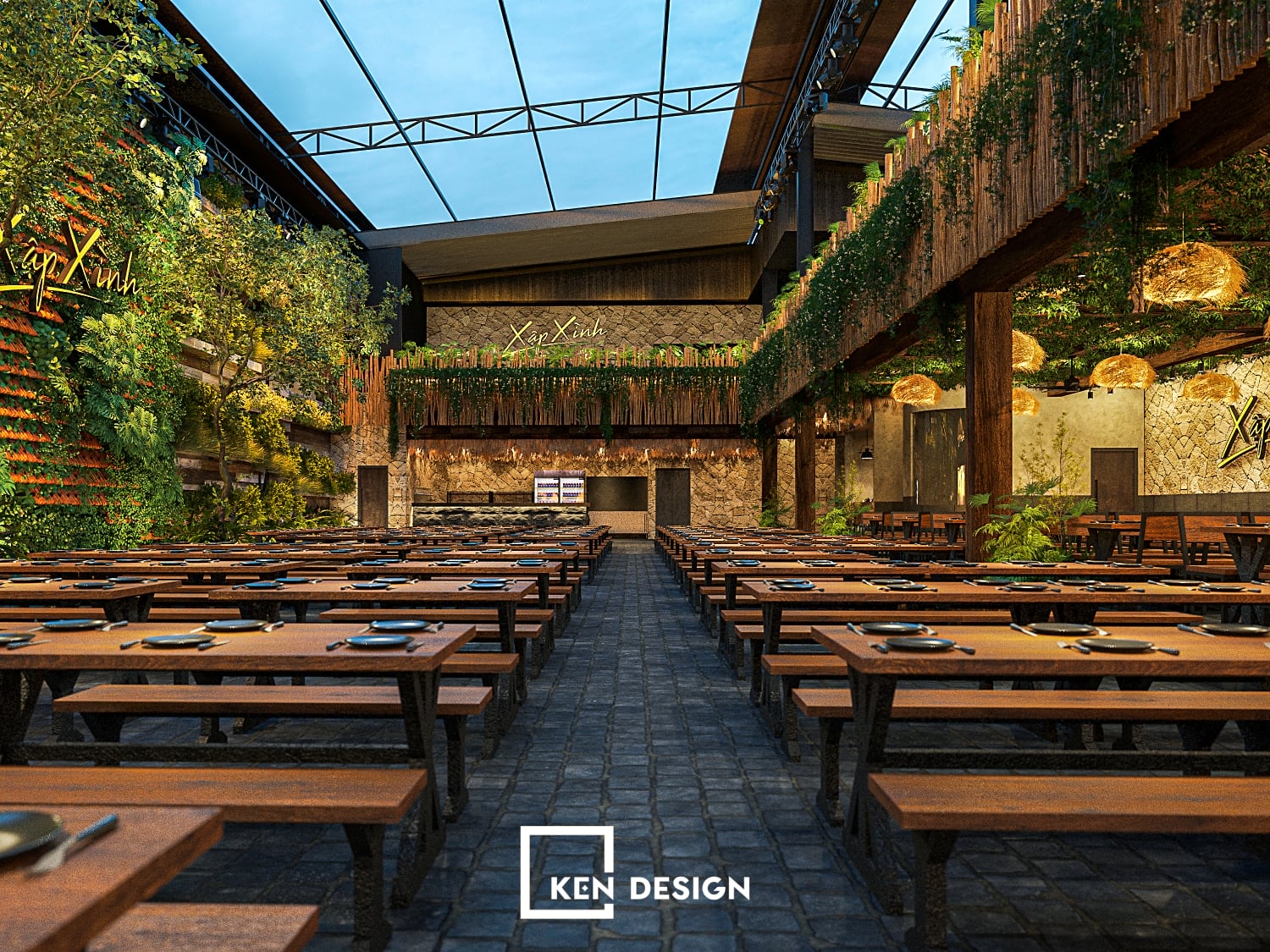
The Tropical element introduces greenery and a cooling, relaxing atmosphere, helping to balance the high energy and crowd density typical of beer garden environments. Meanwhile, the Industrial style, expressed through steel structures, raw materials and large spatial rhythms, supports live performances, staging and large-scale events. Together, these elements create a space that feels both laid-back and powerful when needed.
The concept draws inspiration from international beer gardens, where the venue functions as an entertainment garden rather than merely a place to drink. At Xap Xinh, this concept directly supports the business model by enabling seamless transitions between daytime dining and nighttime entertainment.
4. Spatial Layout Strategy
Given its scale and multifunctional nature, Xap Xinh’s layout was designed with clear zoning while maintaining strong visual and emotional connectivity throughout the project. Each area responds to specific user behaviors but remains integrated into the overall atmosphere.
4.1 Outdoor Seating Area
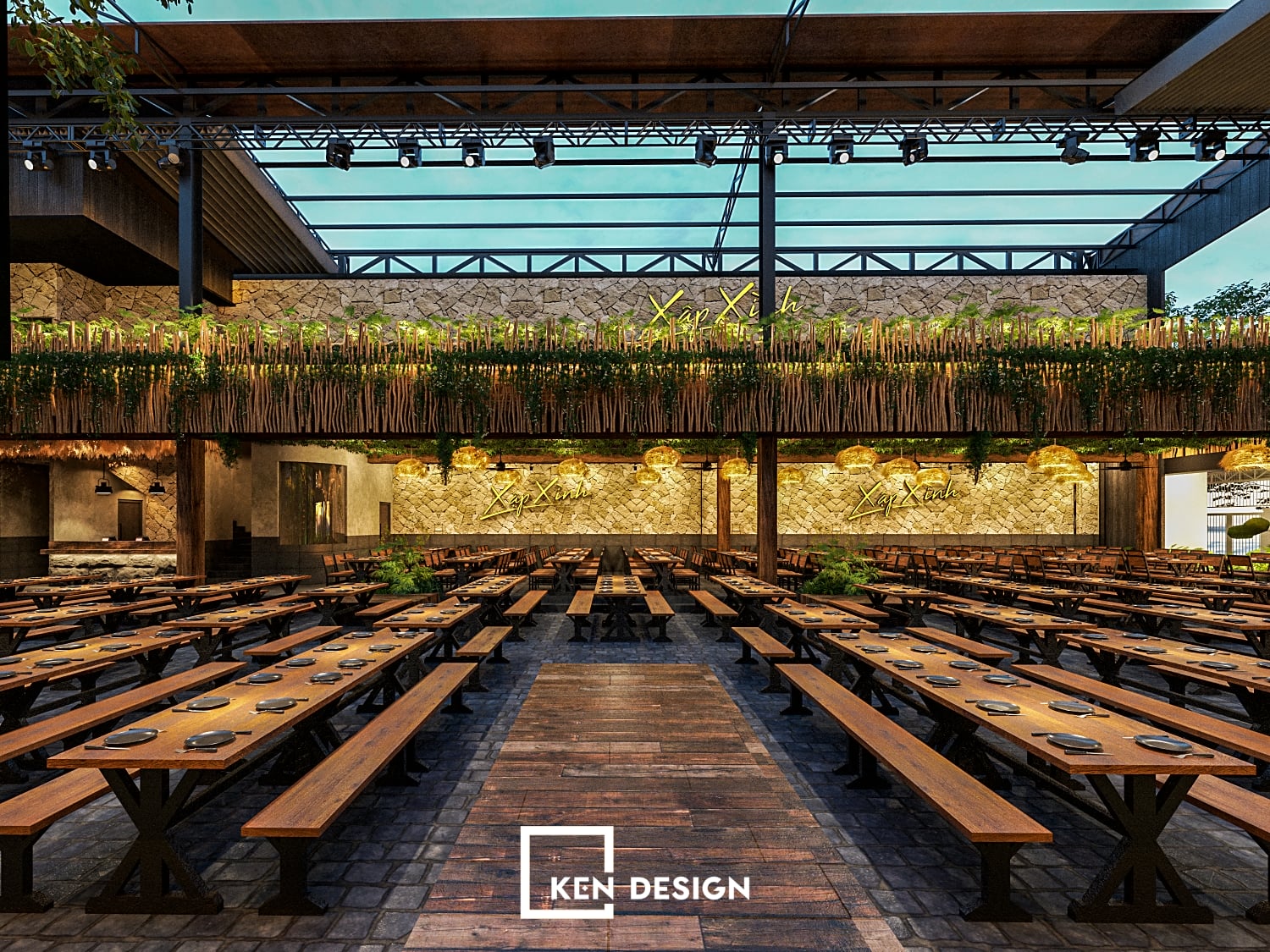
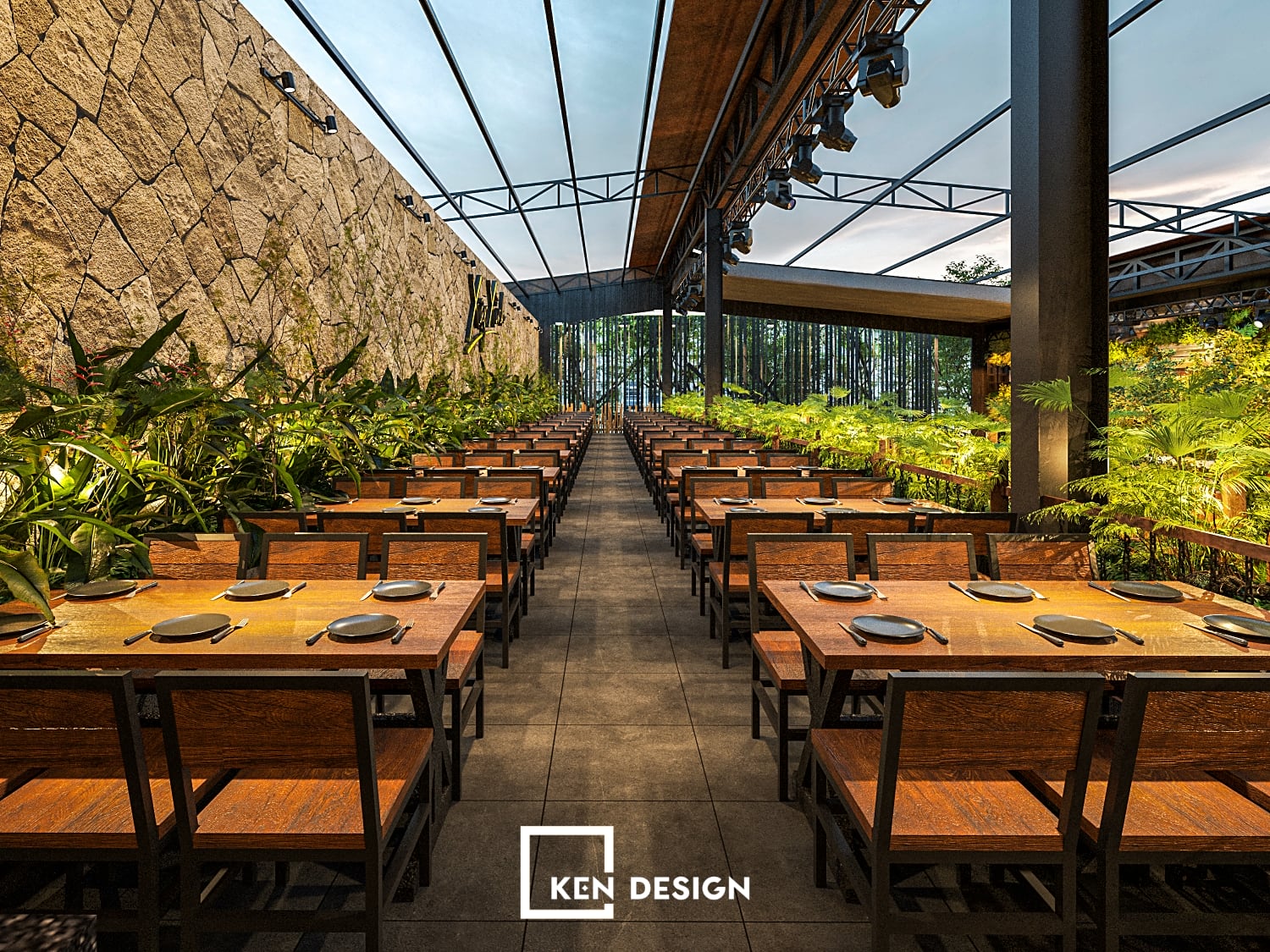
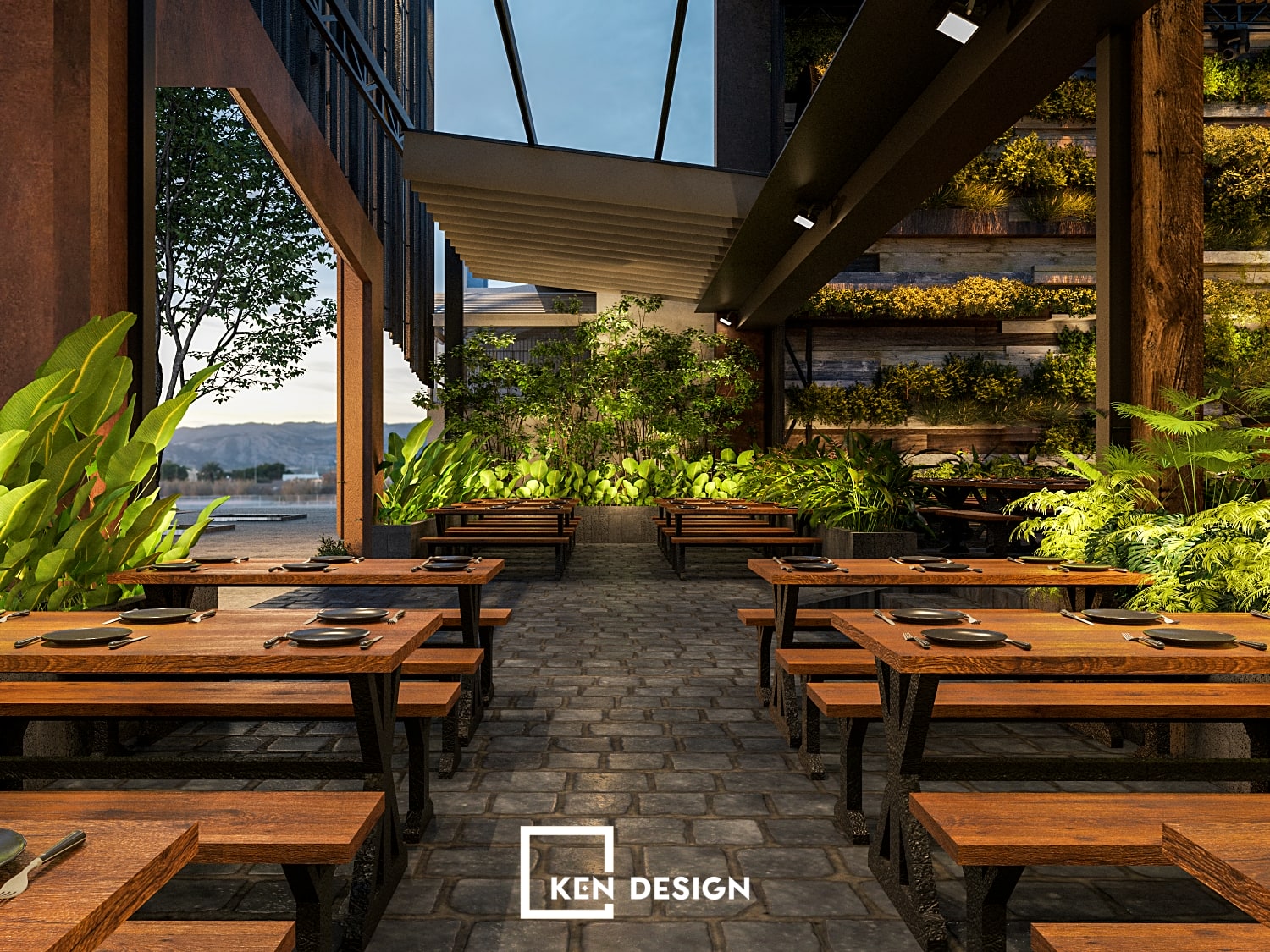
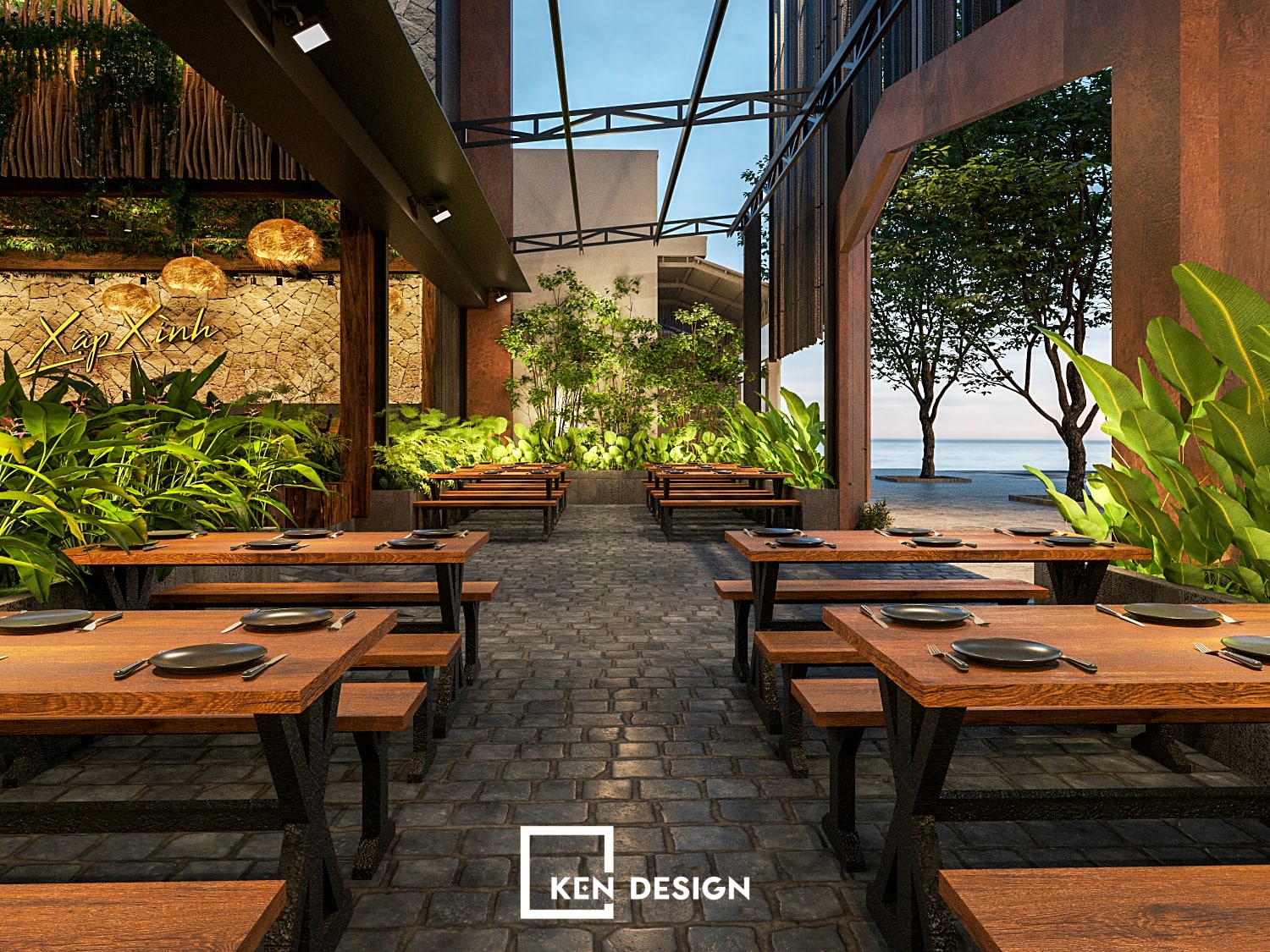
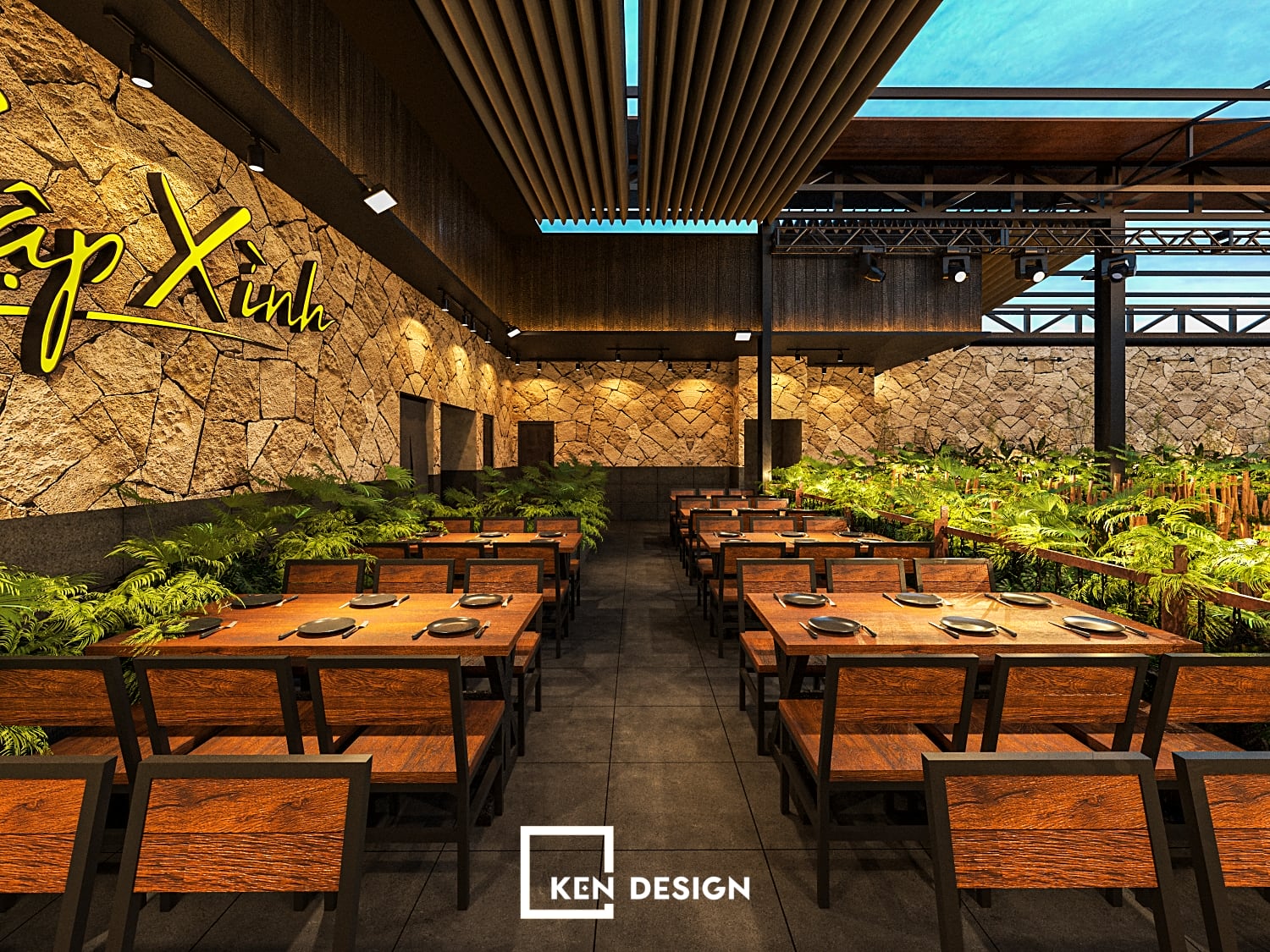
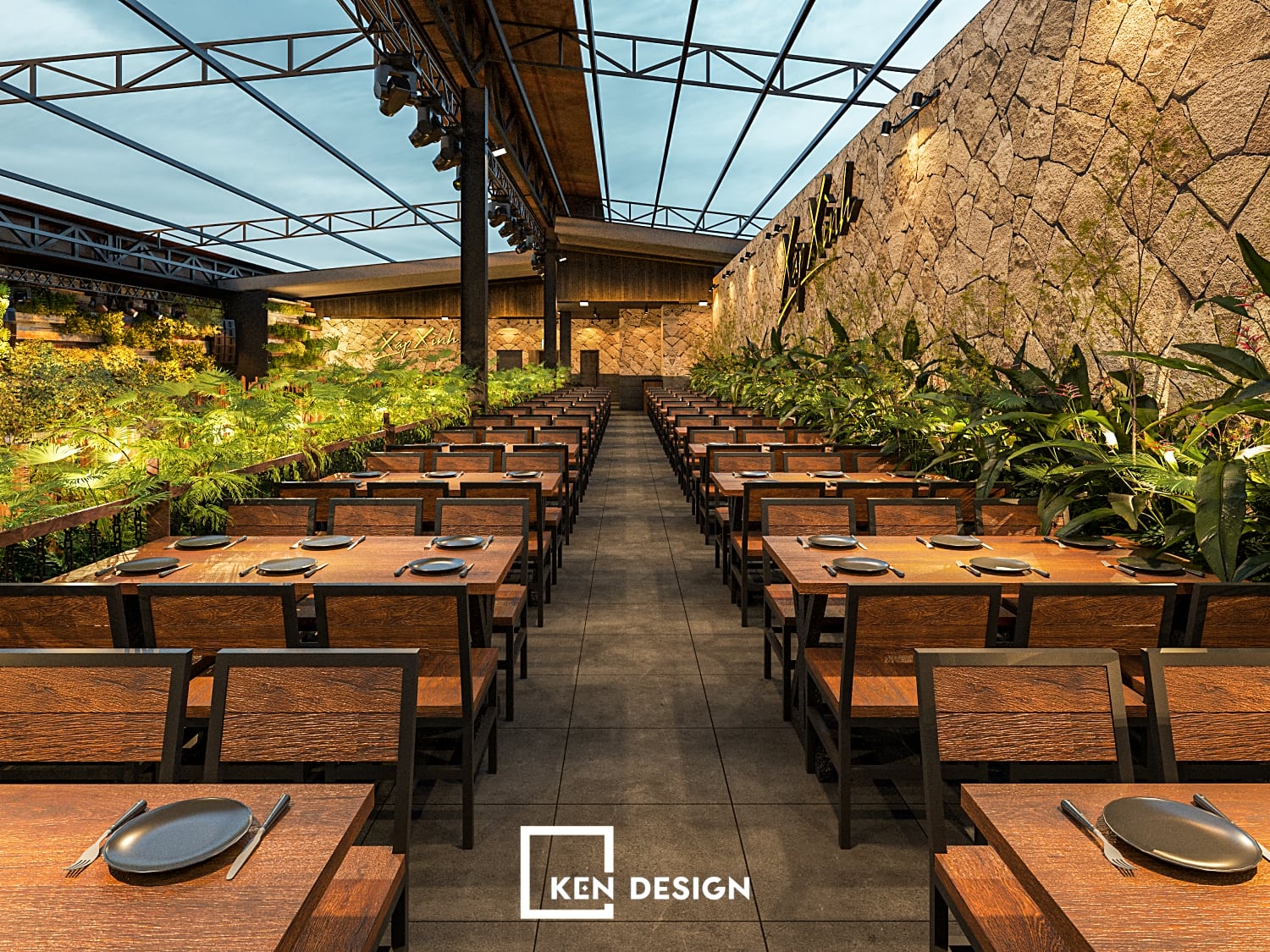
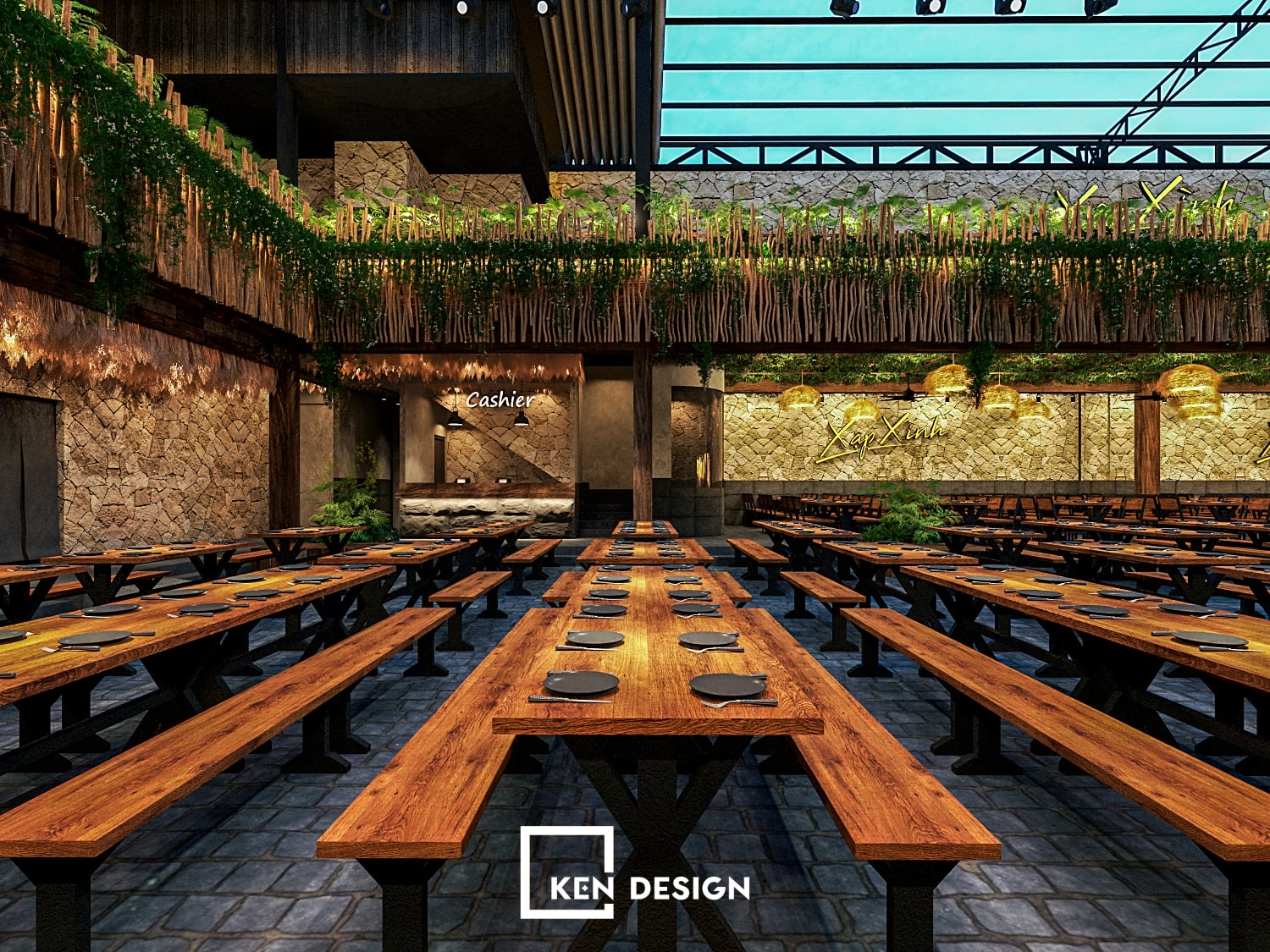
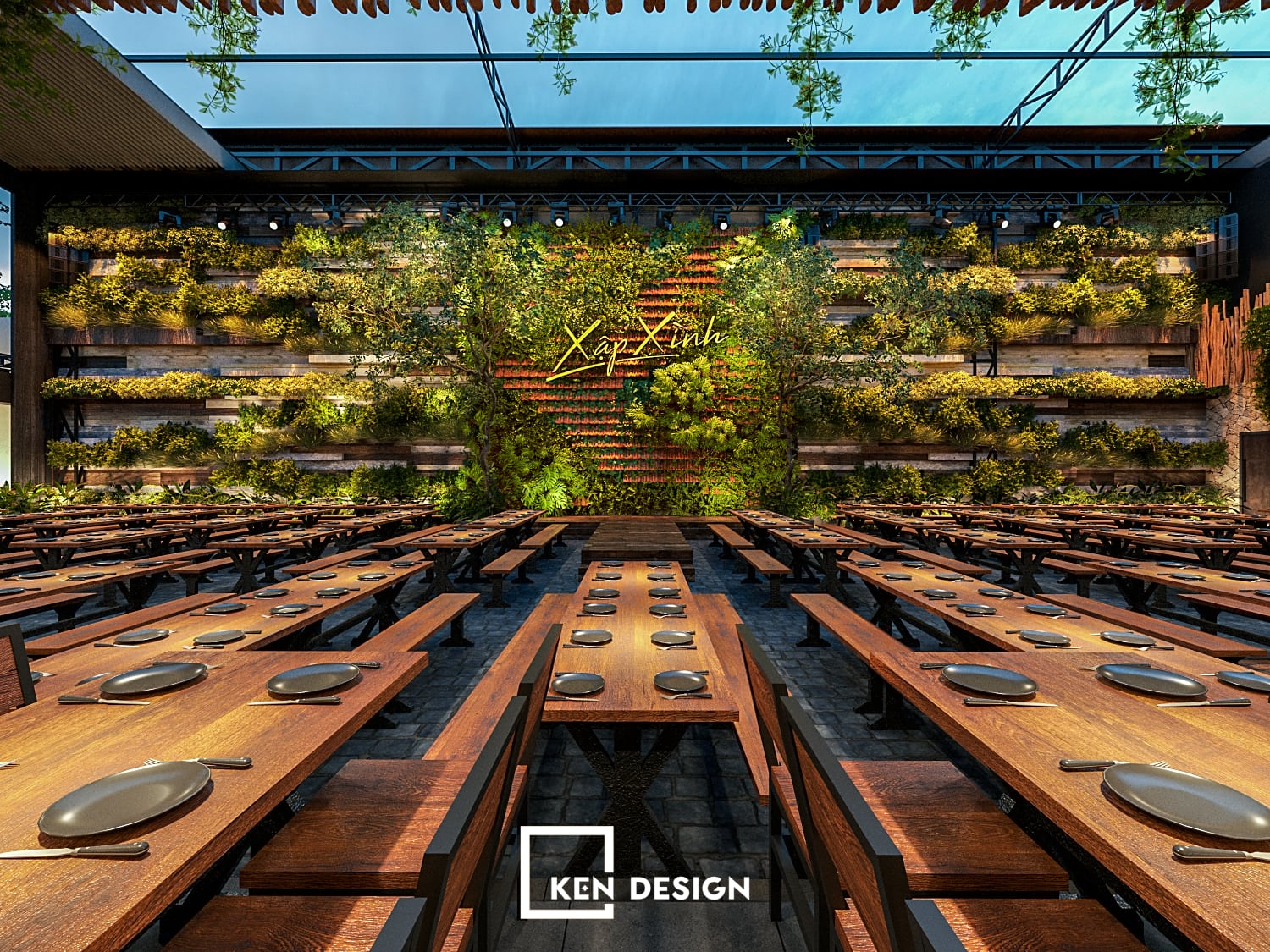
The outdoor seating zone is the heart of the project and best represents the beer garden spirit. The main courtyard is organized around a central stage, with 68 tables seating six people each. This arrangement ensures clear visibility of the stage from all seating positions, creating a strong sense of shared experience.
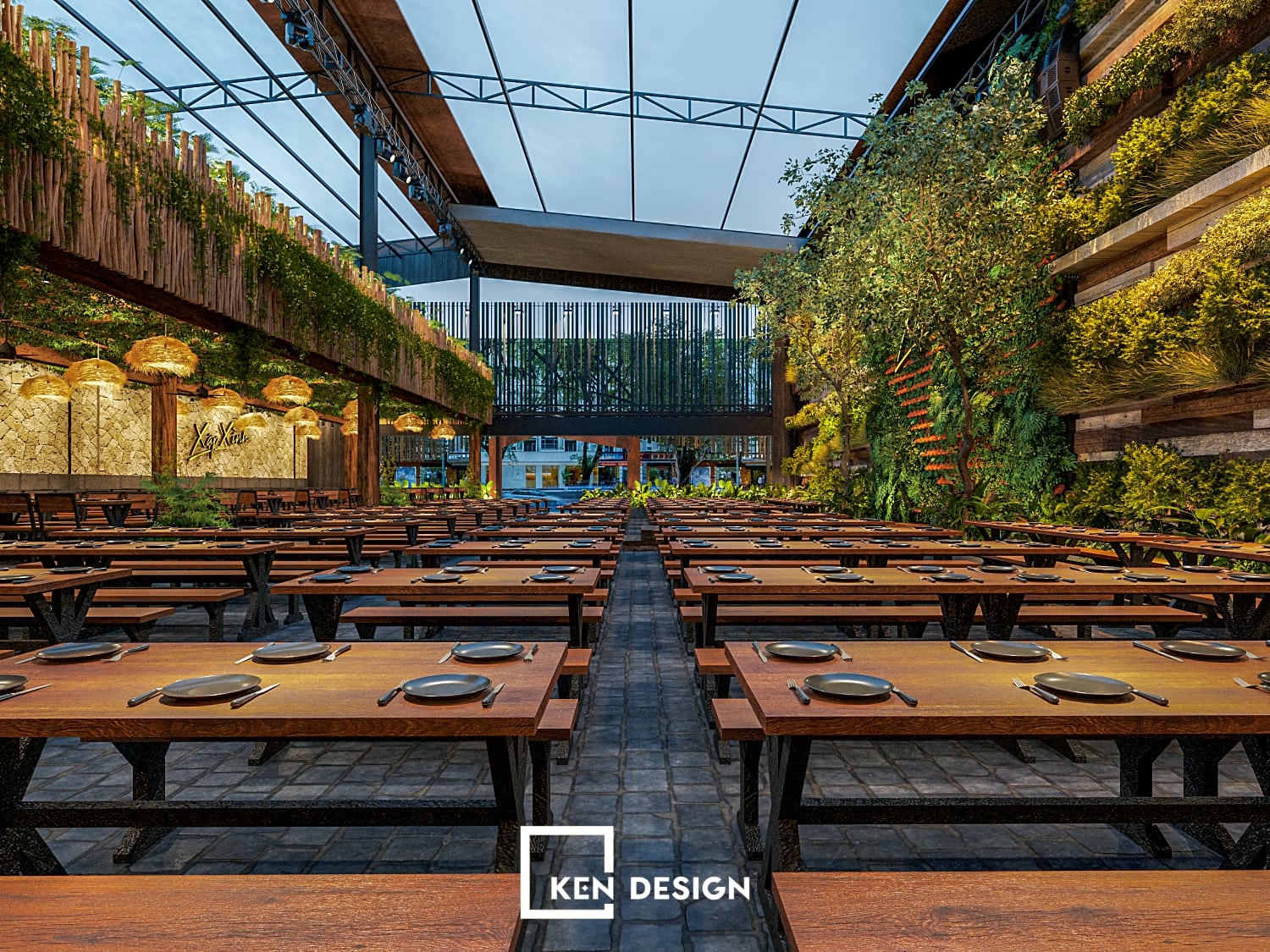
In addition, the front sidewalk area is utilized to accommodate 12 more tables, increasing capacity while acting as a spatial buffer between the venue and the street. Long tables and bench seating are used outdoors, ideal for large groups and flexible movement during high-energy moments.
4.2 Indoor Seating Area
The indoor seating area spans two floors and serves as a functional counterbalance to the outdoor zone. It accommodates both evening beer customers and daytime office lunch diners, who typically seek a calmer and more comfortable environment.
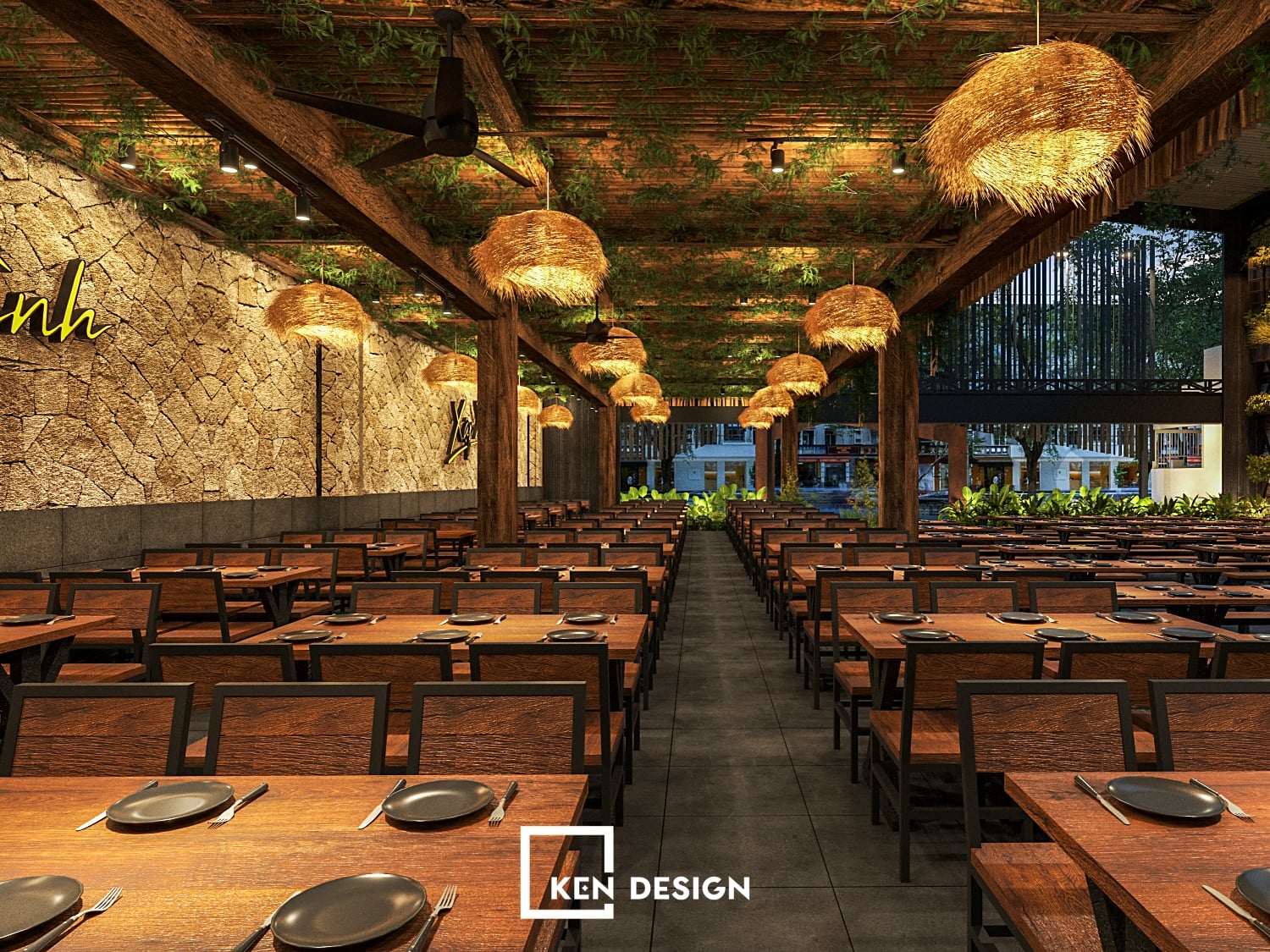
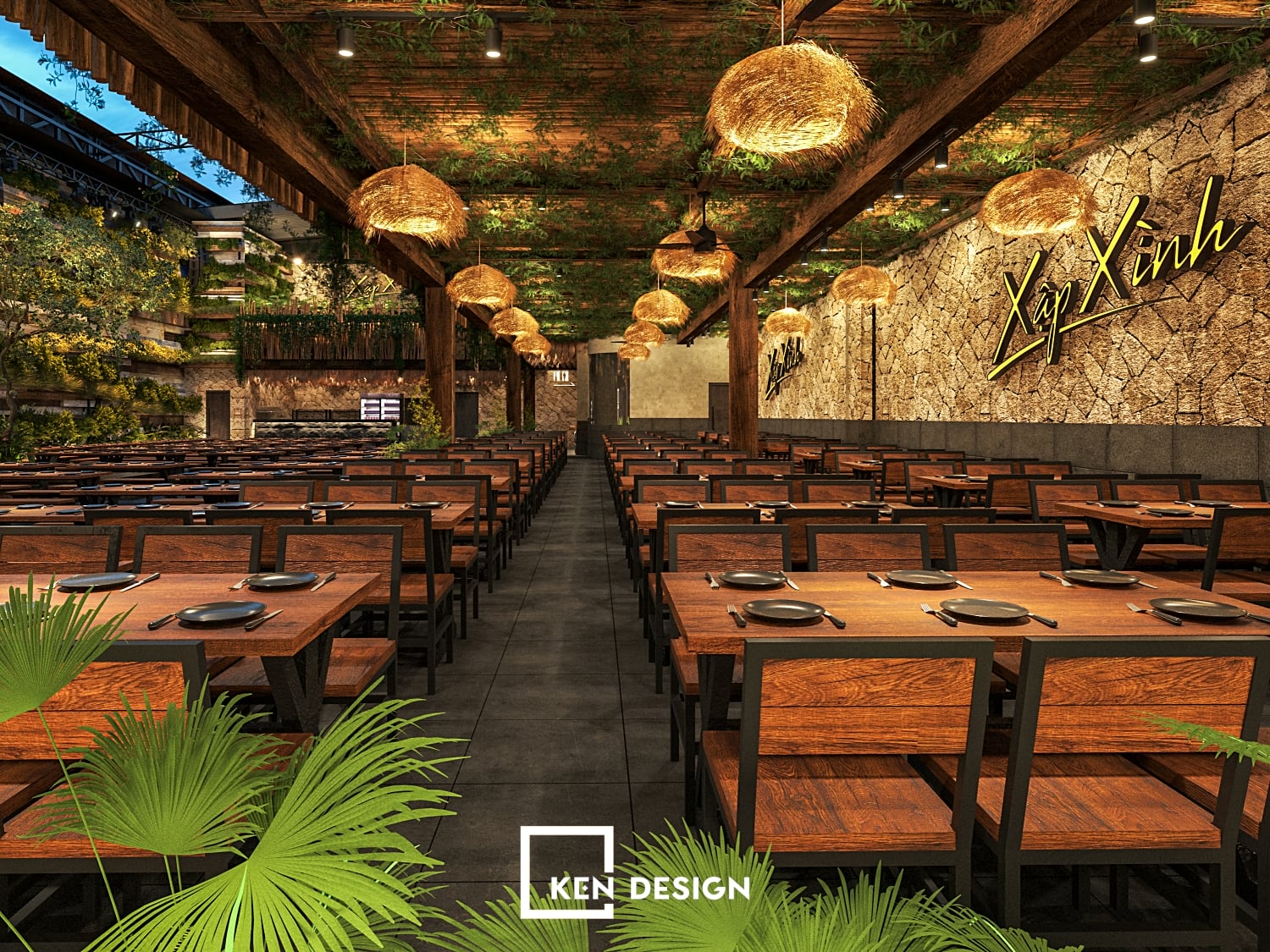
The first floor includes 28 tables, while the second floor contains 32 tables, each designed for six guests. Unlike the outdoor area, movable chairs are used instead of fixed benches, allowing greater flexibility for smaller groups and daytime dining habits. This distinction enables efficient operation across different time frames without major layout adjustments.
4.3 Kitchen and Bar Area
The kitchen and bar are positioned at the deepest part of the site, farthest from the main entrance, and grouped together with the restroom area. This placement minimizes the impact of odors and service noise on customer experience.
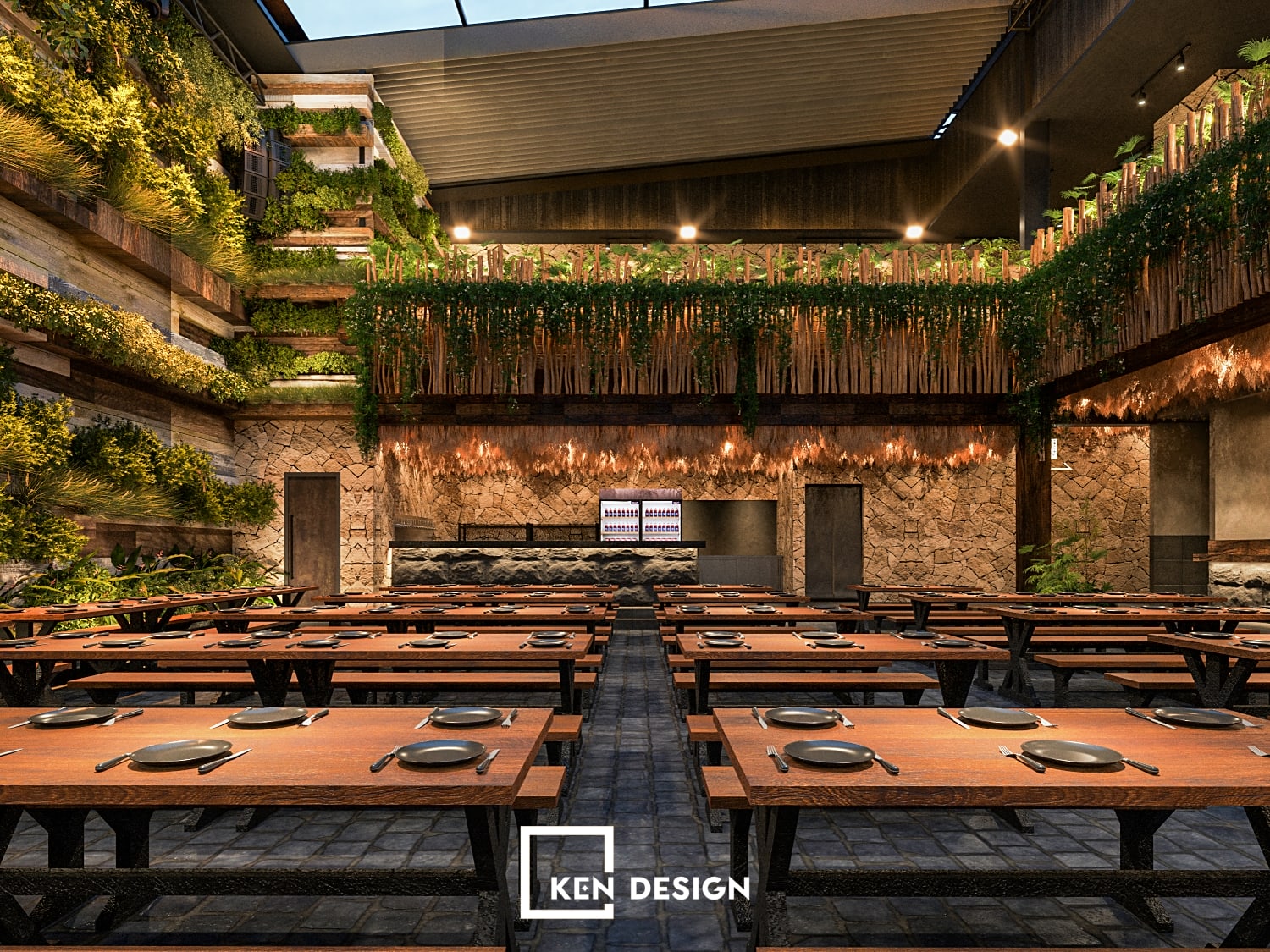
By consolidating service functions into a single zone, internal circulation is optimized and operational control is improved, especially during peak hours. This approach reflects KenDesign’s experience in large-scale beer garden projects, where operational efficiency is as critical as visual design.
5. Façade Design
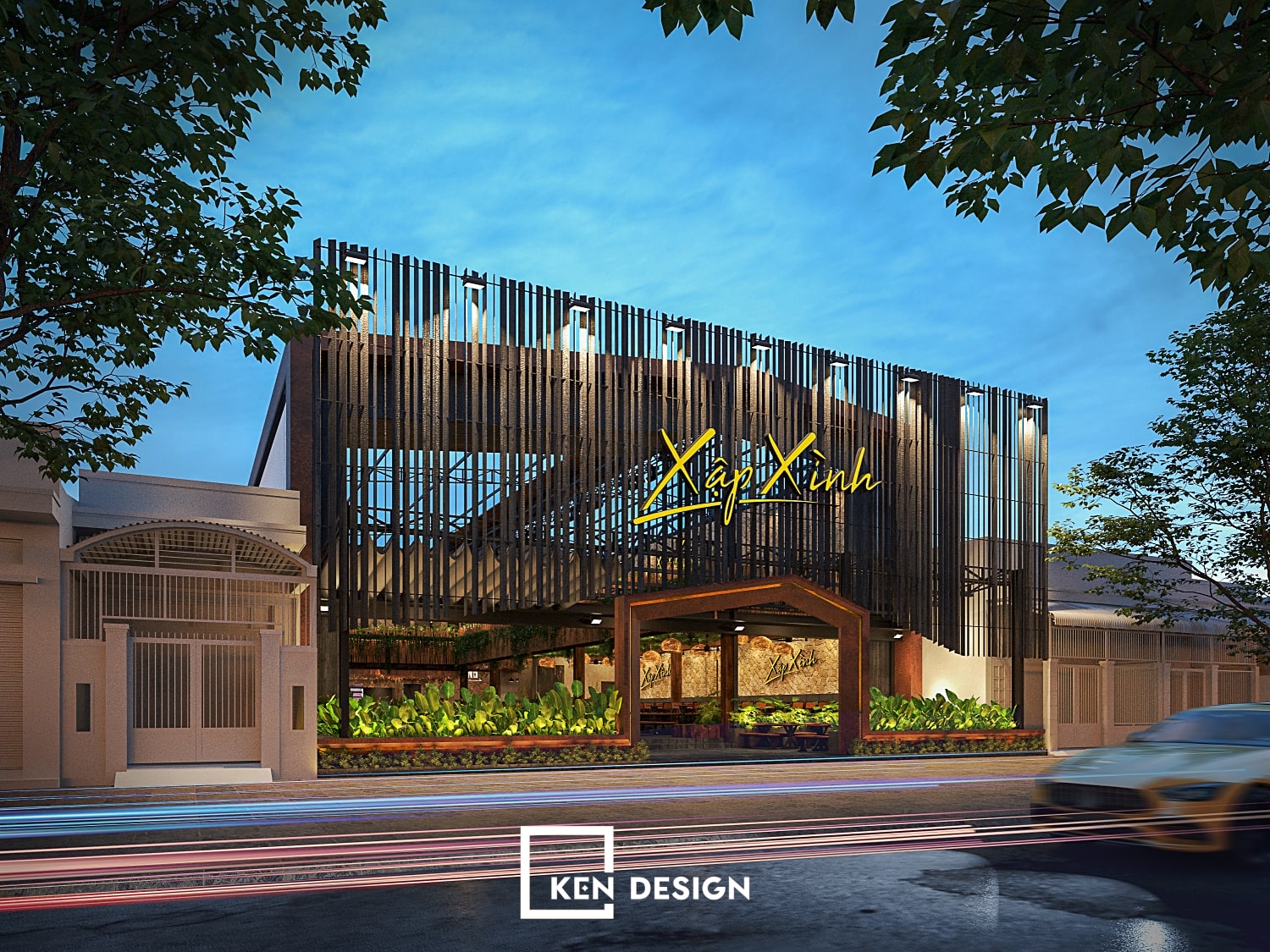
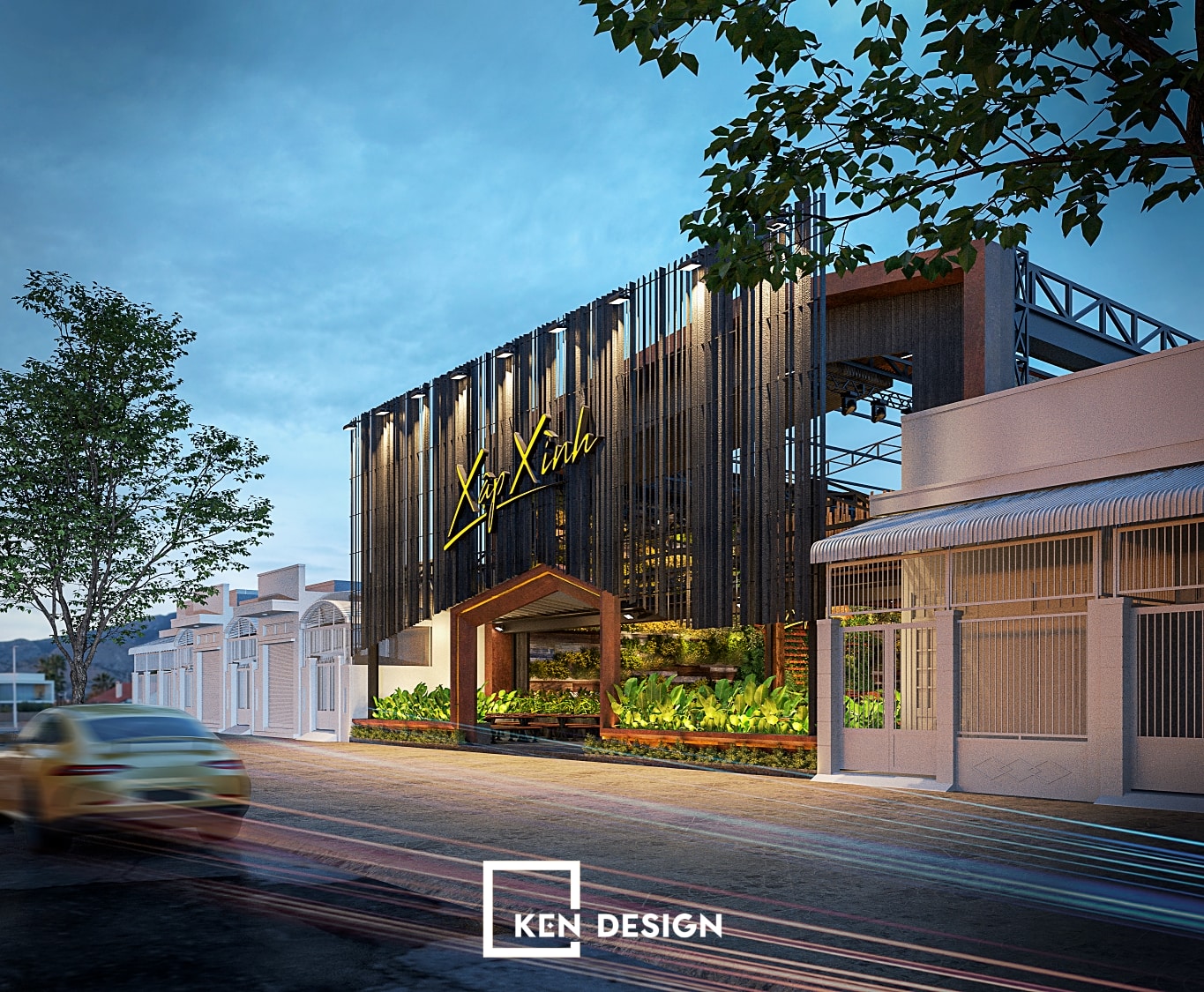
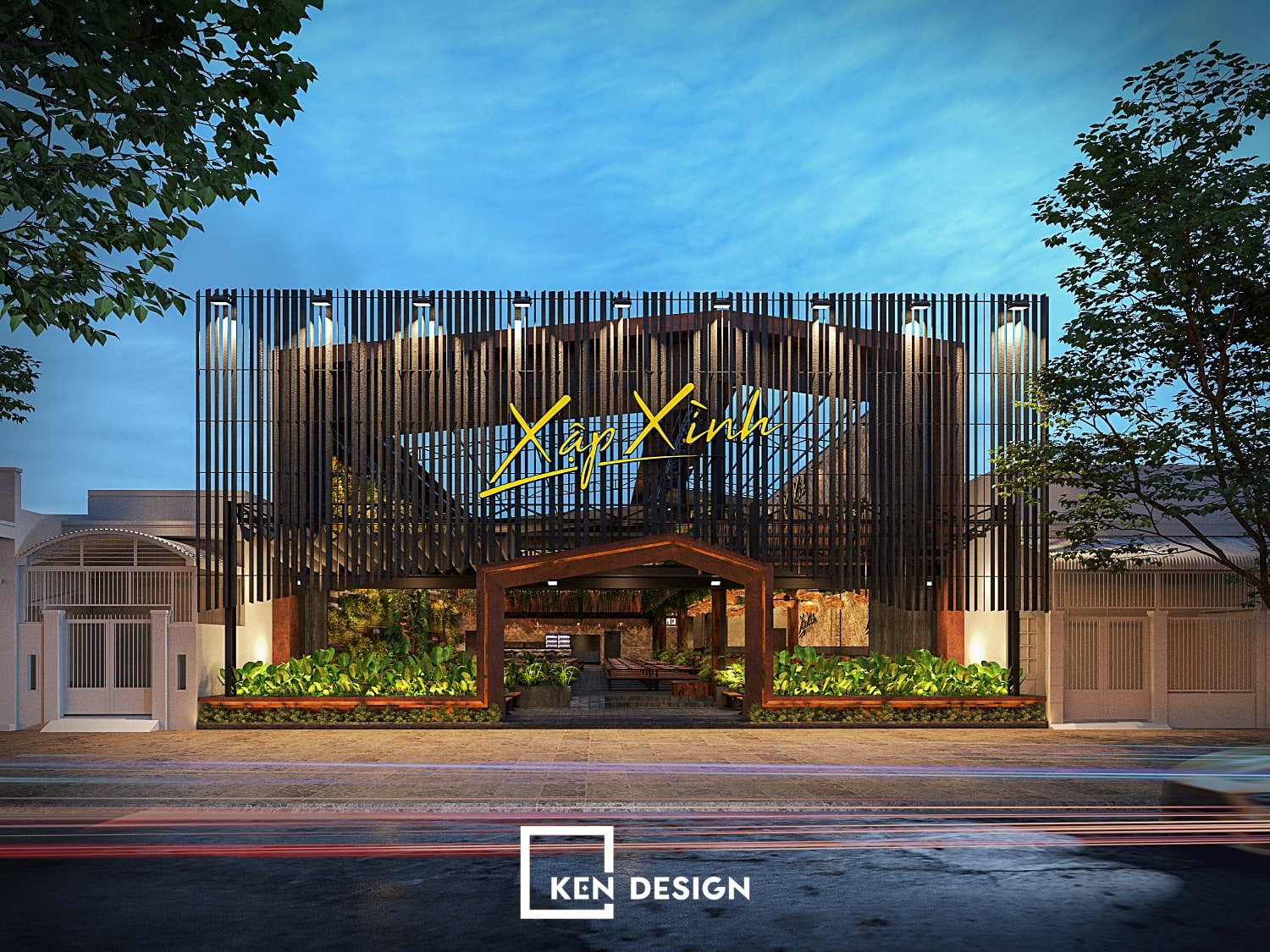
The façade is designed with bold architectural forms that clearly express the scale and entertainment-oriented nature of the venue. Vertical steel louvers wrap the structure, adding visual depth while also serving as acoustic buffering elements.
At night, lighting transforms the façade into a strong visual landmark, reinforcing brand recognition and attracting attention from the surrounding streets.
6. Interior Materials
Material selection prioritizes durability and structural stability, essential for high-traffic beer garden environments. Tables and chairs are made of wood combined with steel frames, ensuring strength and resistance to movement, even when guests stand or dance.
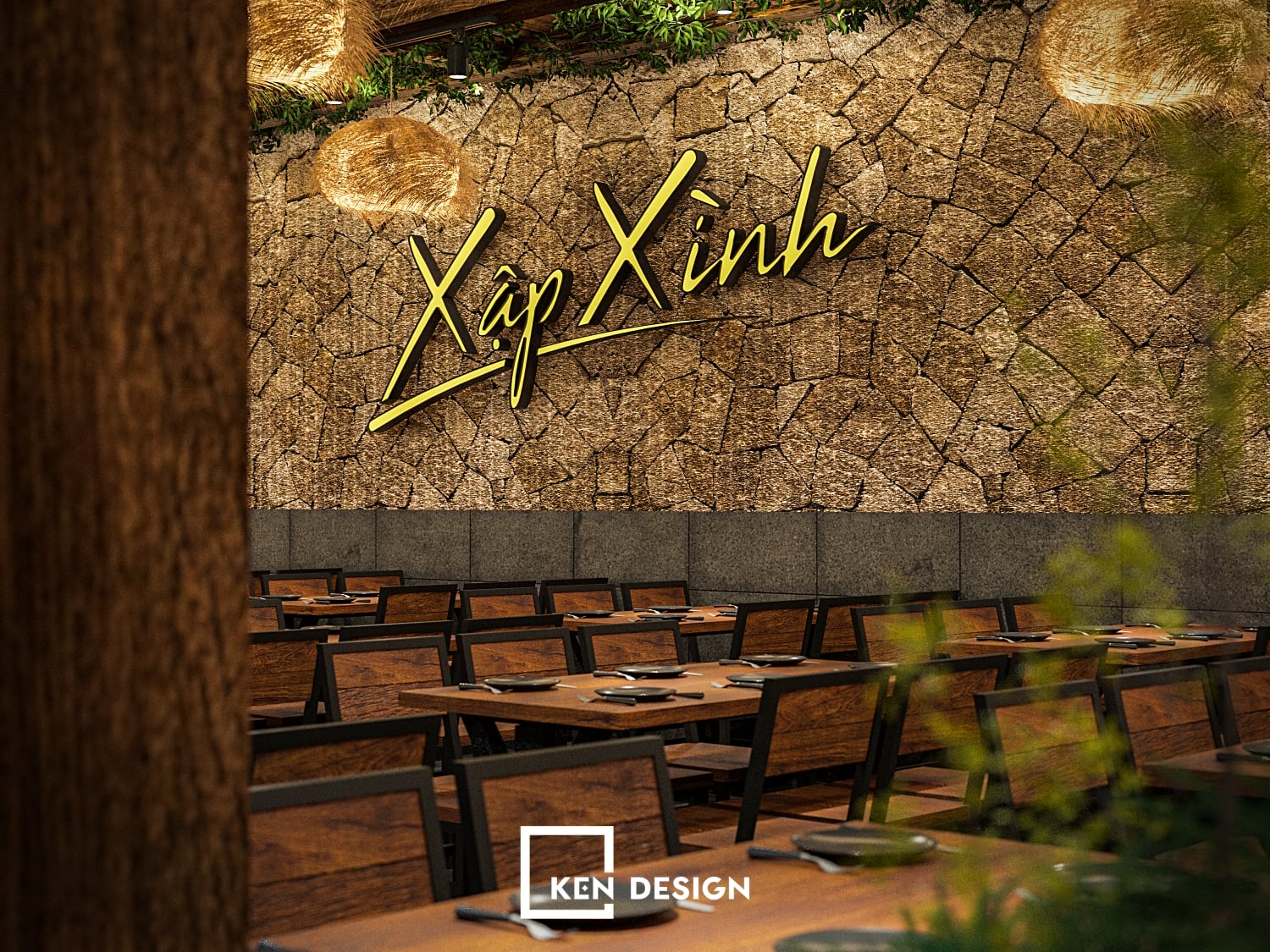
Decorative elements incorporate natural materials such as wood, rough stone and honeycomb brick, combined with dense greenery to create a raw yet welcoming atmosphere. All materials are chosen for longevity and ease of maintenance.
7. Design Highlights and KenDesign Signature
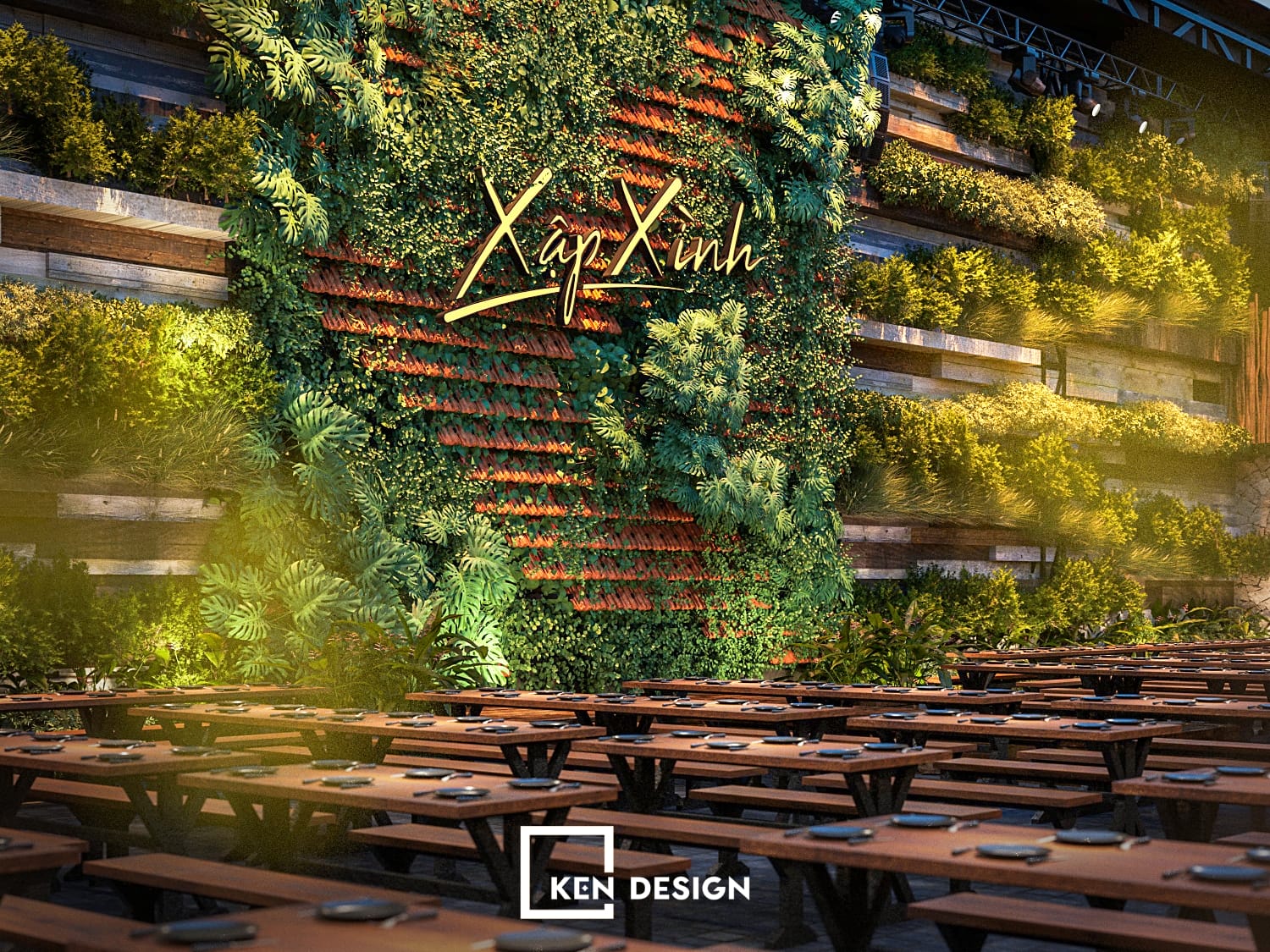
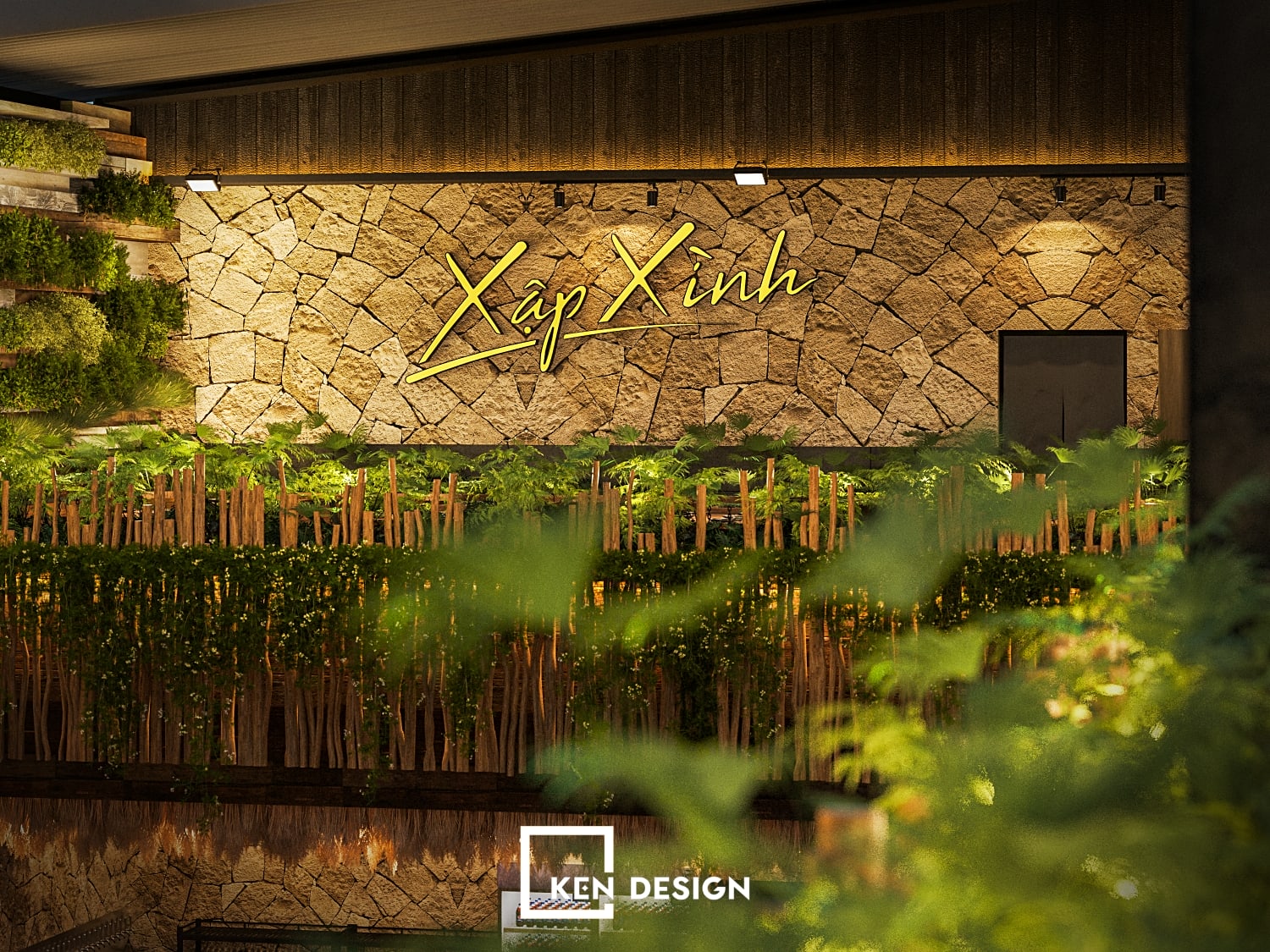
The most striking feature of the project is the large green wall behind the stage, combined with tiled roofing elements, wood and mature trees. This serves both as a performance backdrop and a signature check-in spot, setting Xap Xinh apart from other beer venues in Hai Phong.
The use of layered greenery not only enhances visual identity but also improves microclimate conditions, reducing heat and creating a more comfortable environment. This integration of nature is a recognizable signature in KenDesign’s beer garden projects.
8. Project Value
Xap Xinh’s design maximizes revenue potential through flexible space utilization across different time periods and customer groups. Customer experience is significantly enhanced, as each visit offers more than just food and drinks, but a complete social and entertainment experience.
At the same time, durable materials, efficient structural solutions and thoughtful construction strategies help optimize investment and maintenance costs, ensuring long-term operational sustainability.
The Xap Xinh Beer Garden project in Hai Phong demonstrates that F&B design is not merely about visual impact, but about solving business challenges. From investor insight and site analysis to concept development and detailed solutions, Ken Design delivered a cohesive design strategy centered on experience, efficiency and long-term value.
>>> Read more: The design of The Gangs restaurant Ly Thai To - An inspiration from the innovative industrial style