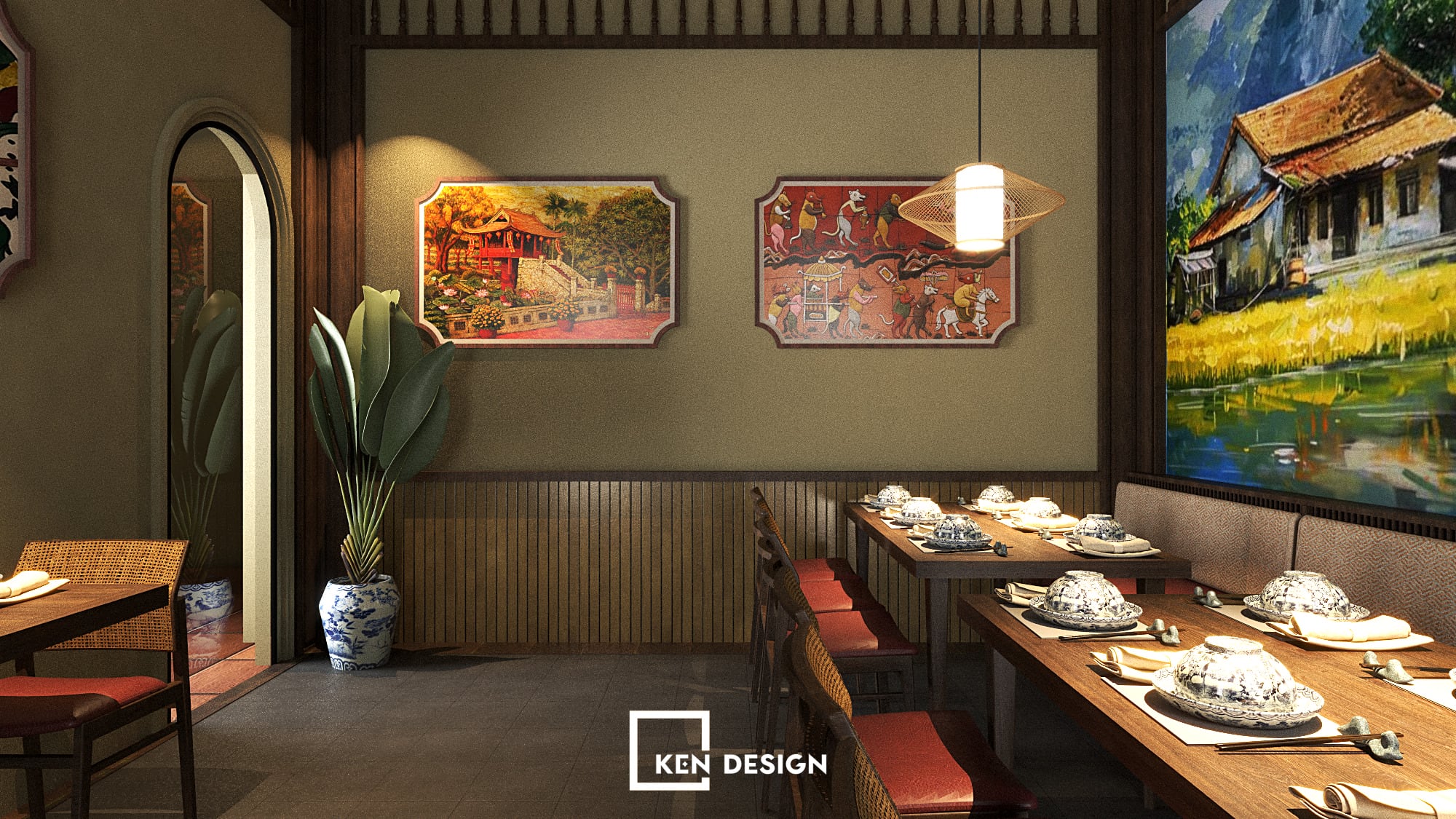
As Vietnamese cuisine continues to gain higher positioning, the concept of “Country-style rice” restaurants is no longer limited to simplicity or low-cost dining. Instead, it is evolving into a more refined experience that balances familiarity, cultural depth and spatial quality.
The Com Que Ba Tan restaurant design project represents a typical challenge within this trend. With an investment budget of only 400 - 500 million VND, the client sought to create a space inspired by Northern Vietnamese rural life while still being visually polished and appealing to mid-range customers. Below is how Ken Design approached and solved this design challenge.
1. The Client’s Design Challenge
Com Que Ba Tan was envisioned as a Vietnamese comfort food restaurant serving dishes closely associated with traditional family meals. However, the goal was not simply to recreate a rustic countryside setting. The space needed to feel warm and familiar without being perceived as budget or casual dining.
The client aimed to attract mid-range customers who appreciate traditional cuisine but also expect a clean, comfortable and aesthetically considered environment. This target group values emotional connection as much as dining comfort.
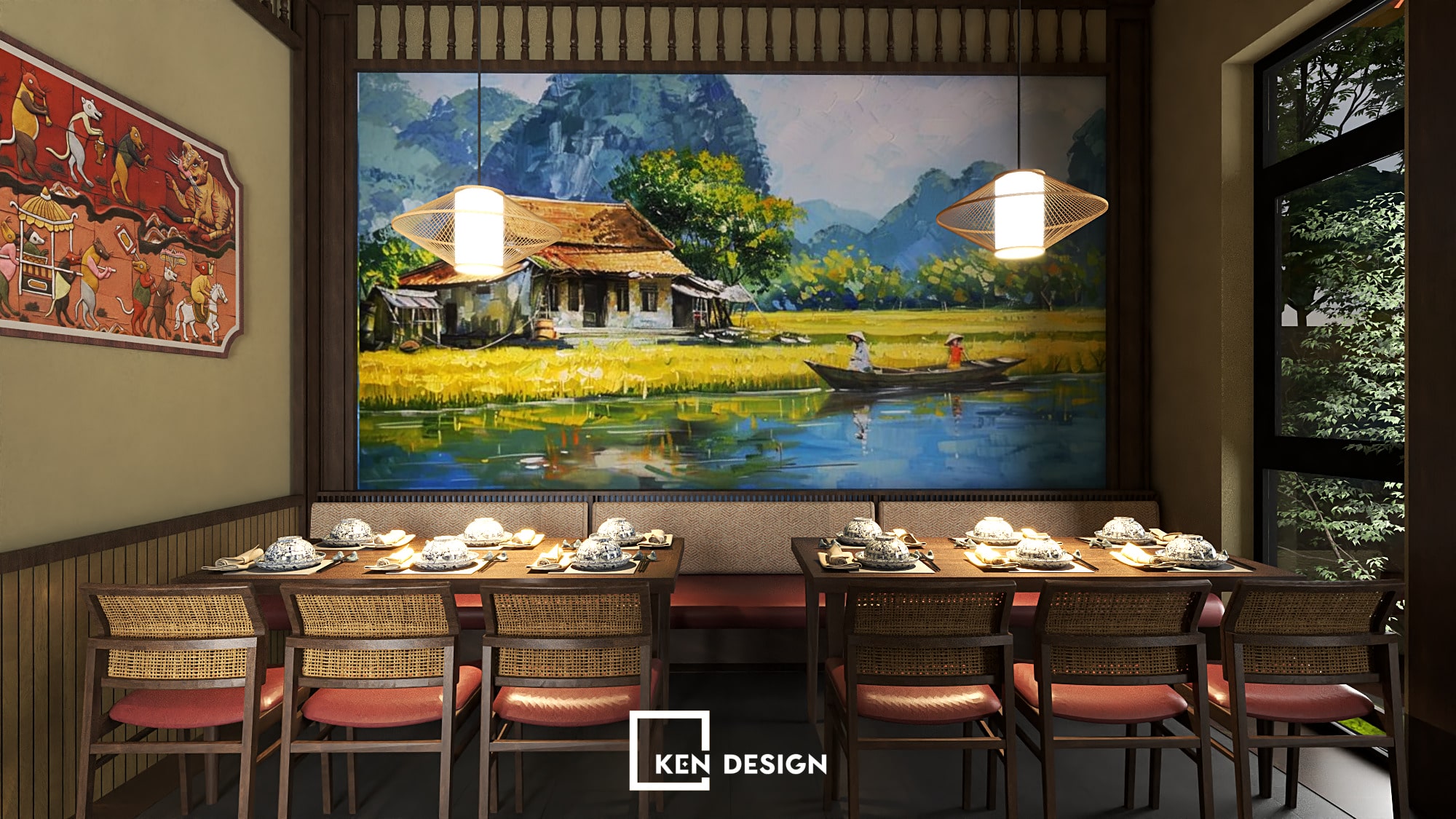
At the same time, the total investment budget was limited to approximately 400–500 million VND. With such constraints, choosing an overly decorative or luxury-driven style would easily lead to cost overruns. The core challenge was therefore to define a design language that felt approachable, visually refined and culturally rich while remaining cost-efficient and realistic to execute.
2. Existing Site Conditions
The restaurant has a total usable area of approximately 282 square meters across two floors. The layout is relatively spacious and well-proportioned, which provides flexibility in organizing dining areas and circulation.
One major advantage of the site is the abundance of windows, allowing generous natural light throughout the interior. This reduces reliance on artificial lighting during the day and enhances overall comfort for diners.
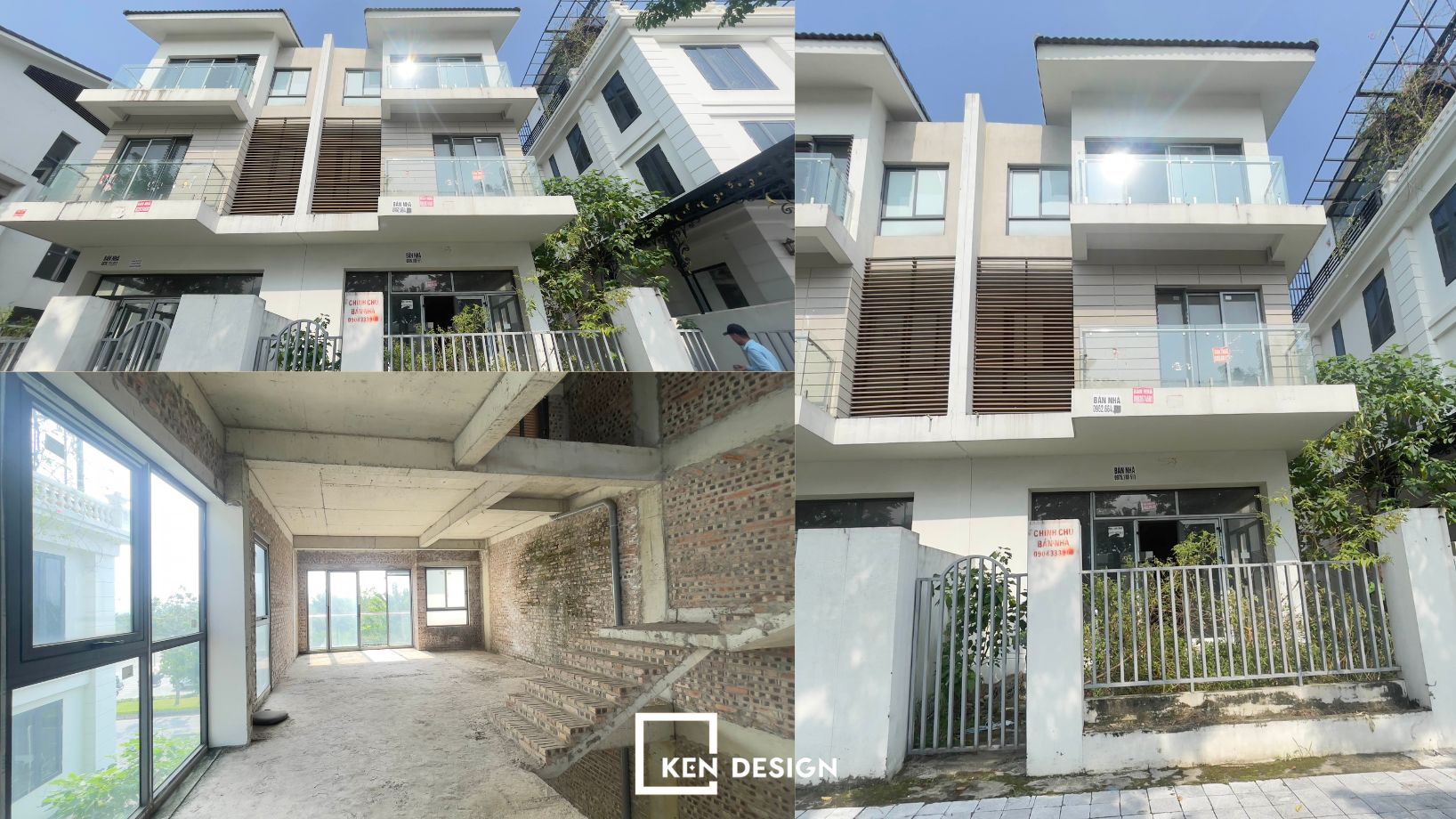
The building was delivered in a newly finished structural shell condition, without previous renovations. As a result, there was minimal cost required for demolition or structural modification. However, this also meant that all finishing works, including floors, ceilings, walls and interior elements, had to be newly invested, placing additional pressure on the limited budget.
3. Design Concept
The overarching concept of the project is “Recreating the Northern Vietnamese village atmosphere in a contemporary context.” Rather than copying old rural imagery directly, the design selectively extracts emotionally resonant elements such as tiled roofs, brick walls, village gates, shutters and countryside visuals, then reinterprets them in a modern spatial language.
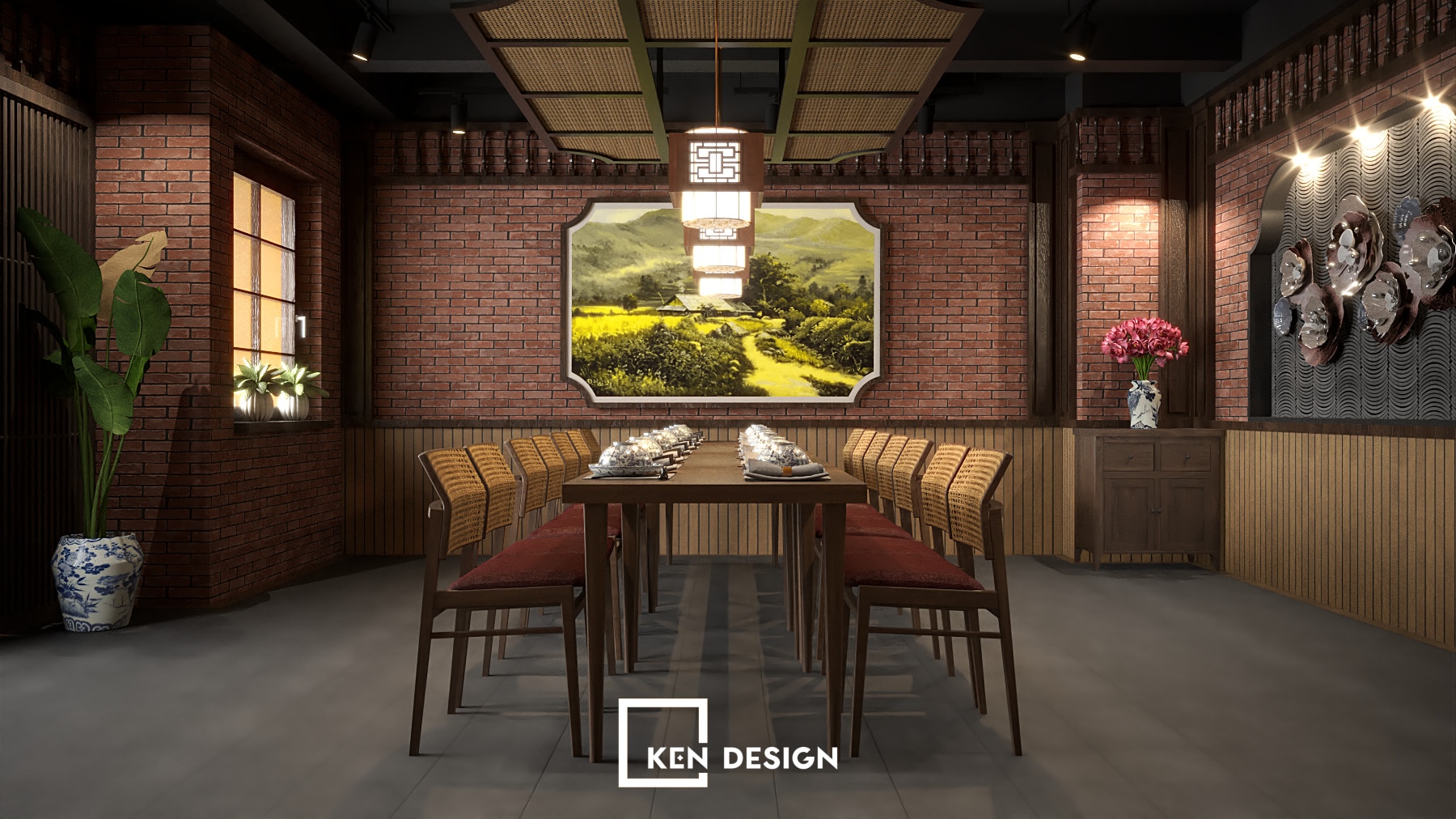
The chosen style is contemporary Indochine combined with Vietnamese vernacular design. This hybrid approach allows the space to retain cultural depth while remaining clean, restrained and suitable for a mass-market restaurant model.
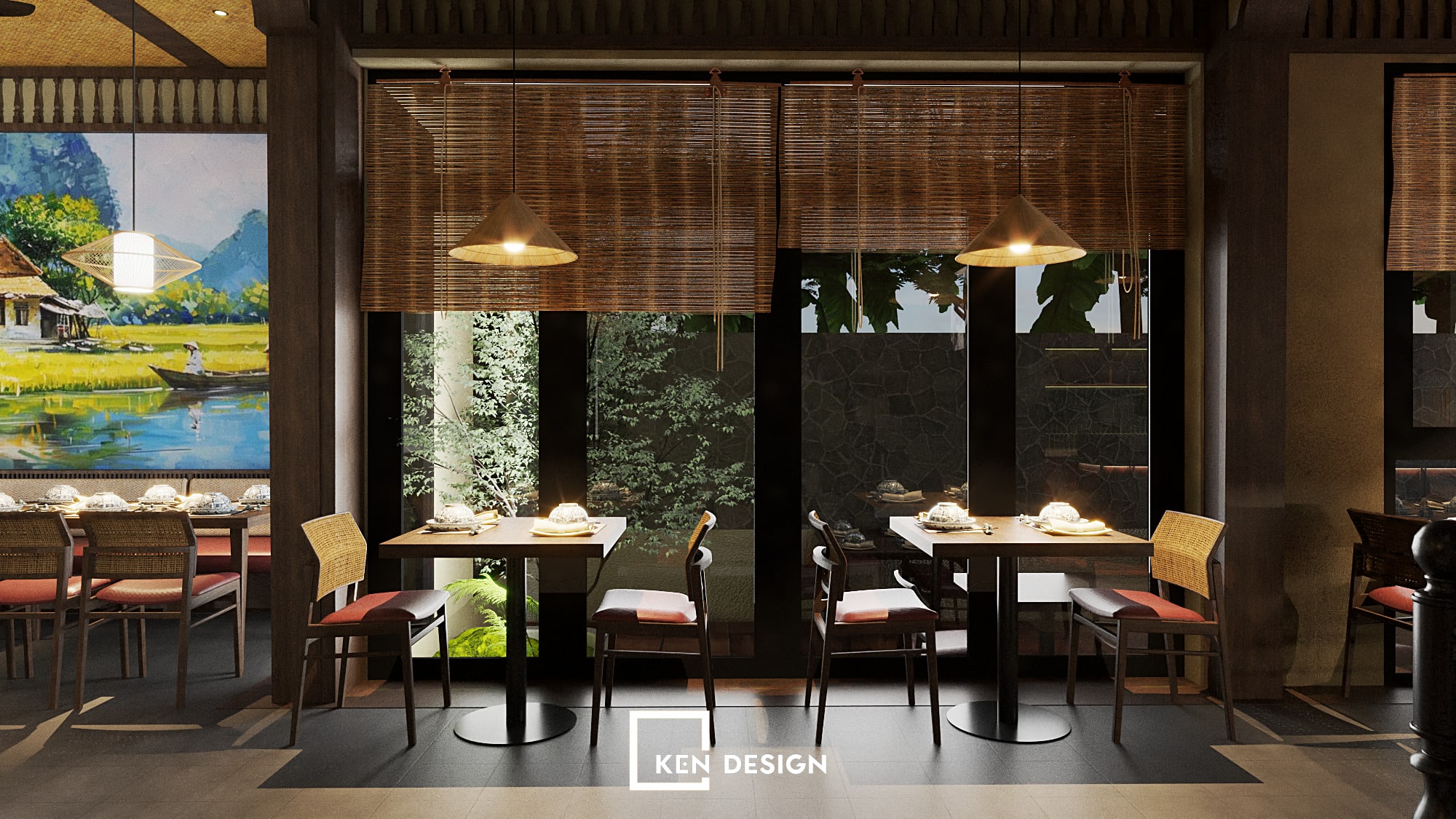
Instead of heavy ornamentation or nostalgic detailing, the design focuses on spatial clarity, architectural rhythm and storytelling through materials and forms. This approach avoids the cluttered feeling often found in traditional Indochine interiors and ensures long-term visual durability.
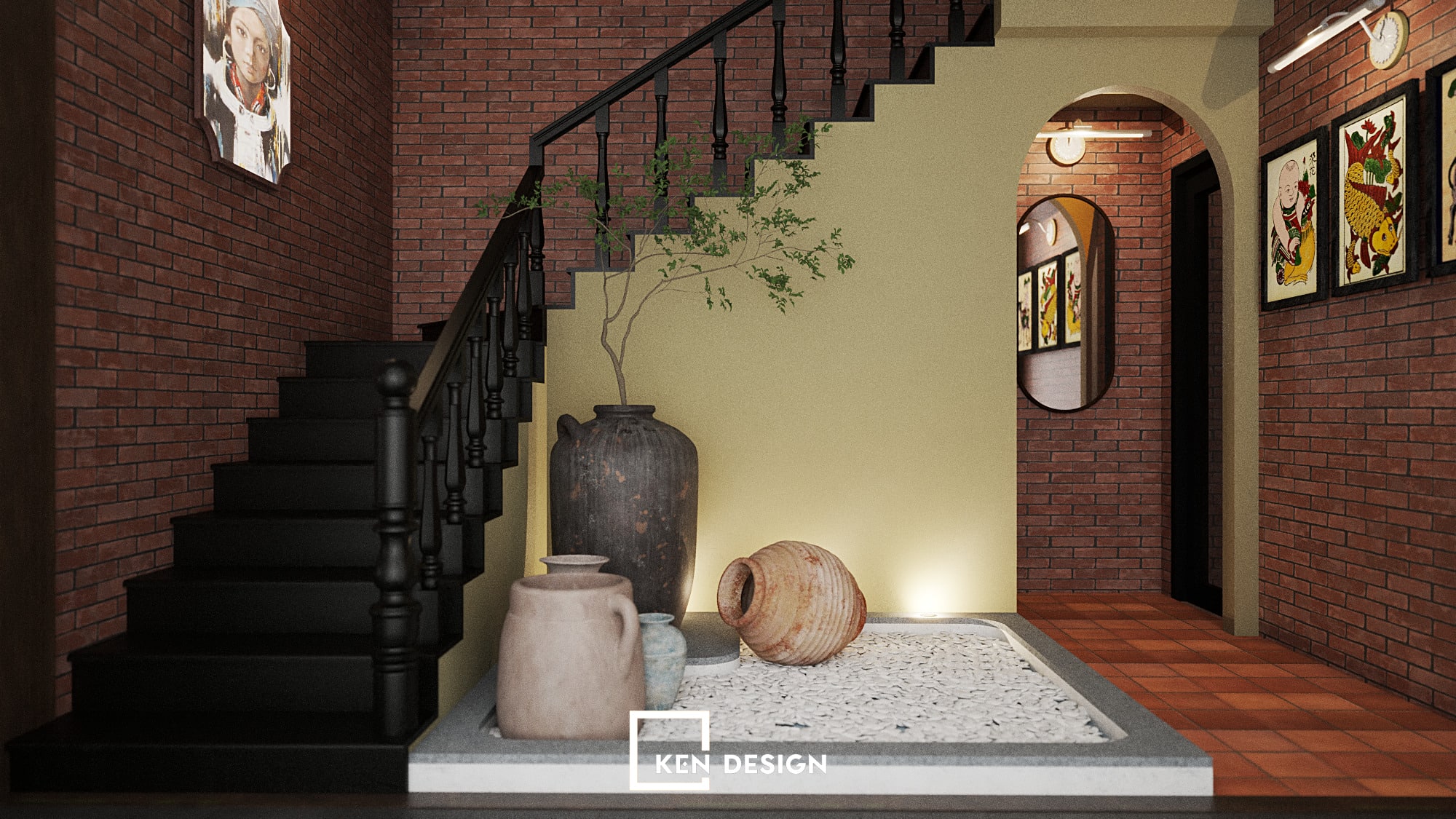
4. Space Planning
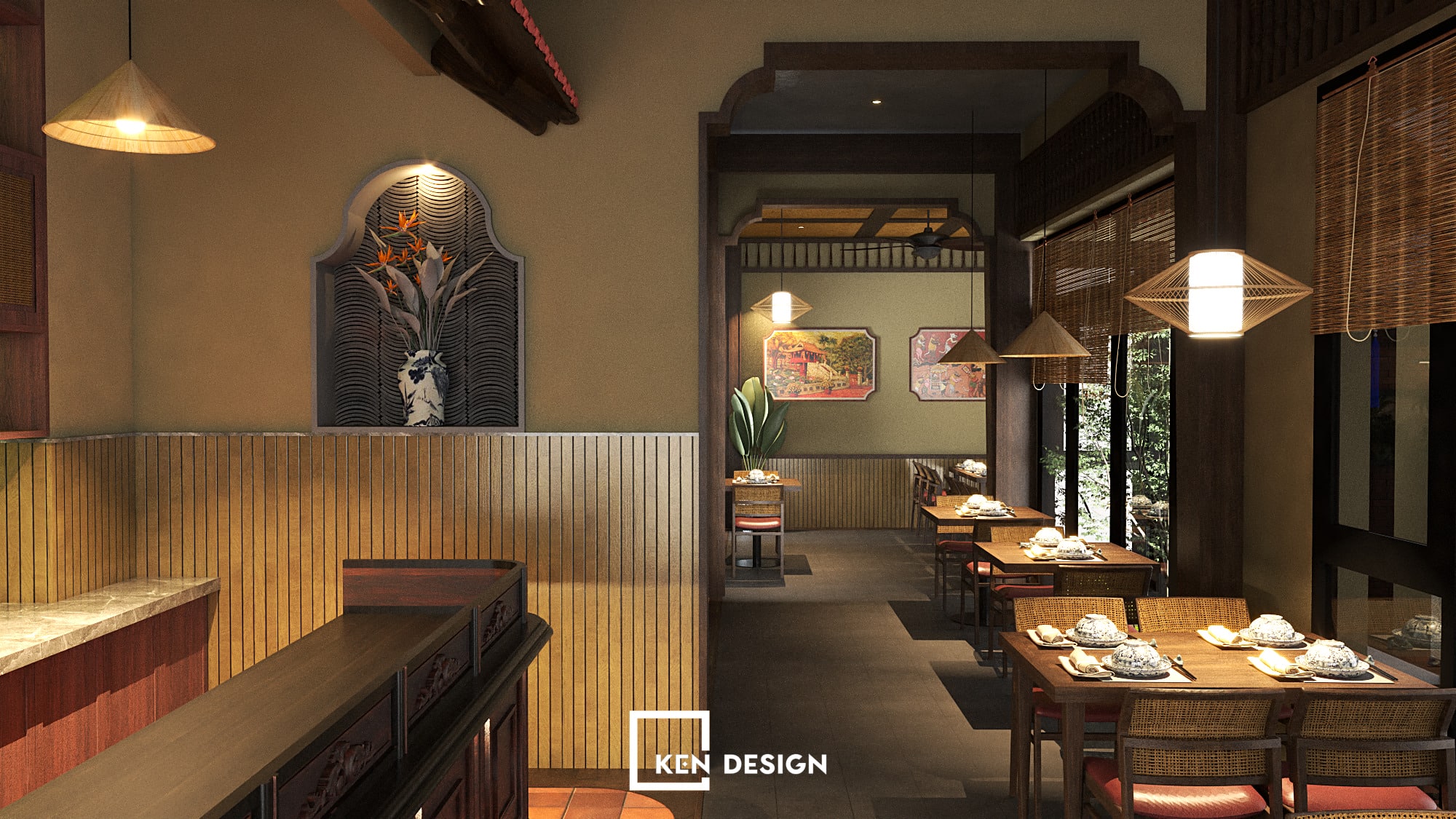
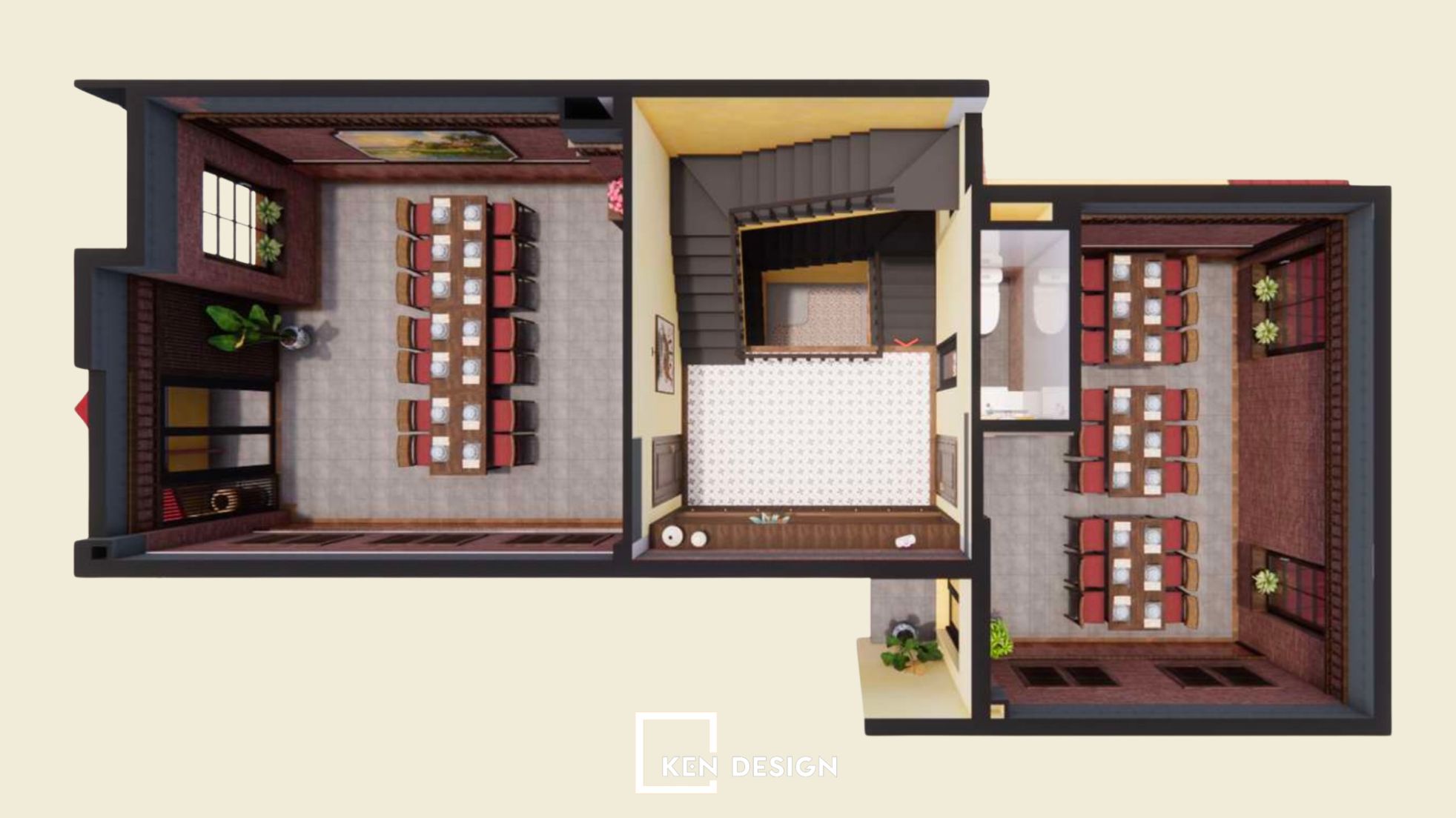
The restaurant layout is clearly organized by function across two floors. The first floor serves mixed customer groups, including both indoor and outdoor seating areas. Tables are arranged with appropriate spacing to accommodate small groups, families and individual diners.
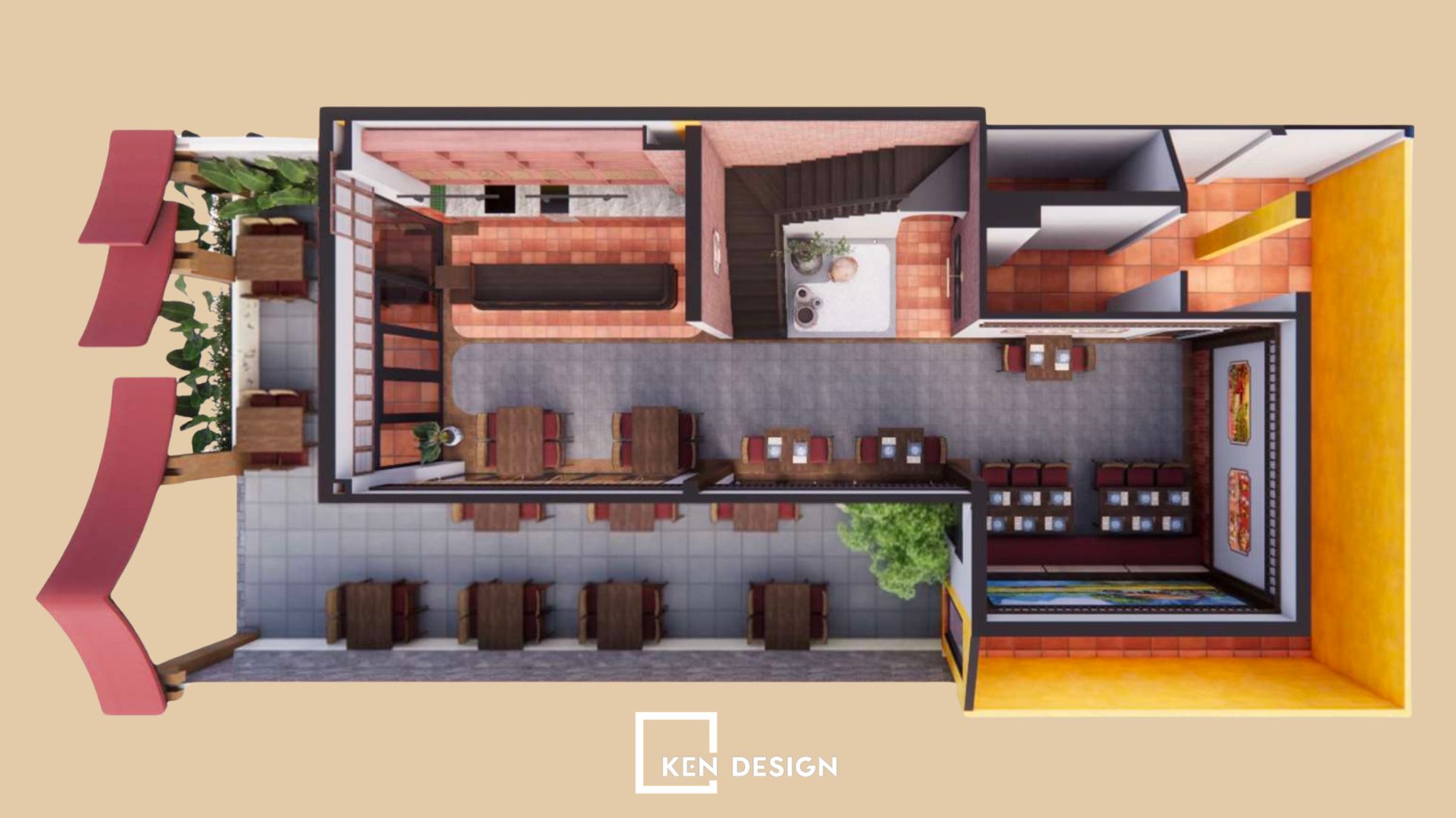
Circulation paths are straightforward and unobstructed, ensuring smooth customer movement and efficient service operations. The service counter is positioned as a central element, functioning both practically and as a visual anchor within the space.
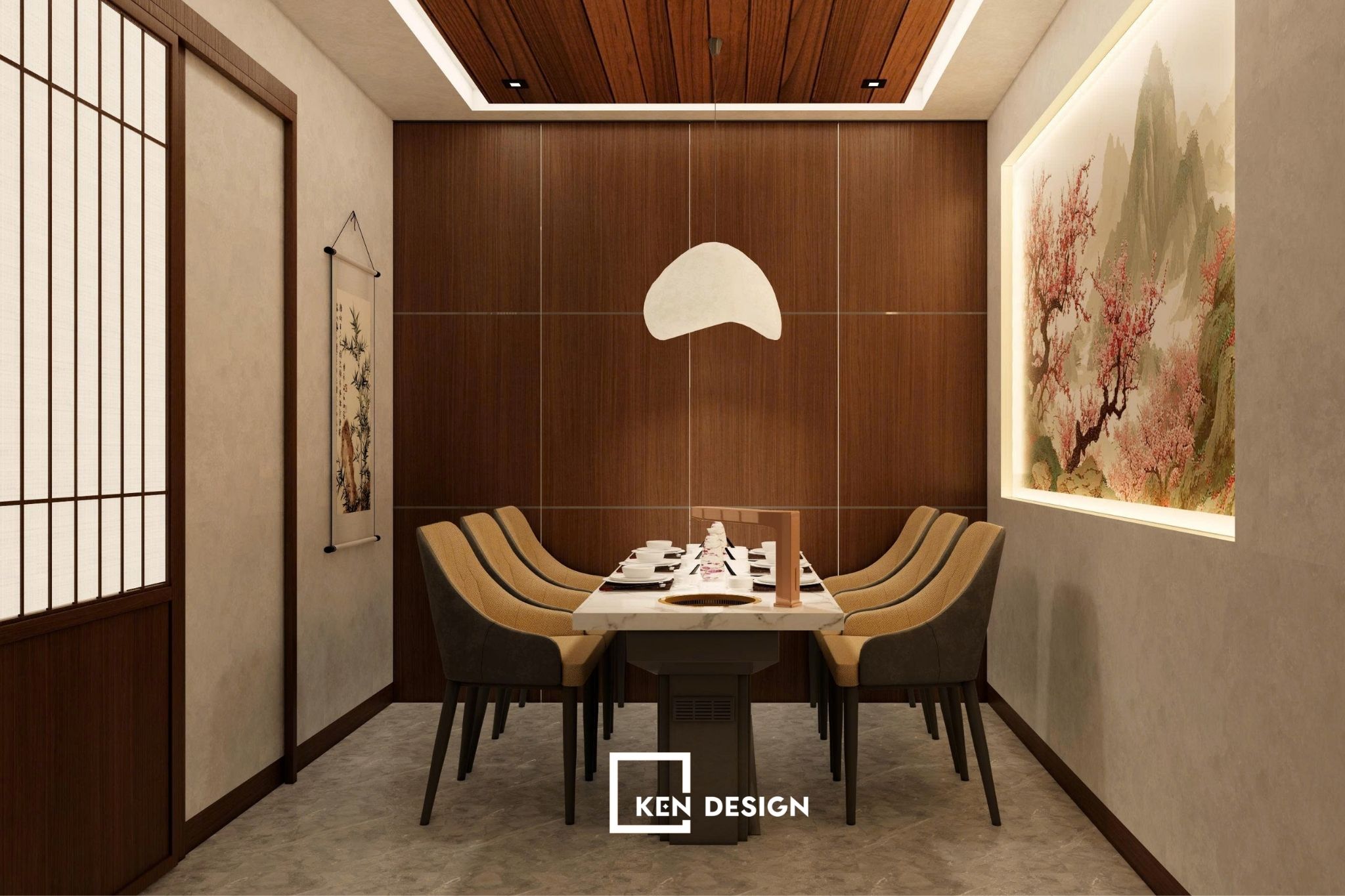
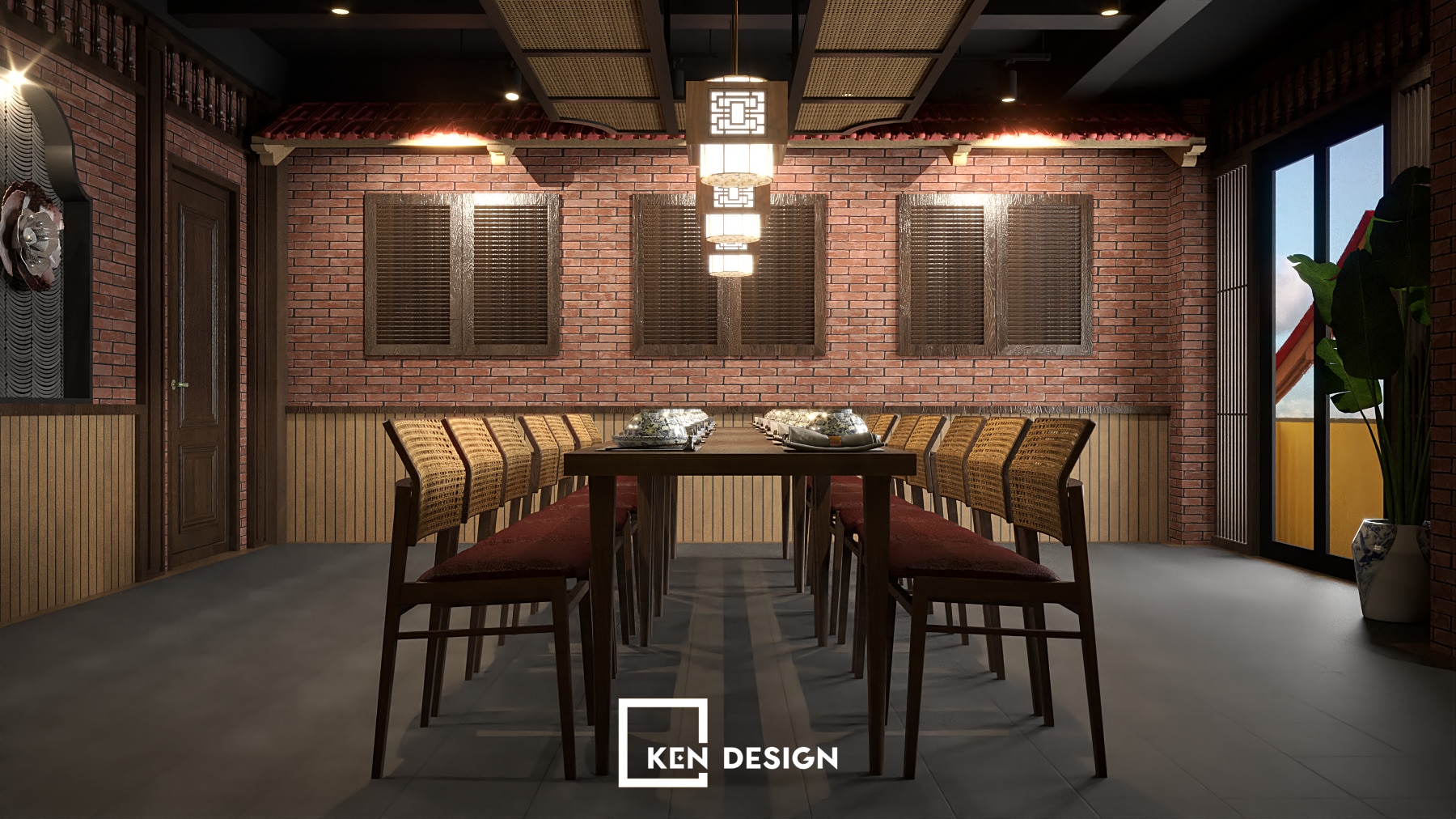
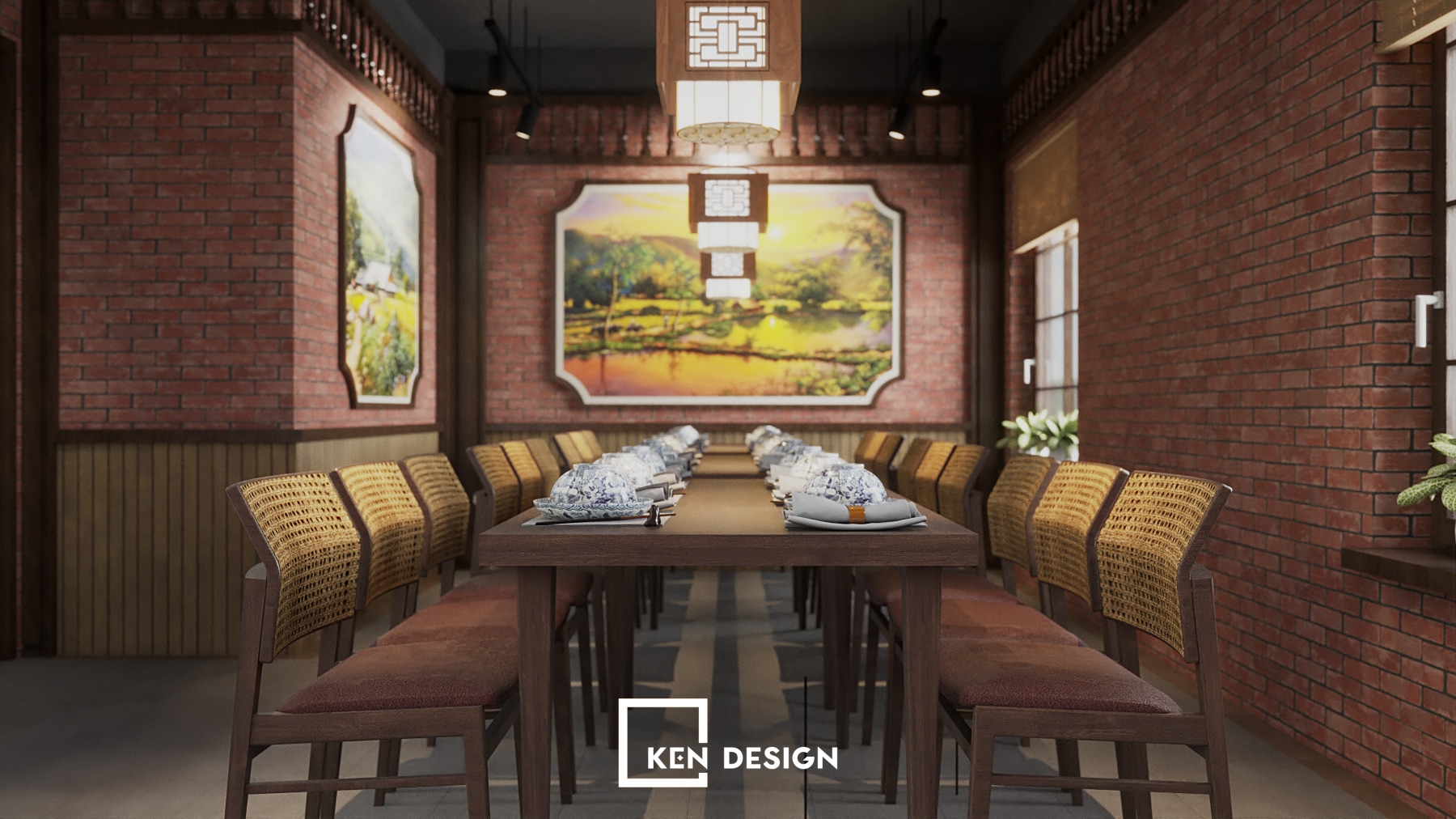
The second floor consists of two private VIP dining rooms. Each room features a long central table, reinforcing the sense of togetherness and shared meals that are deeply rooted in Vietnamese dining culture. The symmetrical arrangement of tables, pendant lights and wall artworks creates a sense of order, privacy and formality suitable for family gatherings or business meals.
5. Facade Design
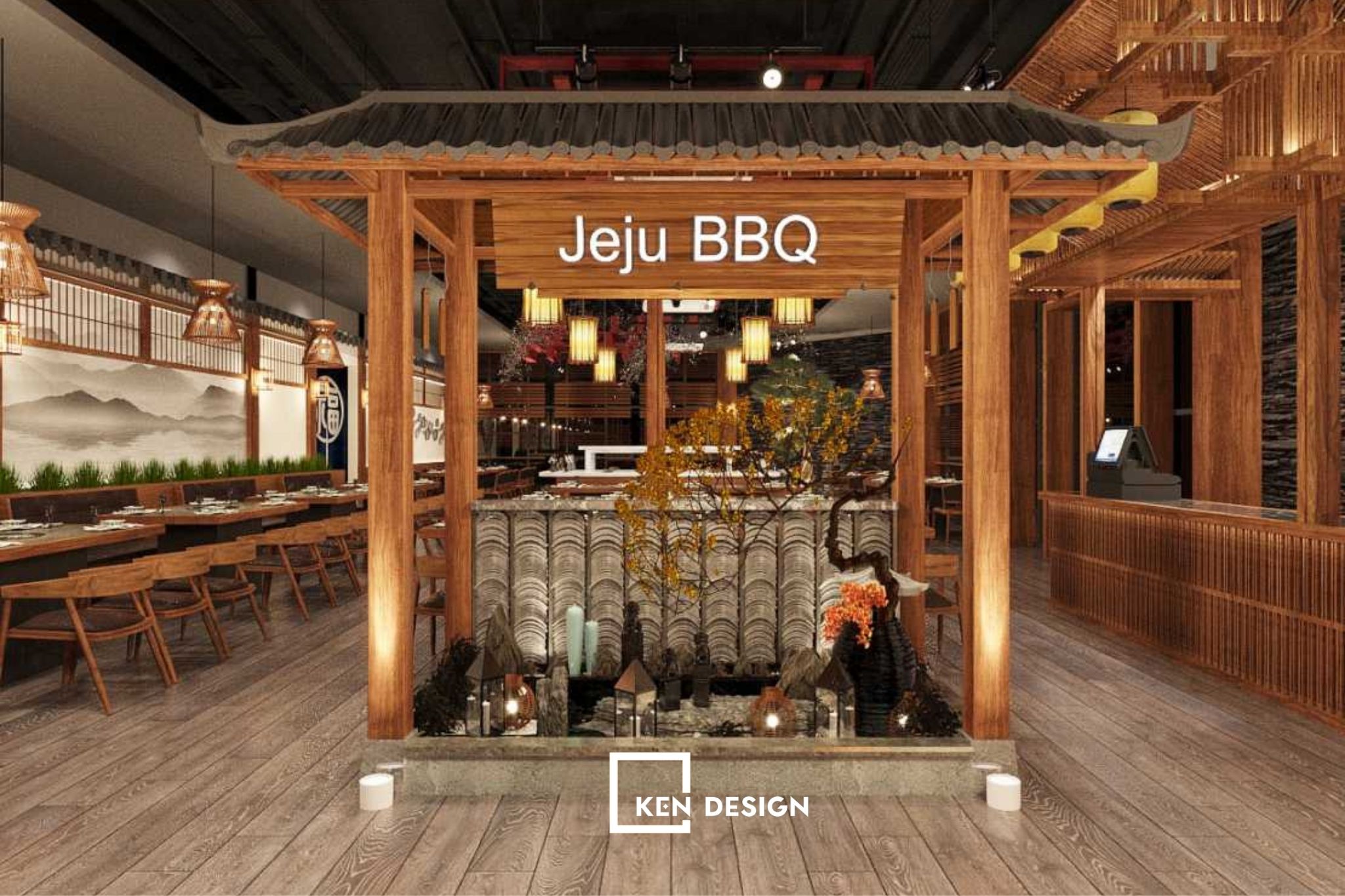
The facade plays a critical role in shaping first impressions and brand recognition. The design incorporates extended tiled roof forms reminiscent of traditional village houses, combined with brick surfaces and wooden slats to evoke the image of a Northern Vietnamese village gate.
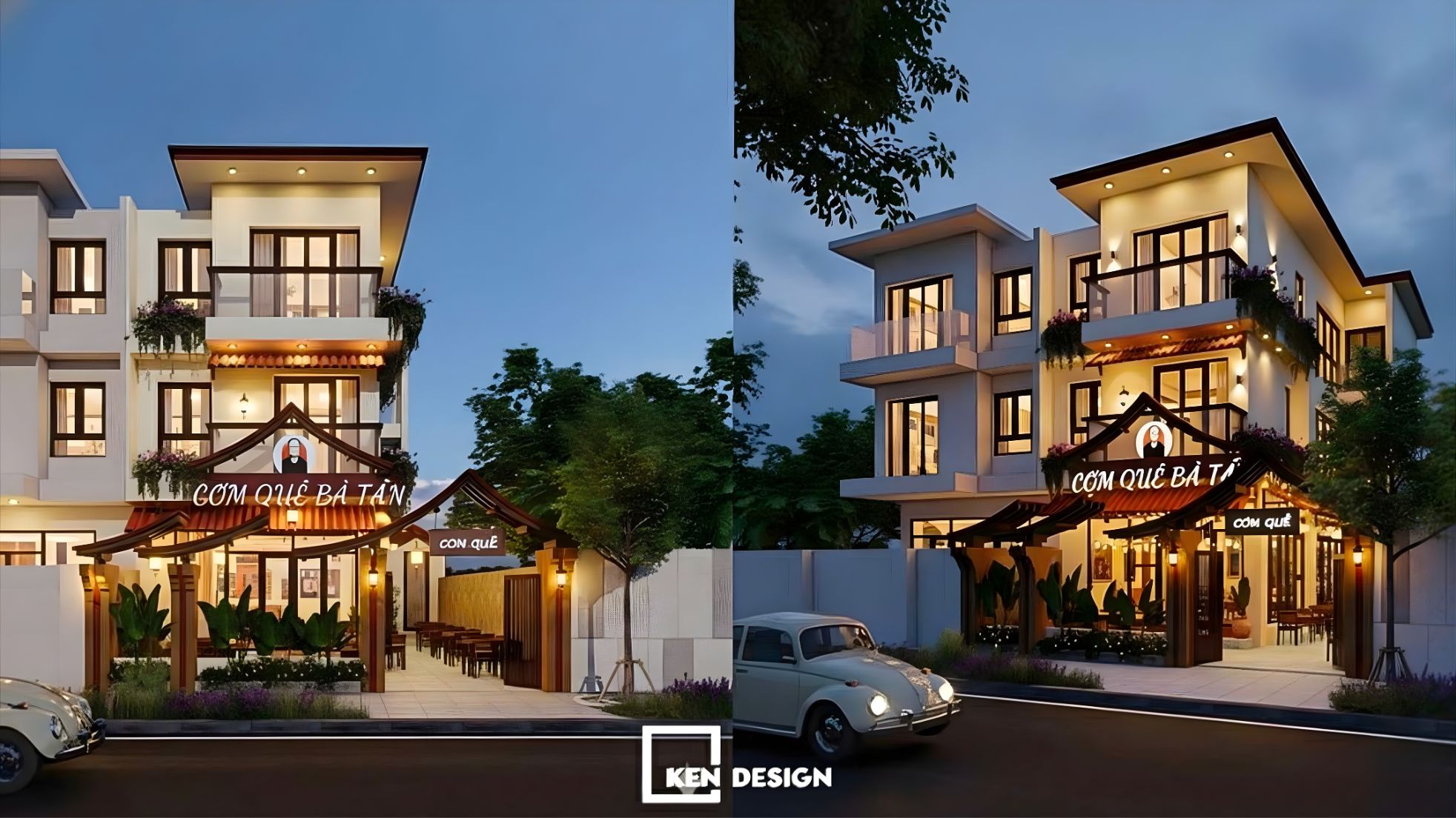
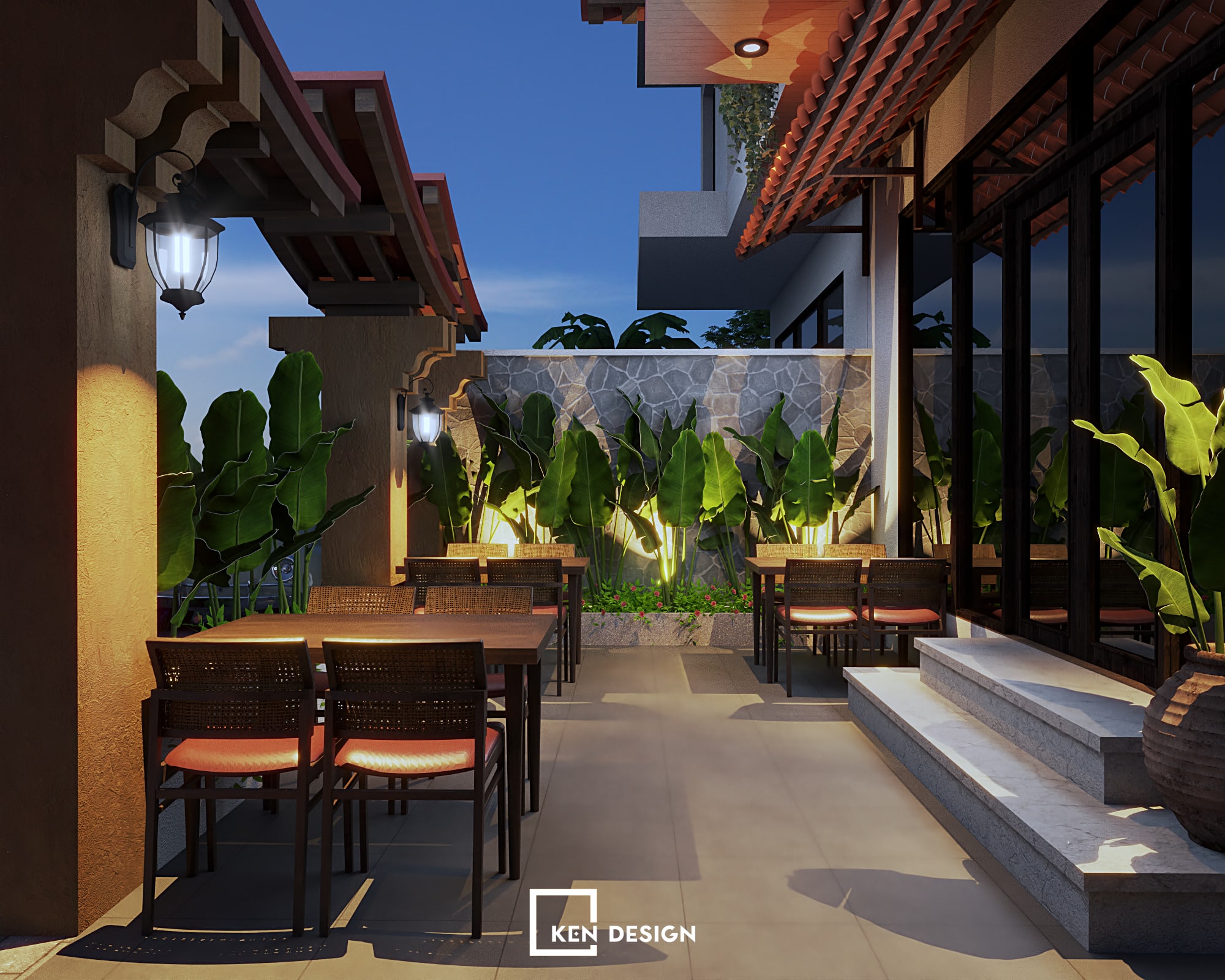
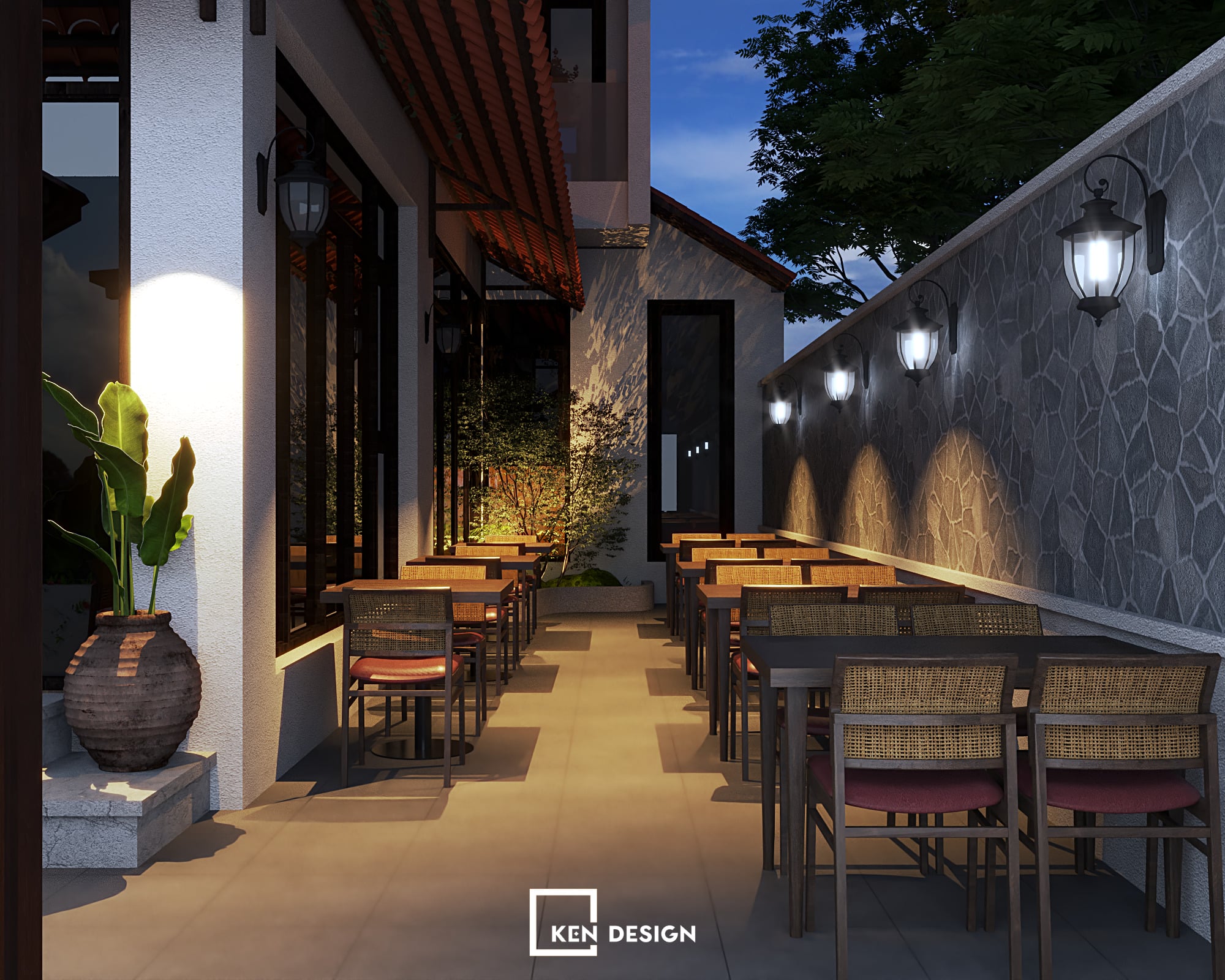
The outdoor seating area at the front acts as a transitional buffer between the street and the interior. In the evening, warm yellow lighting highlights the roof structure and materials, creating a welcoming and familiar atmosphere that naturally attracts attention from passersby.
6. Materials and Furniture Selection
Material selection follows principles of locality, durability and cost efficiency. Dark-toned wood is used for tables, chairs, counters and arch frames, creating a warm and grounded feeling. Woven bamboo and rattan appear in seating, pendant lights and ceiling elements, softening the space visually.
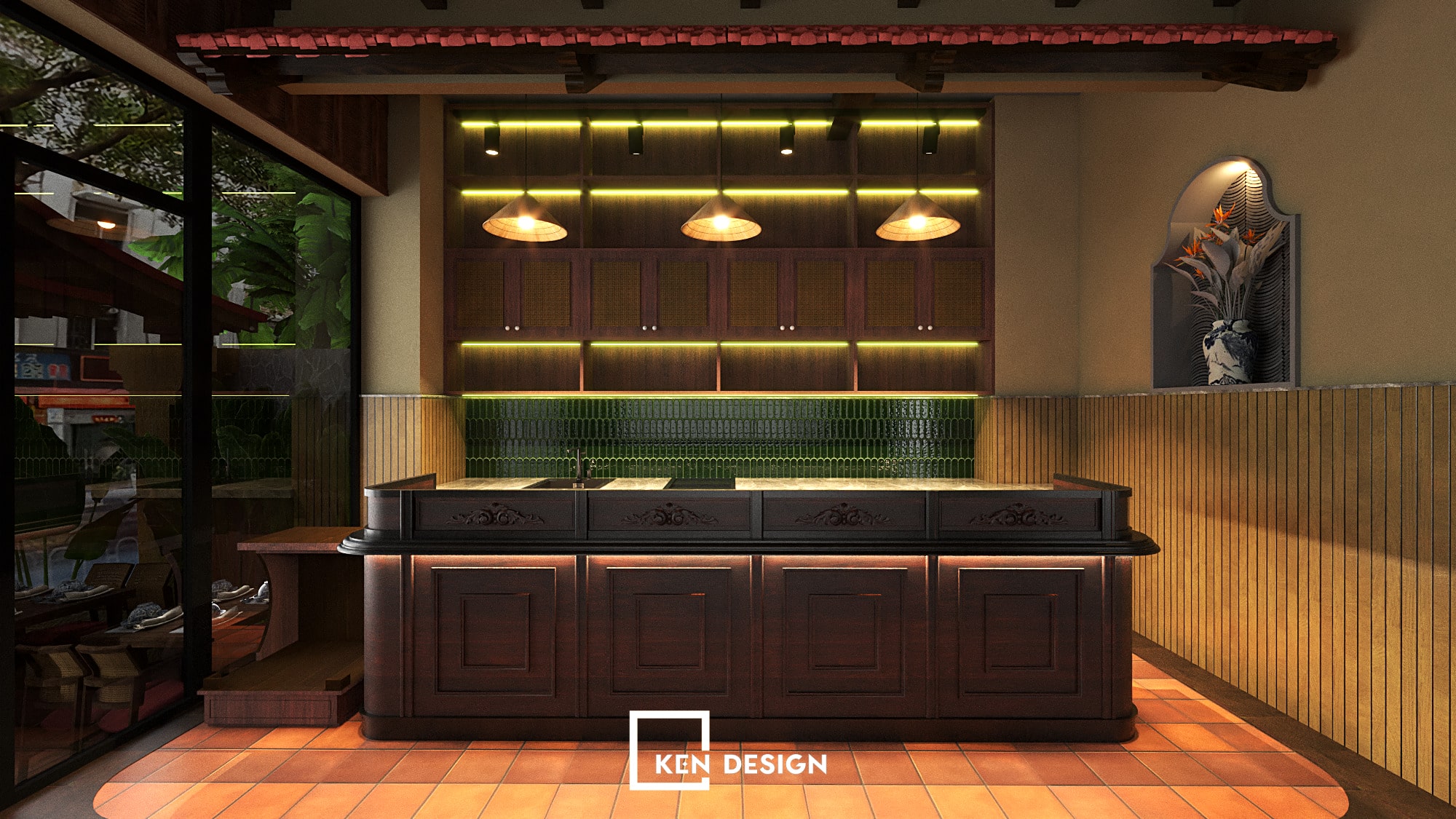
Red brick, green ceramic tiles and earth-toned textured paint finishes are applied strategically to recall Northern Vietnamese rural architecture. These materials are not only conceptually appropriate but also easy to maintain, making them well-suited for restaurant operations.
7. Color Palette and Lighting
The dominant color palette consists of warm and muted tones such as earthy yellow, olive green and dark wood brown. These colors evoke nostalgic memories of rural life while being refined enough to avoid an outdated appearance.
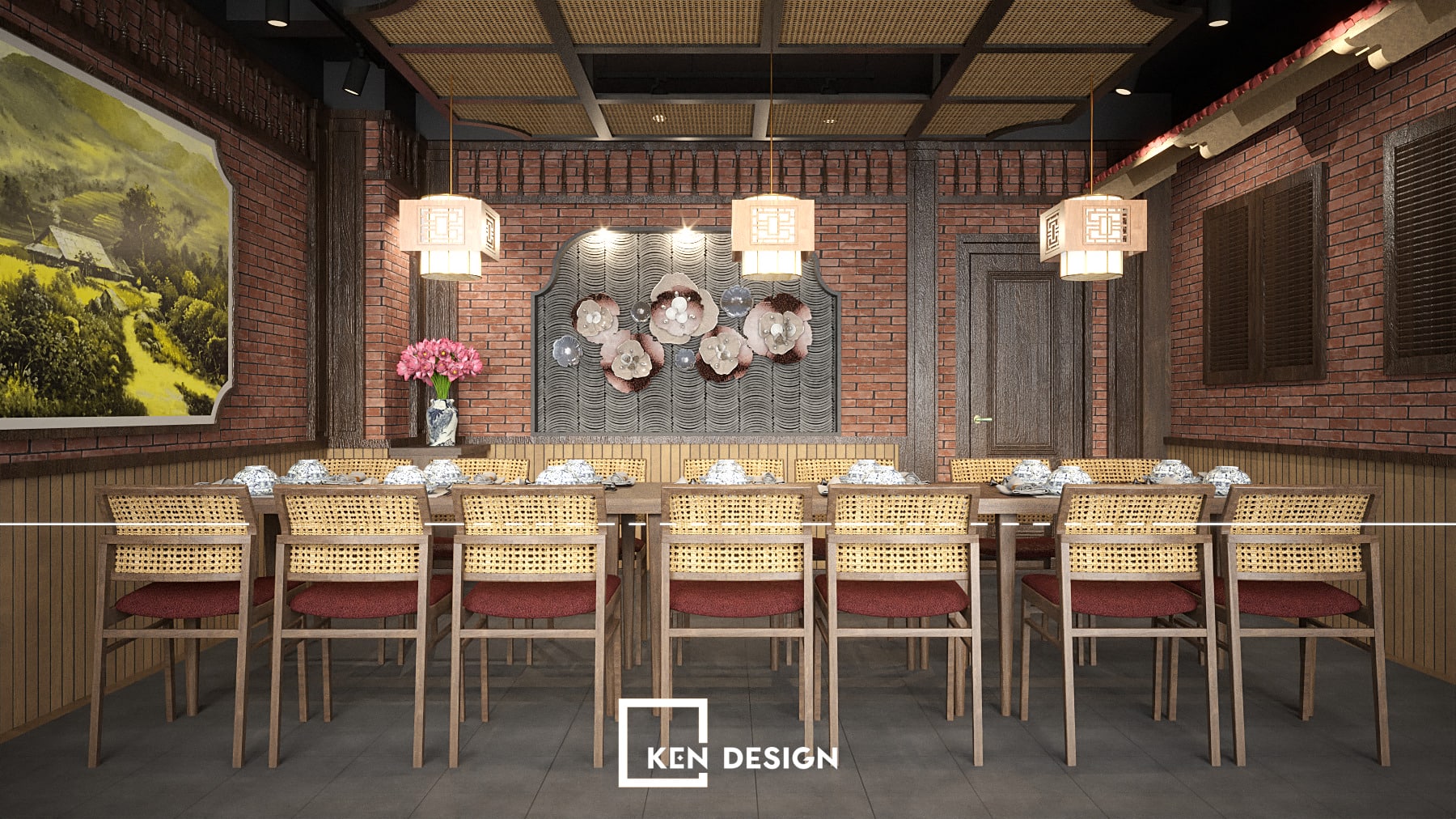
Warm lighting is used throughout the restaurant, combined with natural daylight from the large windows. The lighting system is layered, including ambient lighting, table-focused pendant lights and wall washers. This approach enhances comfort, visual depth and allows guests to enjoy long dining experiences without fatigue.
8. Key Design Highlights
One of the most distinctive features of the project is the integration of tiled roof elements within the interior space. This symbolic gesture adds depth and creates a memorable visual identity.
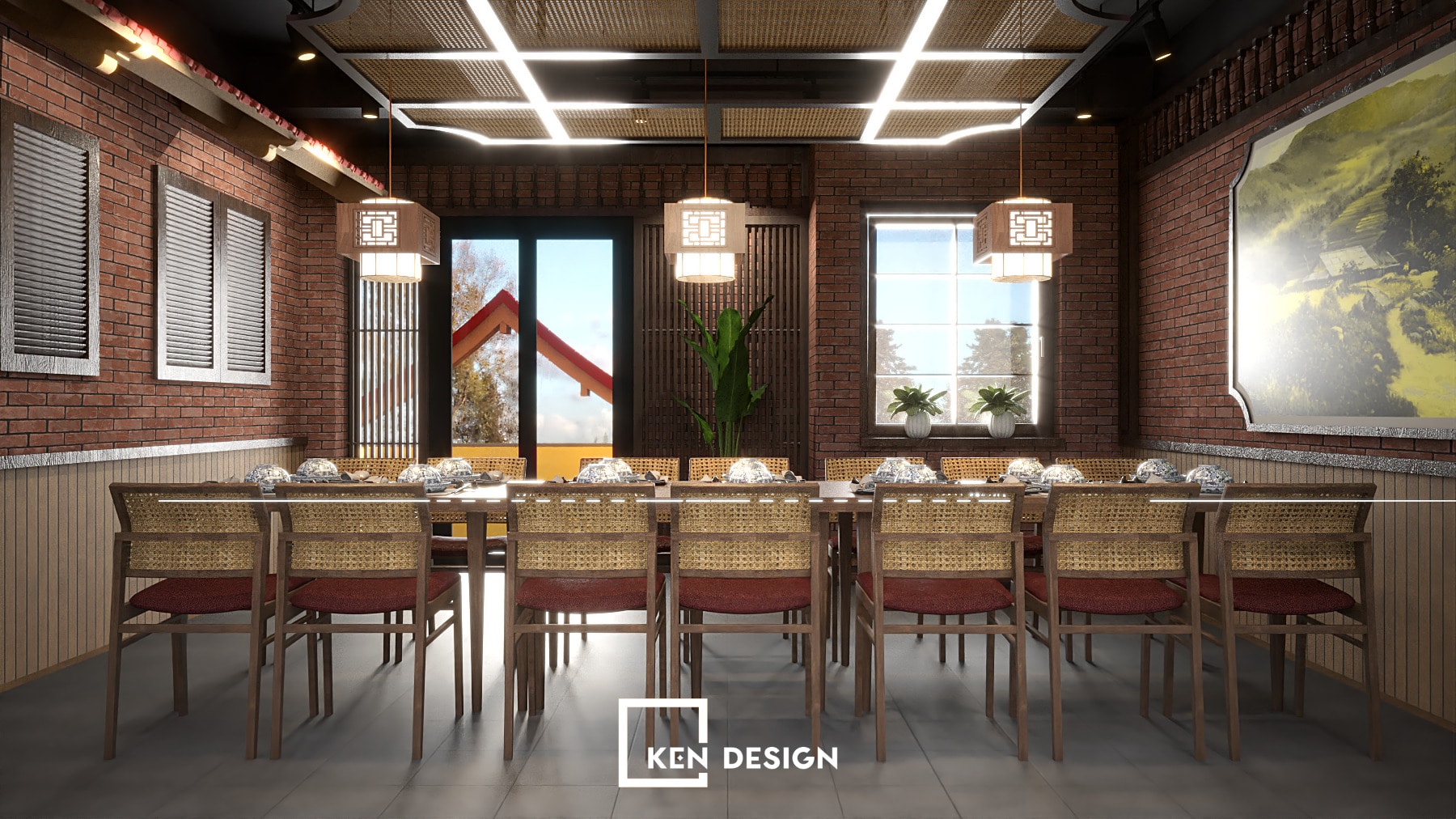
Decorative shutter-style windows, rough-textured red brick walls and woven bamboo ceilings are combined to form rich spatial layers. These elements are subtle rather than decorative-heavy, effectively conveying the spirit of rural Vietnam within a contemporary dining environment.
9. Project Value and Market Relevance
The Com Que Ba Tan restaurant demonstrates that a meaningful and aesthetically refined space does not require an excessive budget. With an investment of 400–500 million VND, the project successfully meets functional, visual and experiential requirements.
Beyond solving budget constraints, the design aligns with a broader trend in Vietnamese dining. Comfort food restaurants are no longer associated with low-end dining but are emerging as a valuable segment where emotional familiarity and spatial quality coexist.
Through this project, Ken Design showcases a flexible and strategic design approach, offering sustainable solutions for Vietnamese restaurant models that balance cultural identity, operational efficiency and contemporary aesthetics.
>>> Read more: Asian Indochine Restaurant Design in Australia: A Cultural Journey