Are you preparing to open a coworking café? Before signing a lease or choosing a contractor, read this real case study on the construction of the Flow Haus cafe coworking in Hanoi, Vietnam. KenDesign will walk you through the entire journey of completing Flow Haus Me Tri (Branch 2): from the actual condition of the site, the investor’s requirements, how we addressed them, to the final result, so you can better understand before getting started.
1. Site condition before construction of the Flow Haus cafe coworking
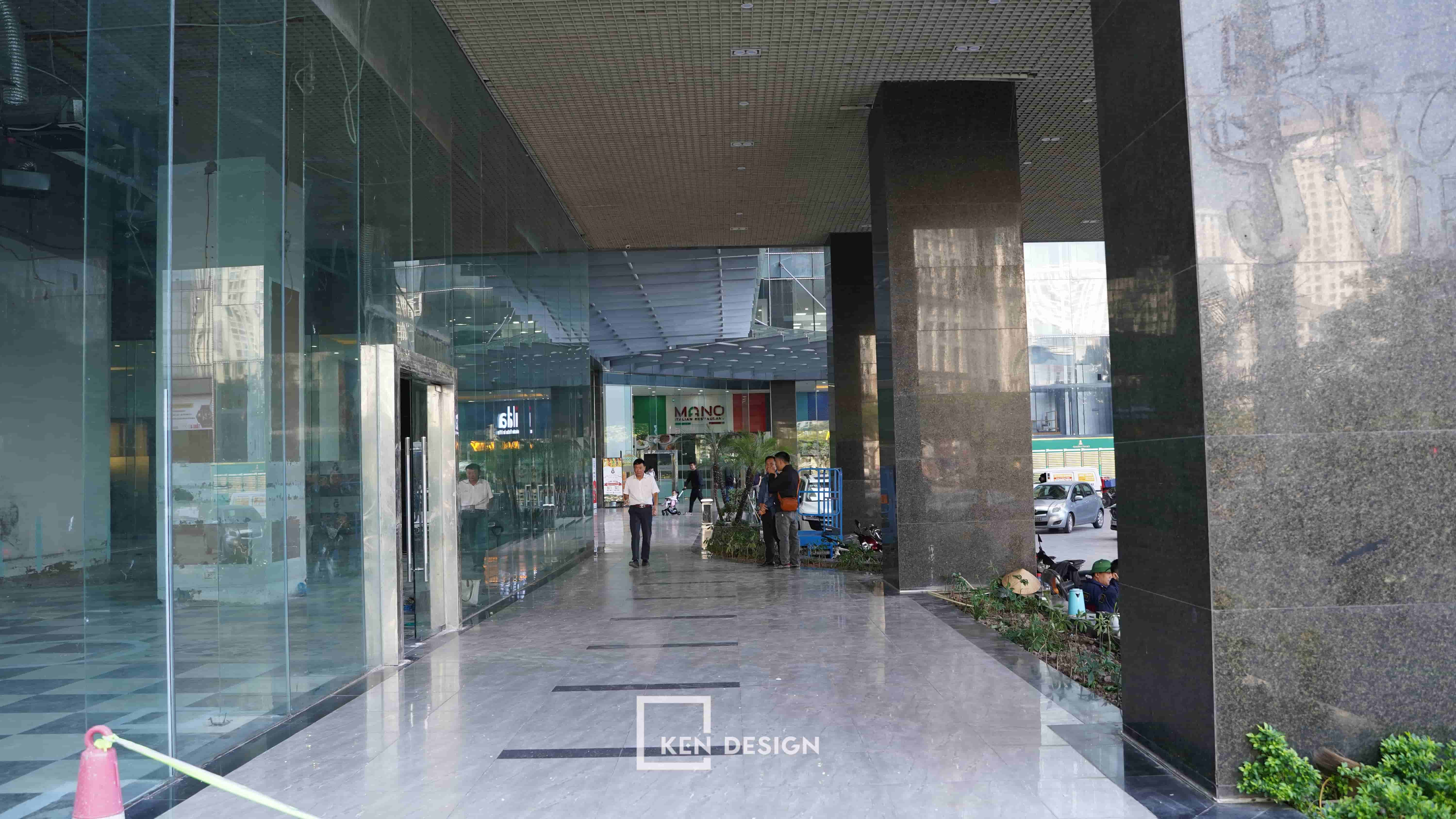
The Flow Haus Me Tri site is located on the ground floor of Golden Palace building, Me Tri, Hanoi - a location with high foot traffic and a dense residential community. In terms of location, it is an ideal choice for the construction of the Flow Haus cafe coworking in Hanoi, Vietnam. However, stepping inside revealed a completely different picture.
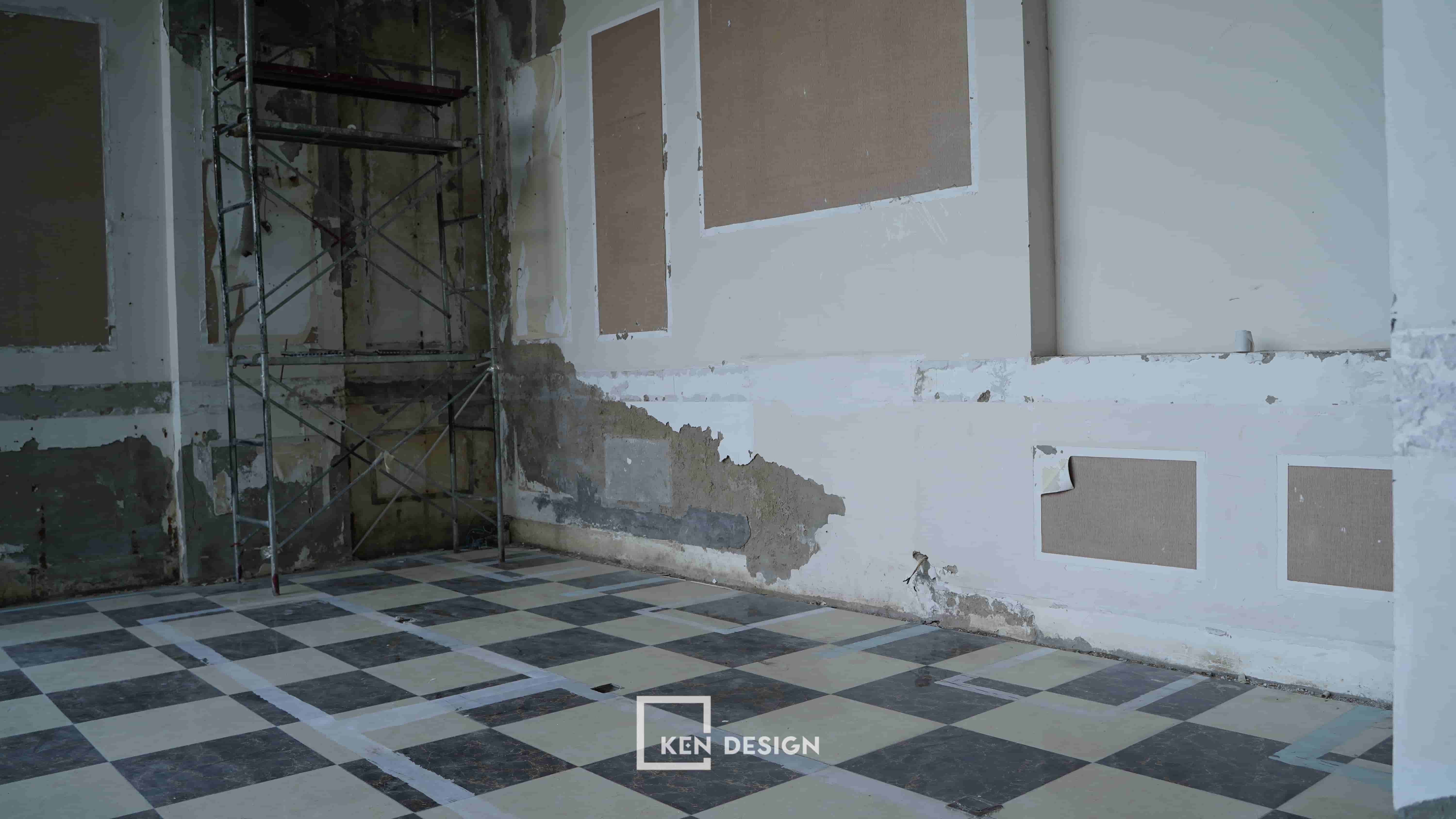
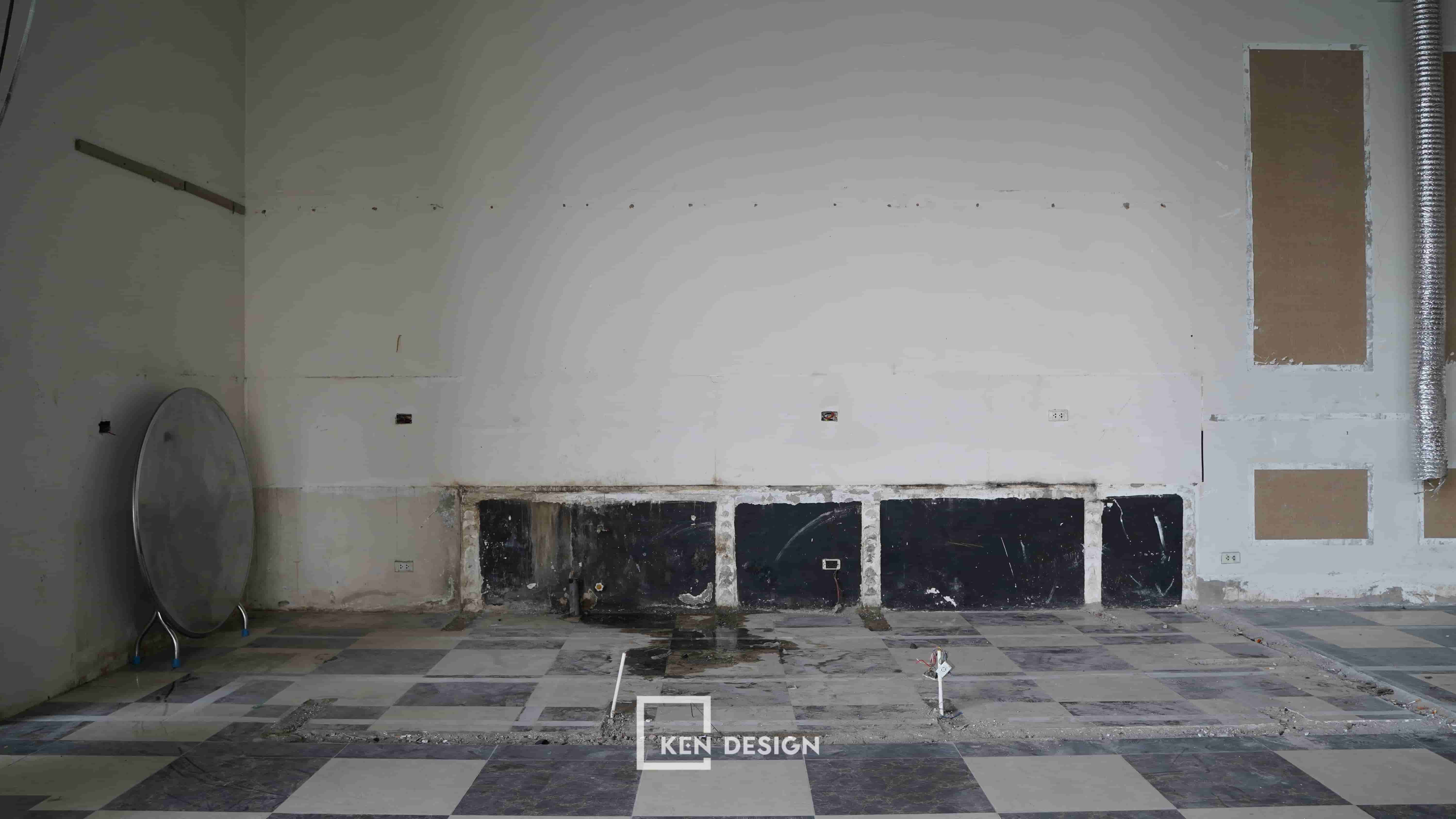
This 400m² space used to be an old café that had been operating for many years but was abandoned and severely deteriorated. Located next to a seafood restaurant, a large portion of the walls suffered from water seepage, peeling, and mold spreading onto the floor. This condition not only affected aesthetics but also posed potential health risks if not thoroughly addressed during the construction of the Flow Haus cafe coworking in Hanoi, Vietnam.
Main existing issues:
-
Moisture and peeling: Severe water seepage from the adjacent seafood restaurant caused widespread peeling and mold.
-
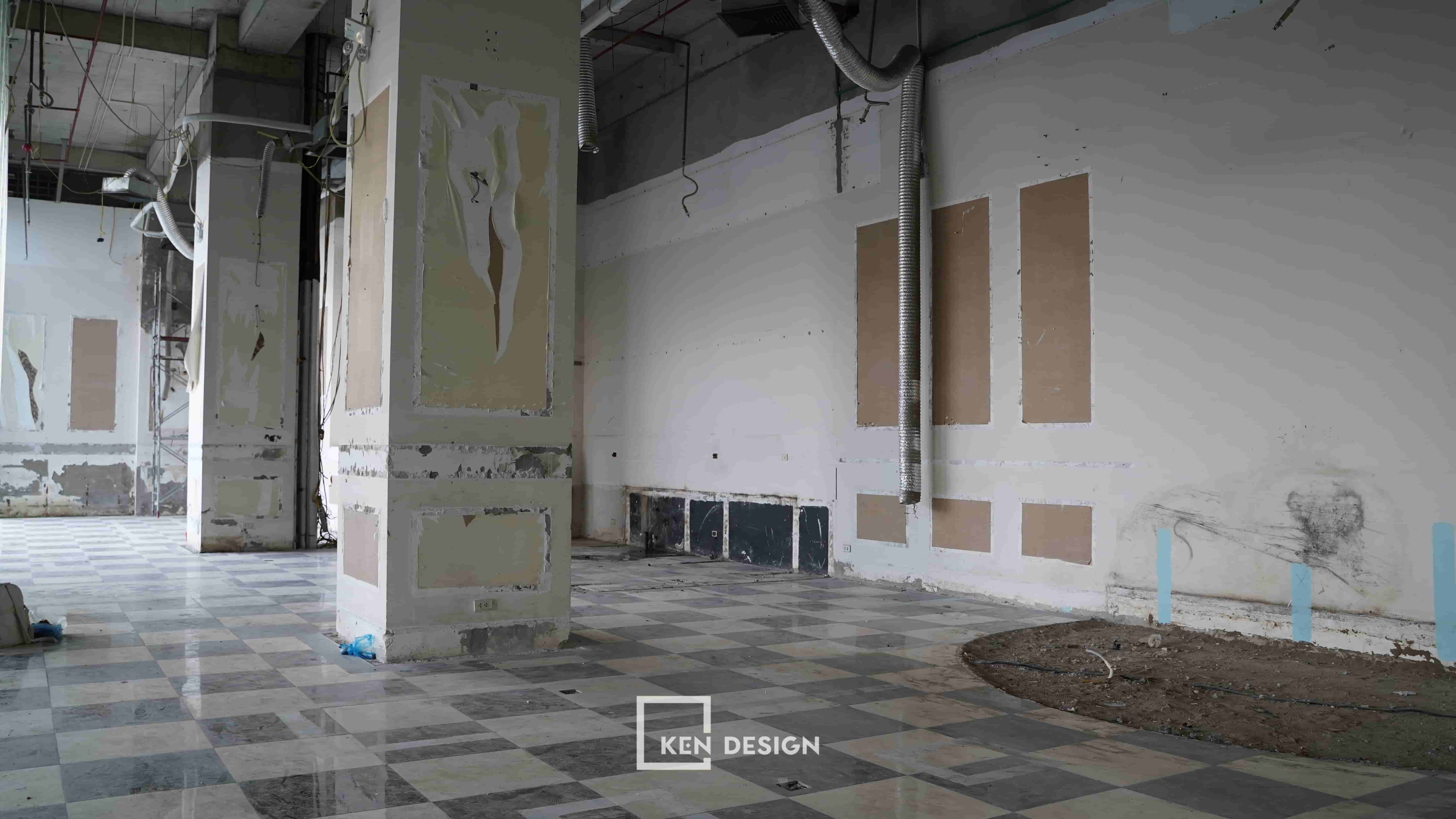
Large columns and beams dividing space: The uneven distribution of large columns and beams fragmented the space, making it difficult to arrange interiors effectively.
-
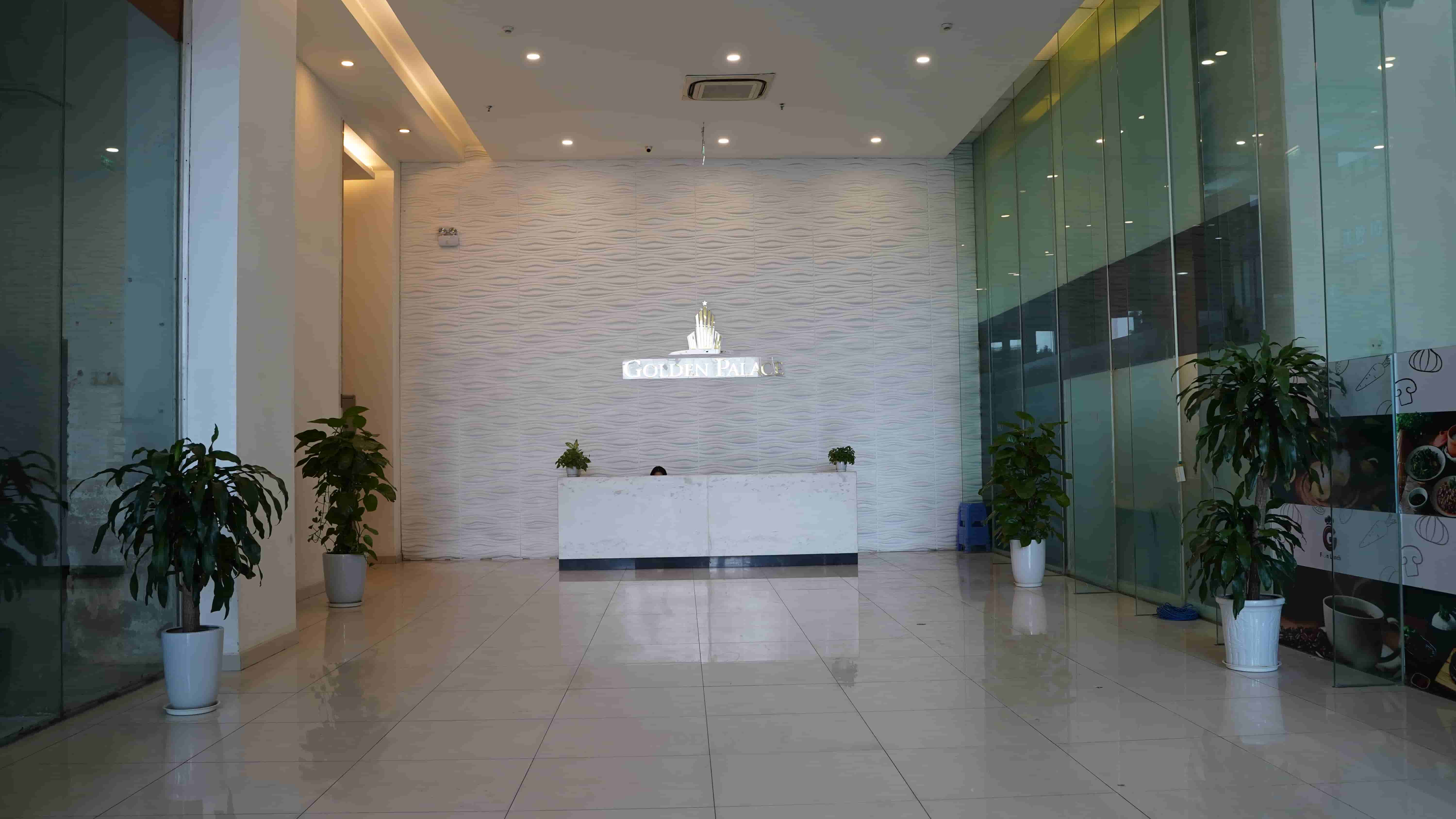
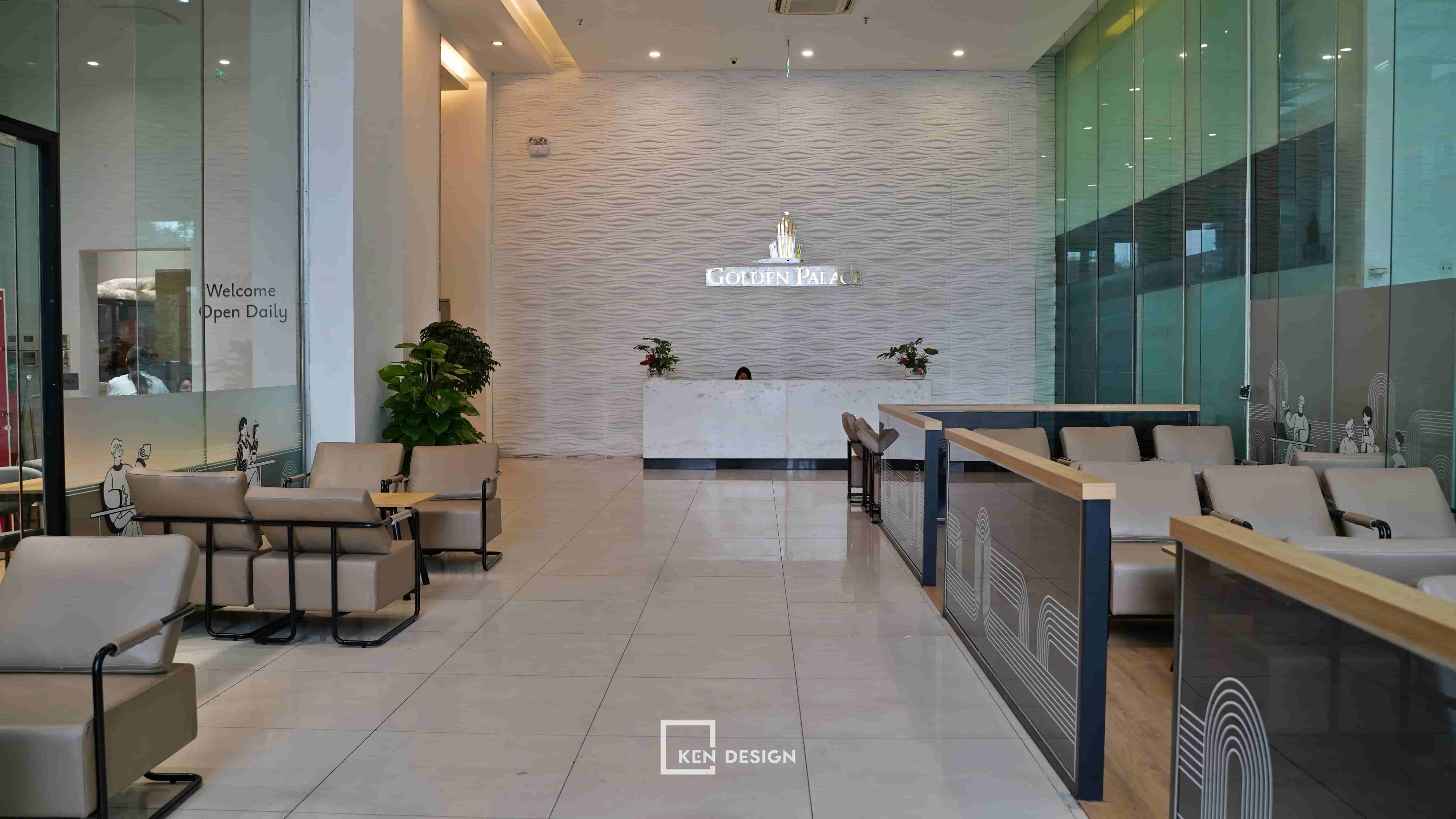
Reception lobby: The building’s reception area was spacious but unused, not yet leveraged to serve customers in the construction of the Flow Haus cafe coworking in Hanoi, Vietnam.
2. Investor’s expectations & requirements
Flow Haus is not a new brand. Branch 1 had already been successfully operating, with KenDesign accompanying from design to construction completion. Therefore, when the investor decided to open Branch 2 in Me Tri, we already had a clear mutual understanding in terms of aesthetics, operations, and expectations for the construction of the Flow Haus cafe coworking in Hanoi, Vietnam.
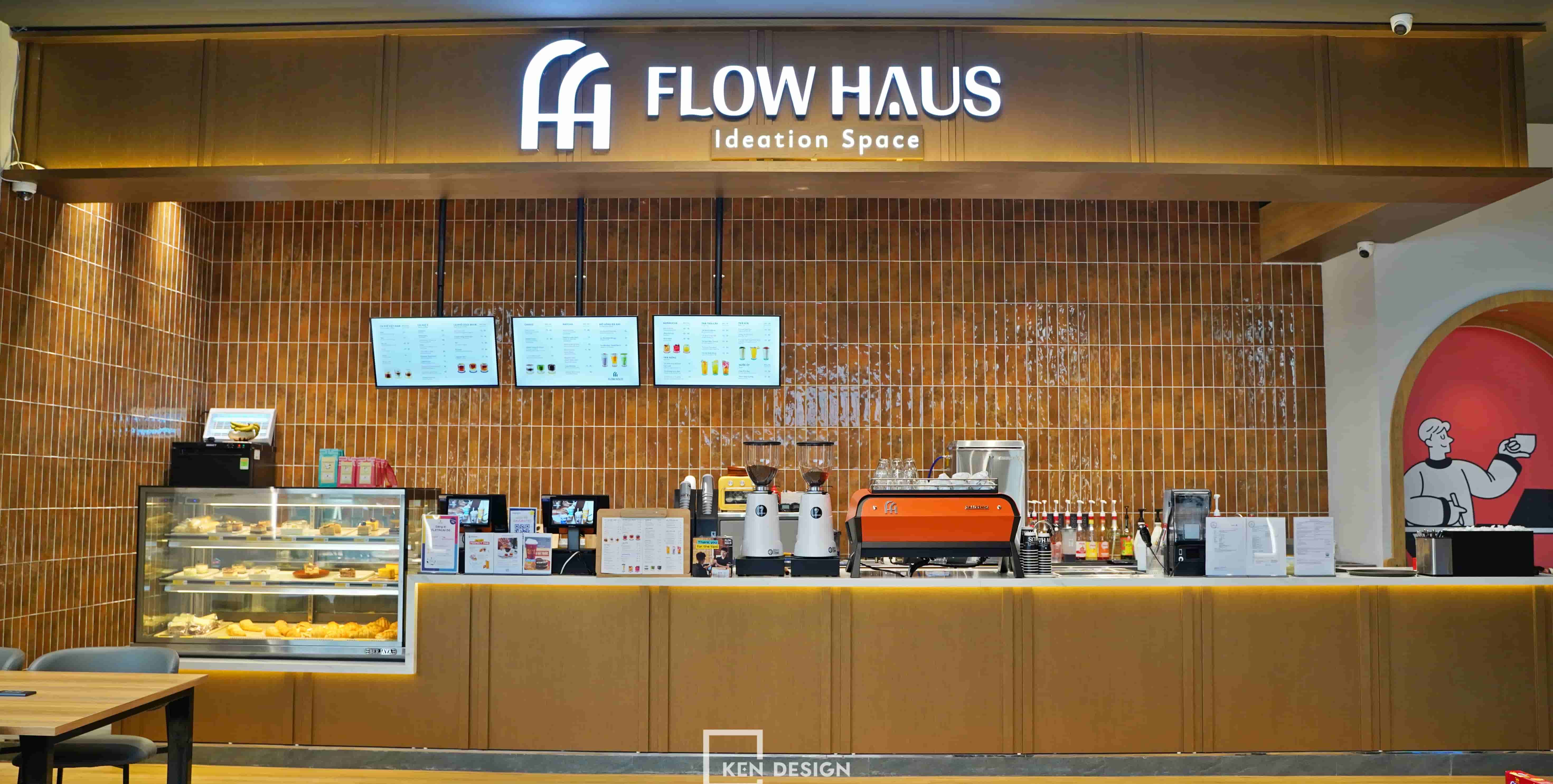
The area of Branch 2 is 400m², about 200m² smaller than Branch 1. However, the requirements did not “scale down” with the size. On the contrary, the challenge became even more complex in the construction of the Flow Haus cafe coworking in Hanoi, Vietnam.
Specific requirements:
-
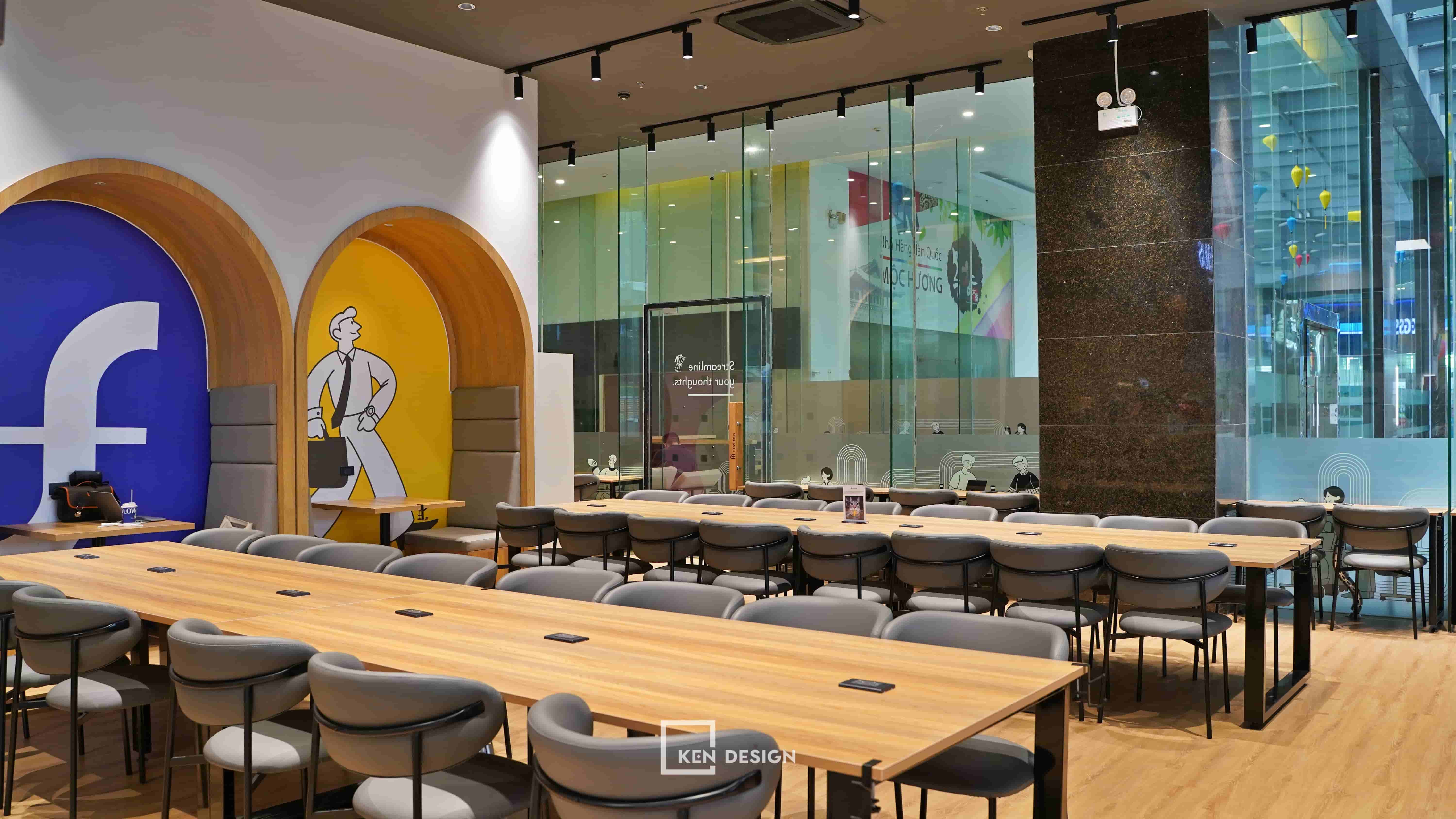
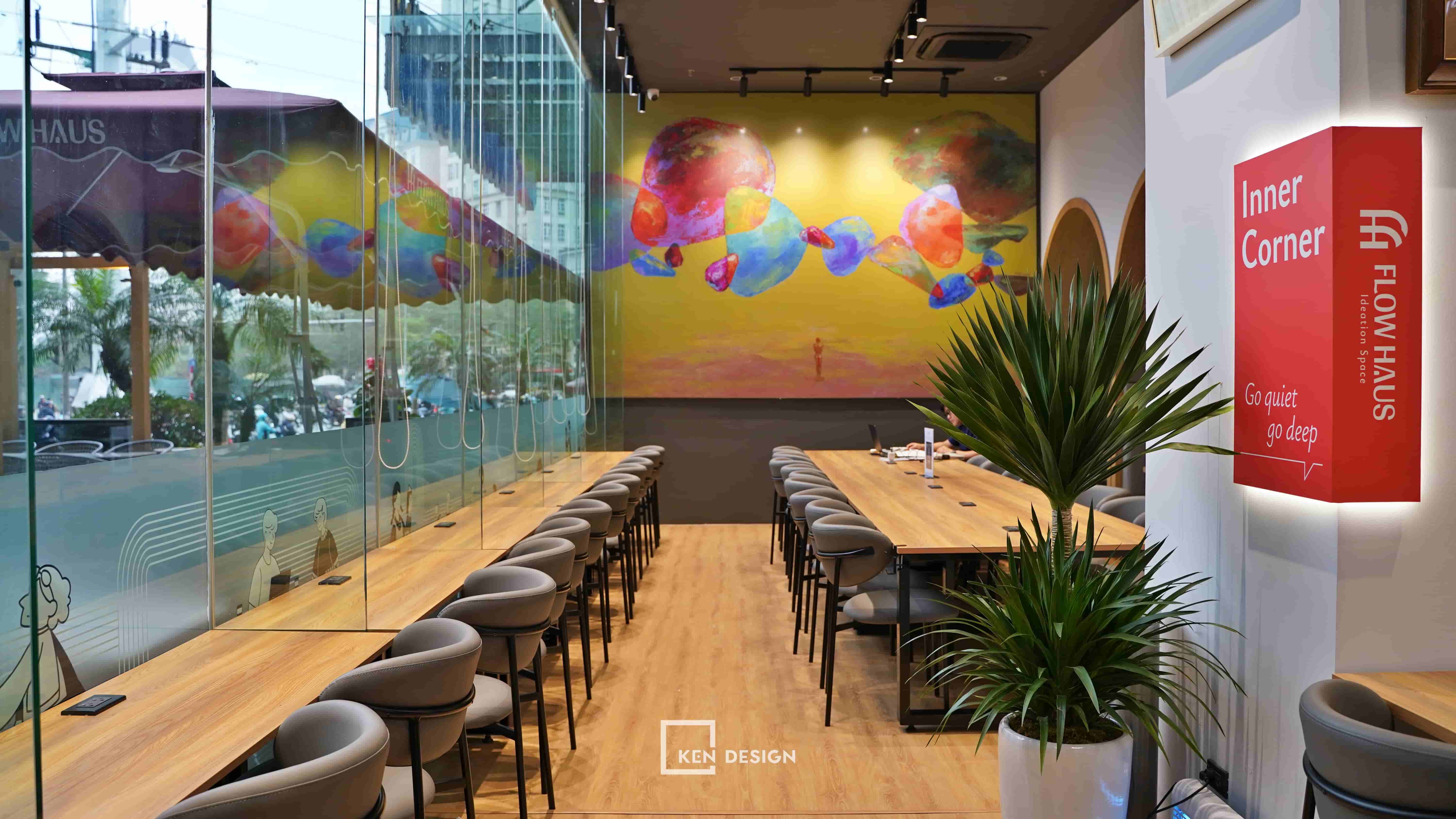
80/20 functional allocation: 80% of the space for coworking, working and studying areas; 20% for café beverage service. This is the most sought-after modern workspace café model among young professionals.
-
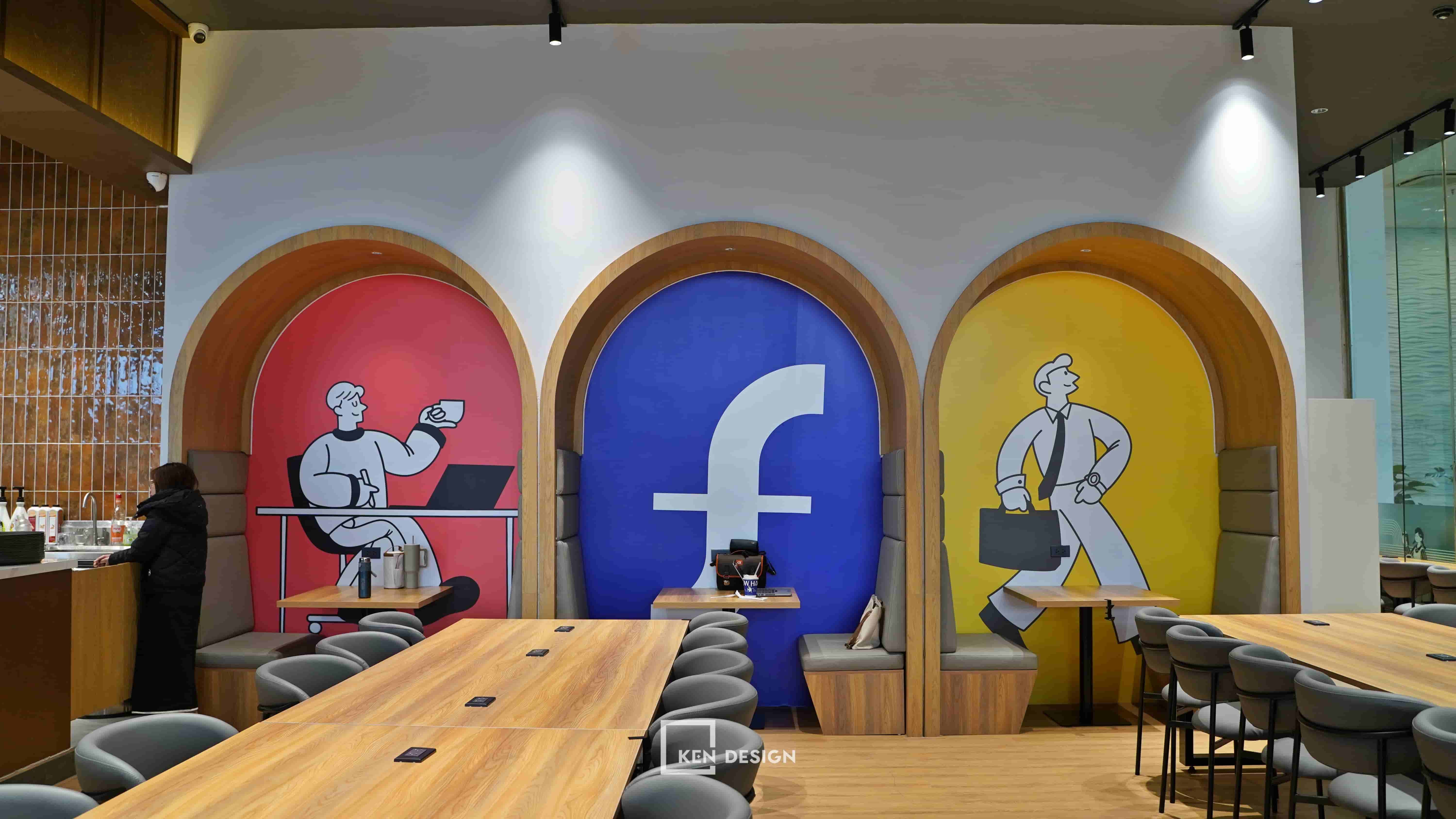
Maintain the design DNA of Branch 1: The Flow Haus brand identity - from colors and materials to design language must remain consistent so returning customers feel “familiar yet new” in the construction of the Flow Haus cafe coworking in Hanoi, Vietnam.
-
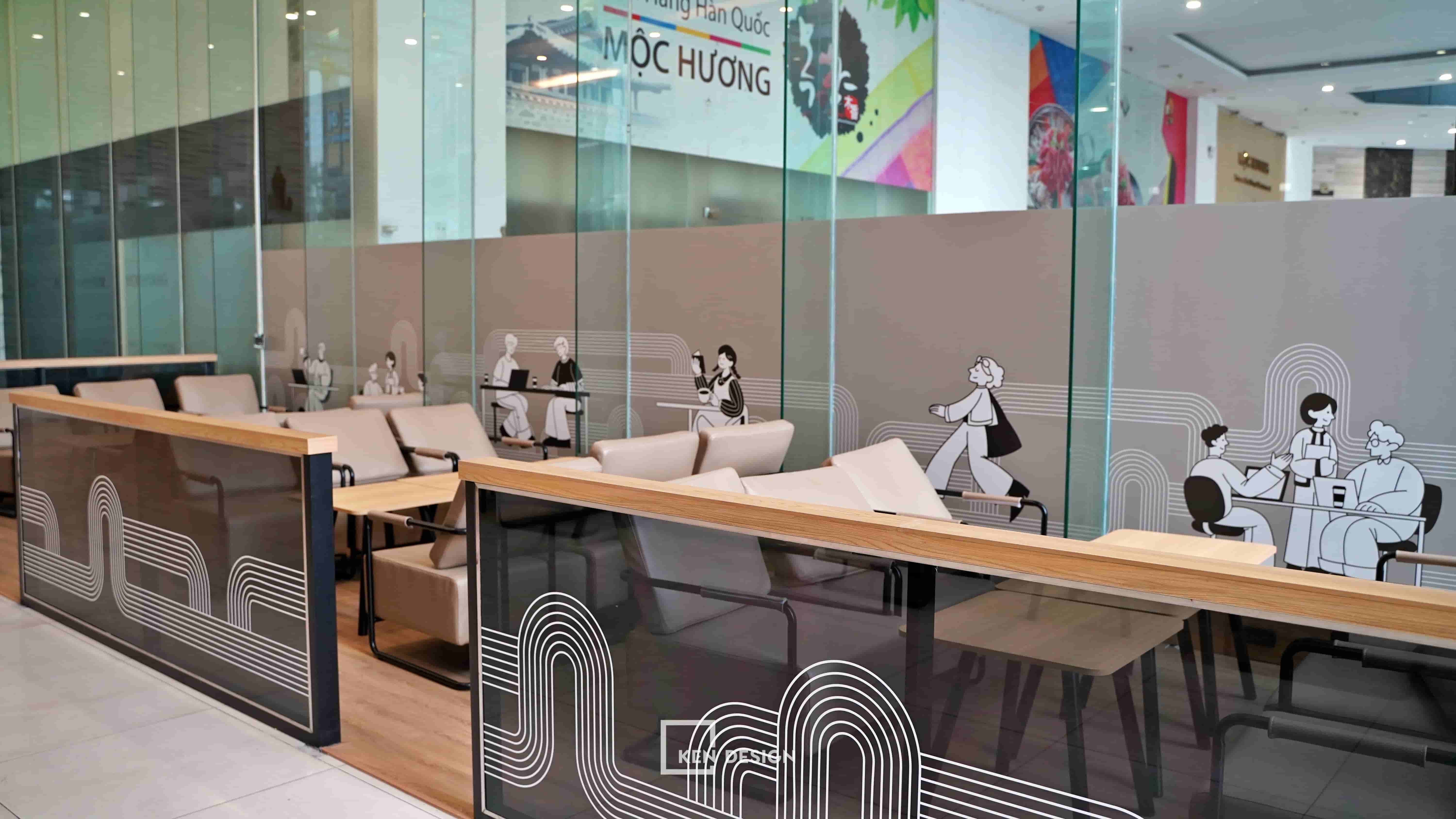
Optimize seating capacity: Despite the smaller area, the investor required more seating in a smart layout without creating a cramped or low-quality experience.
-
Thorough waterproofing treatment: This was a mandatory condition before opening. The investor placed strong emphasis on customer health experience.
-
Faster timeline than Branch 1: Based on prior collaboration, the investor expected a shorter construction time to meet the business launch schedule.
3. KenDesign’s construction solutions for the construction of the Flow Haus cafe coworking in Hanoi, Vietnam
After thoroughly surveying the site and understanding the requirements, we divided the construction strategy into three main solution groups for the construction of the Flow Haus cafe coworking in Hanoi, Vietnam.
3.1. Site treatment
Double-layer wall solution for waterproofing
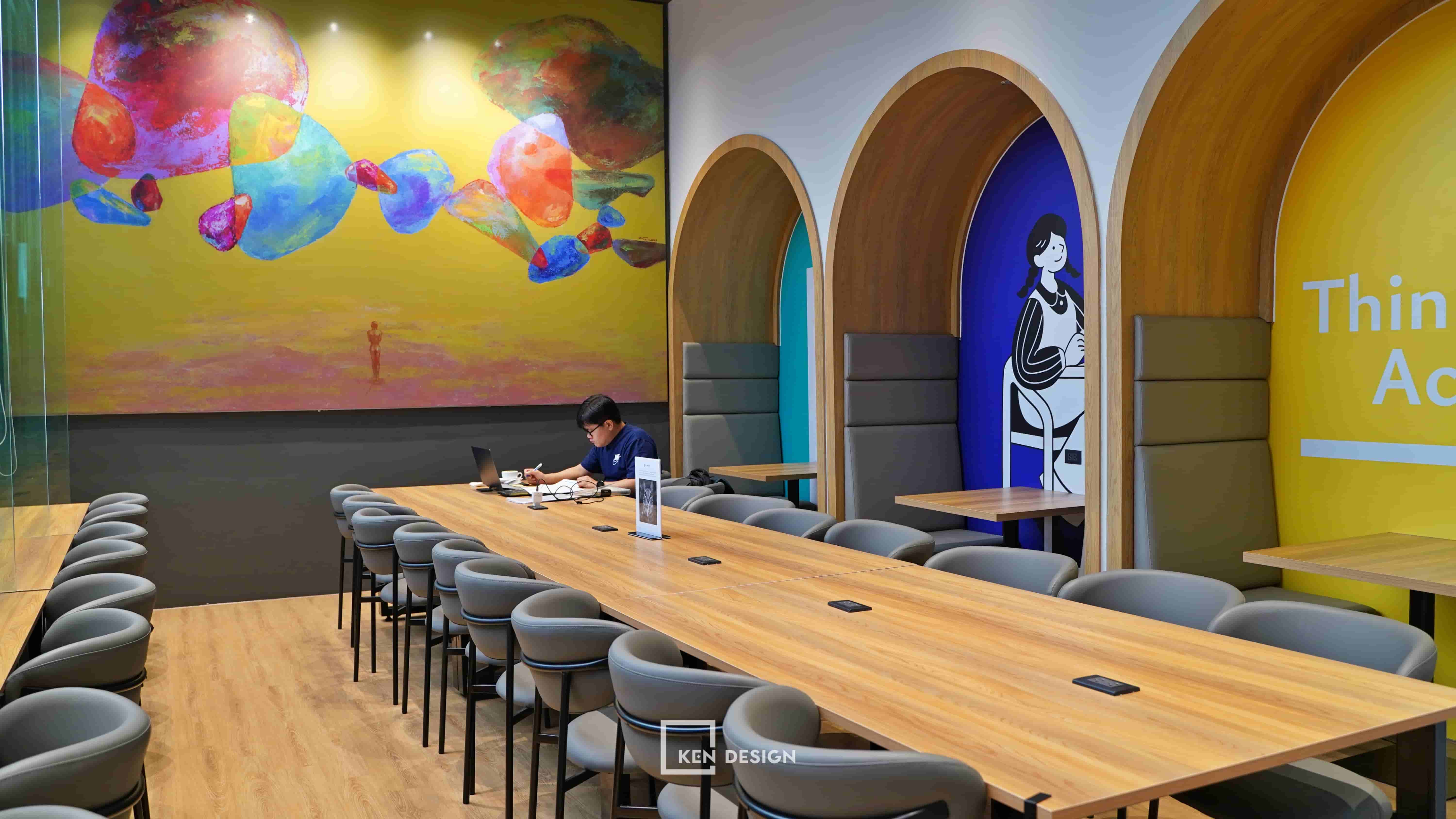
Instead of simply repainting the surface - a quick fix often used by fast contractors. We proposed a complete treatment of affected walls, followed by installing a separate gypsum layer detached from the original wall.
This “double-wall” technique creates a physical gap between the moisture source and the interior surface, ensuring that even if humidity from the adjacent seafood restaurant persists, the interior space remains aesthetically intact and safe in the long term during the construction of the Flow Haus cafe coworking in Hanoi, Vietnam.
This approach requires higher initial investment but saves significant maintenance and repair costs later.
Reconfiguring electrical and plumbing systems for coworking use
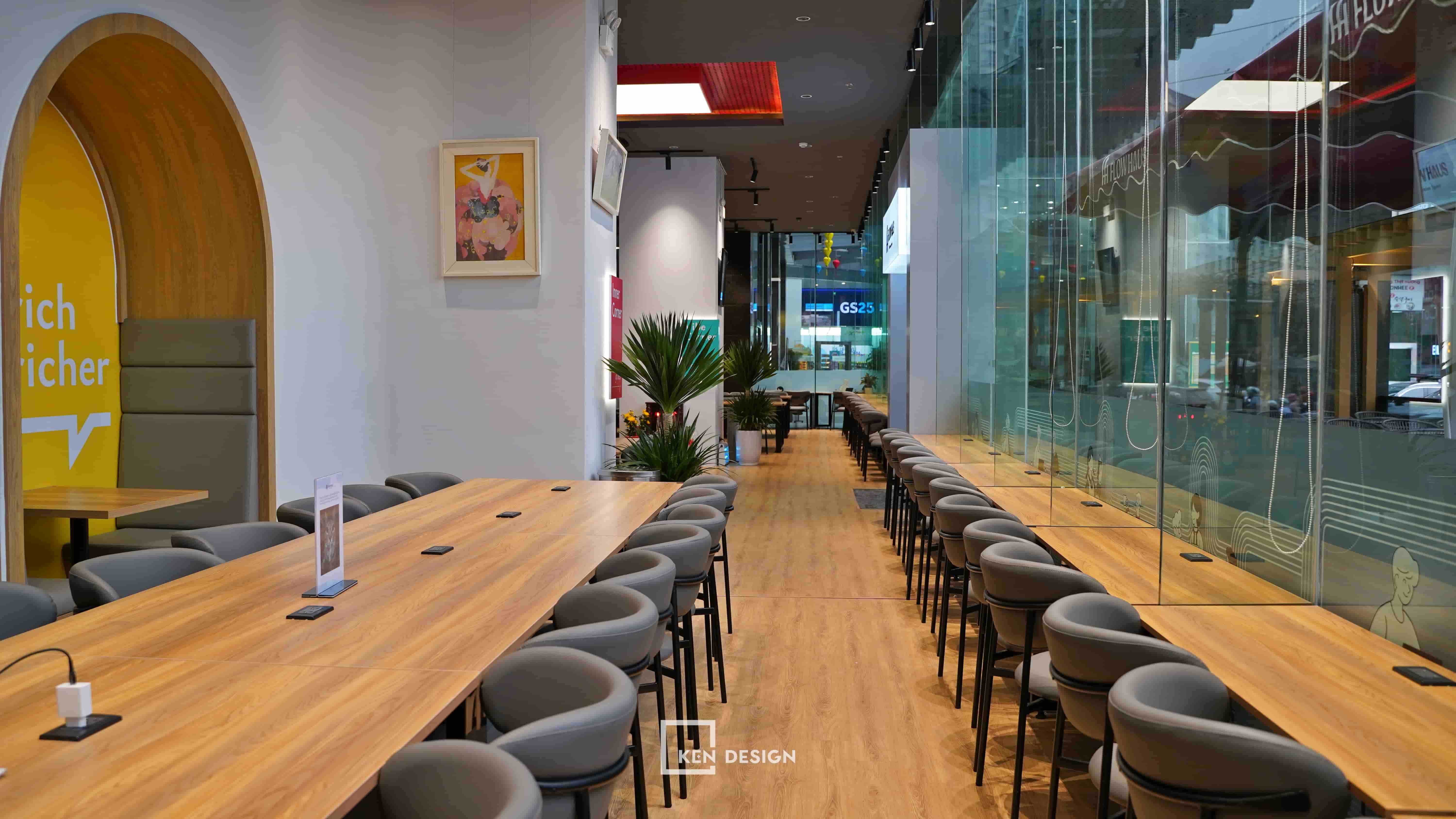
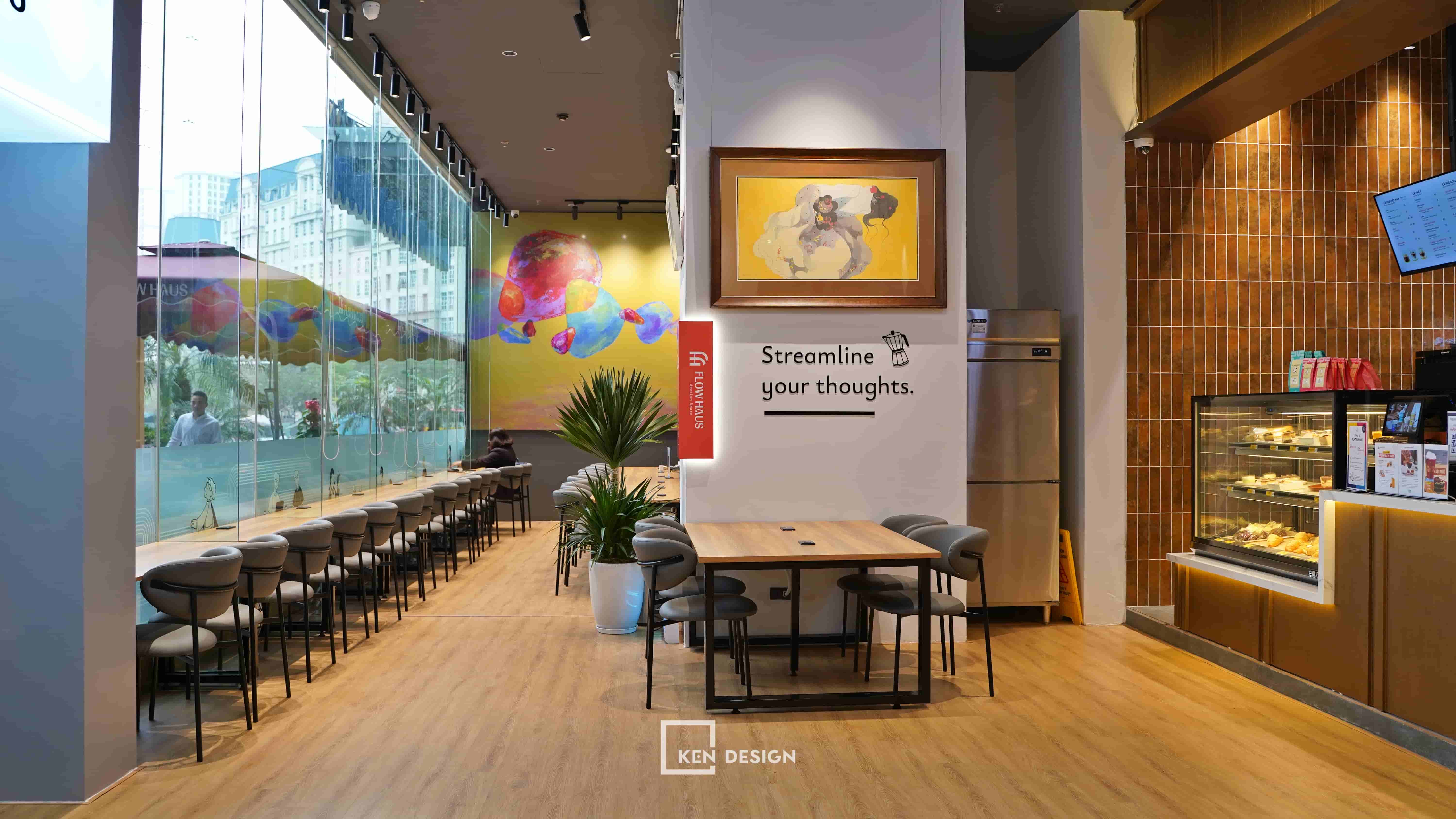
A commonly overlooked detail in coworking cafés: power outlets. In a workspace model, each customer uses laptops, phones, and sometimes additional monitors. We applied a standard tested from Branch 1: at least one shared outlet for every two seats, placed directly on the table surface for convenience, avoiding messy wiring and long extensions from wall sockets in the construction of the Flow Haus cafe coworking in Hanoi, Vietnam.
3.2. Space optimization
This was the most challenging aspect of the project. A 400m² space with many large columns and beams, yet required to accommodate over 200 seats without feeling crowded, demanded very careful zoning strategies in the construction of the Flow Haus cafe coworking in Hanoi, Vietnam.
Eliminating meeting rooms, utilizing exterior lobby space
Unlike Branch 1, we did not include a dedicated meeting room at the Me Tri location. The reason: market research showed a lower demand for meeting room bookings compared to individual or small group work. Placing meeting rooms in a column-heavy layout would create “dead corners” and a cramped feeling, wasting space rather than optimizing it.
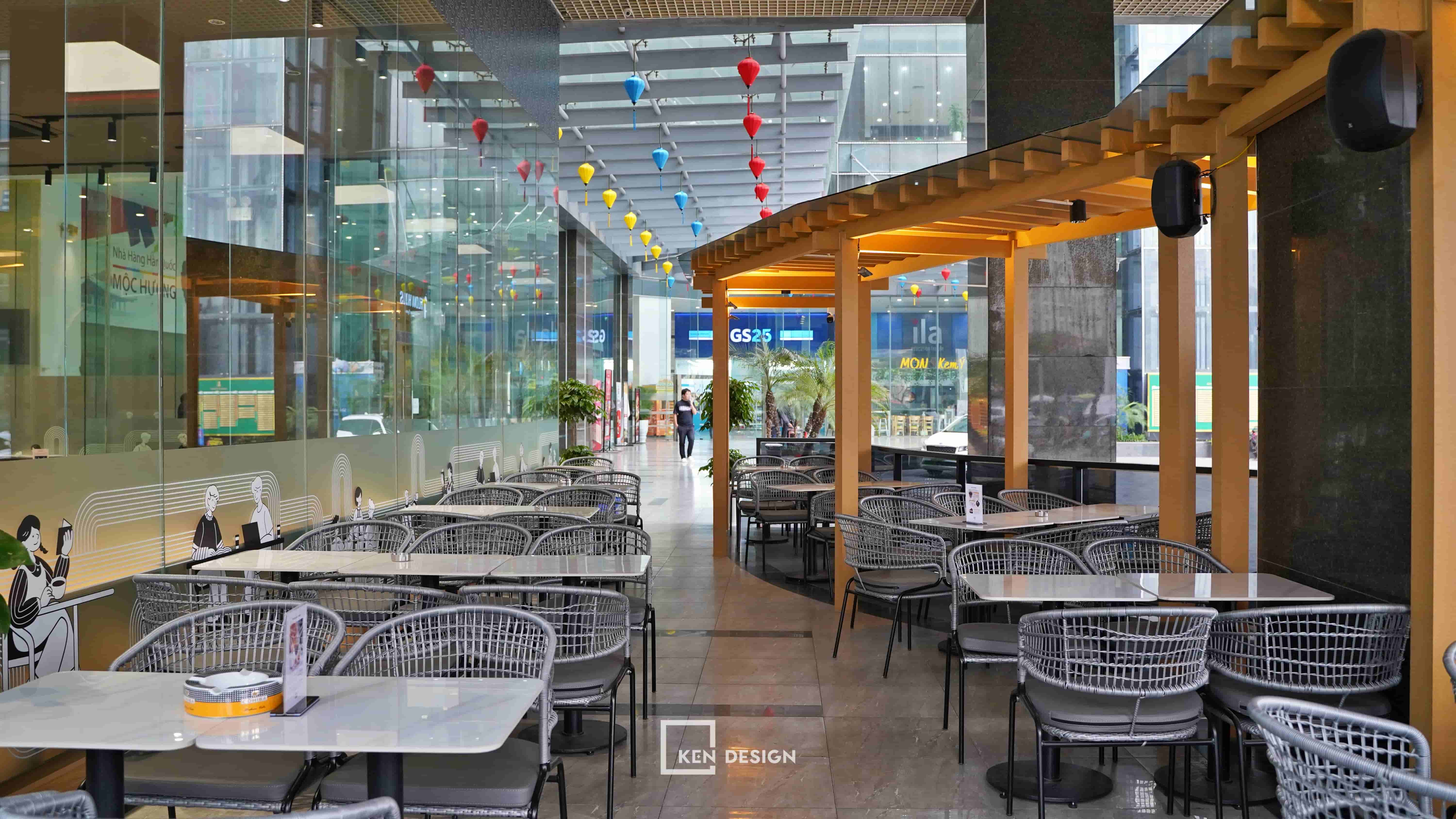
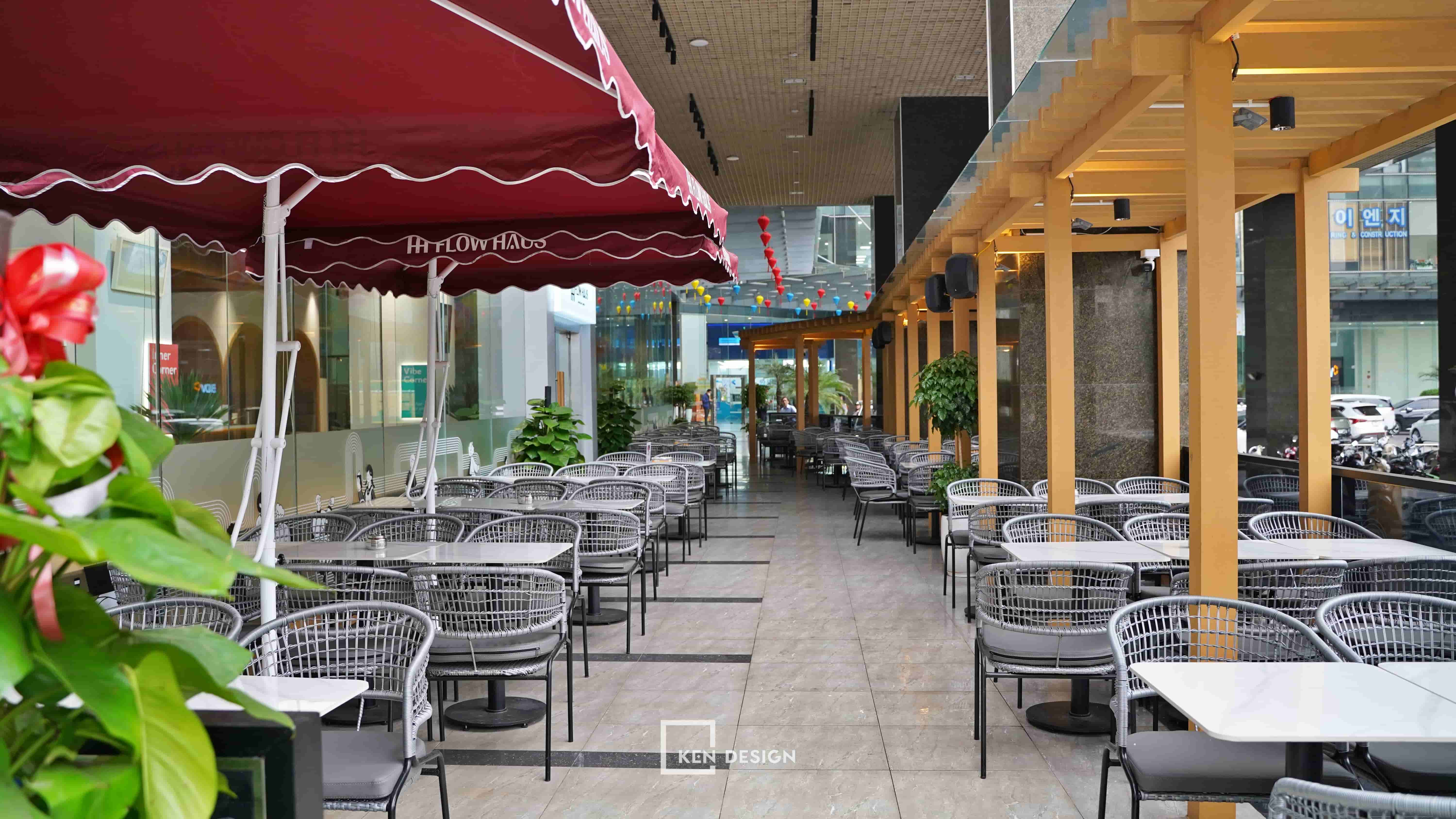
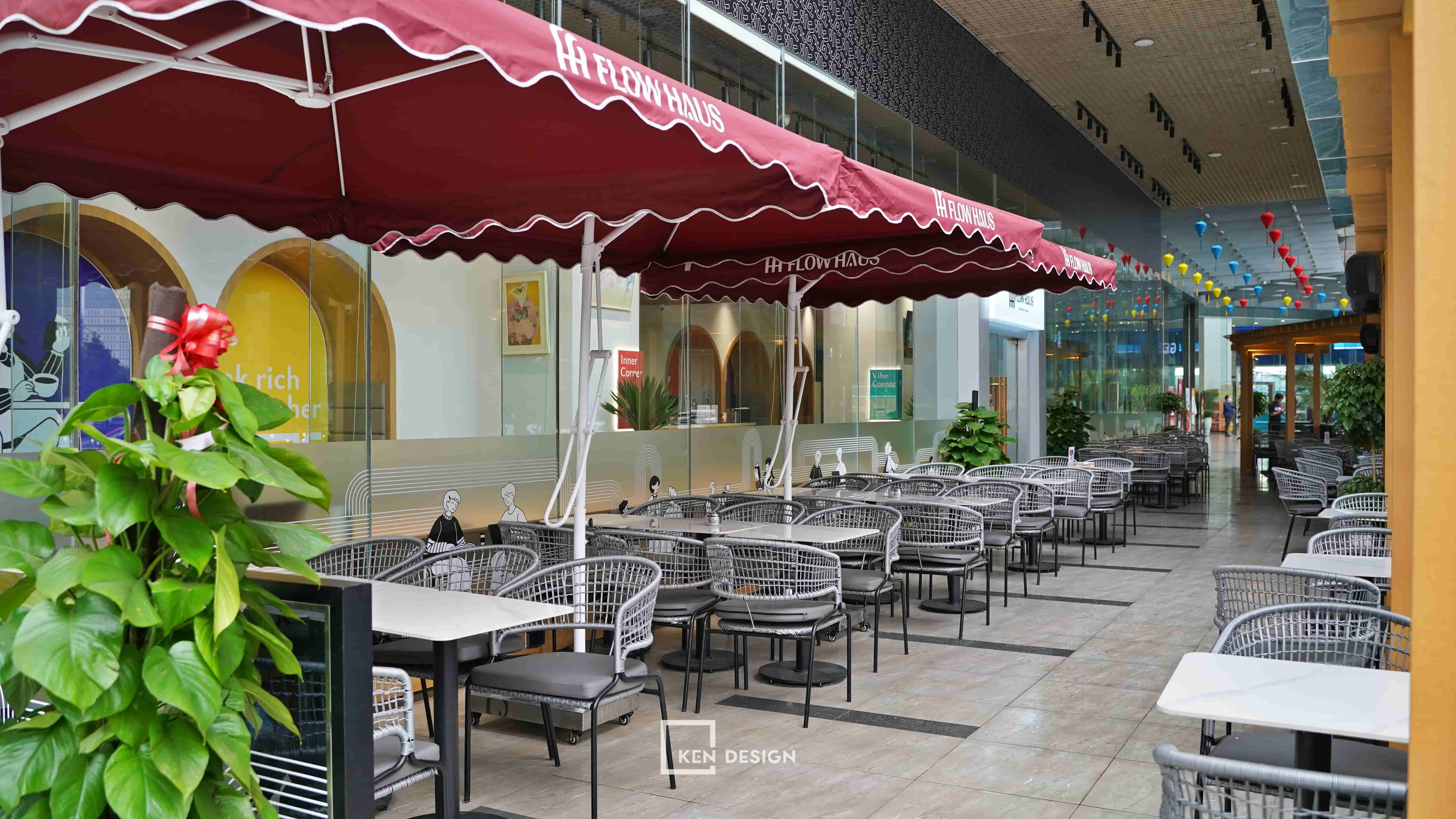
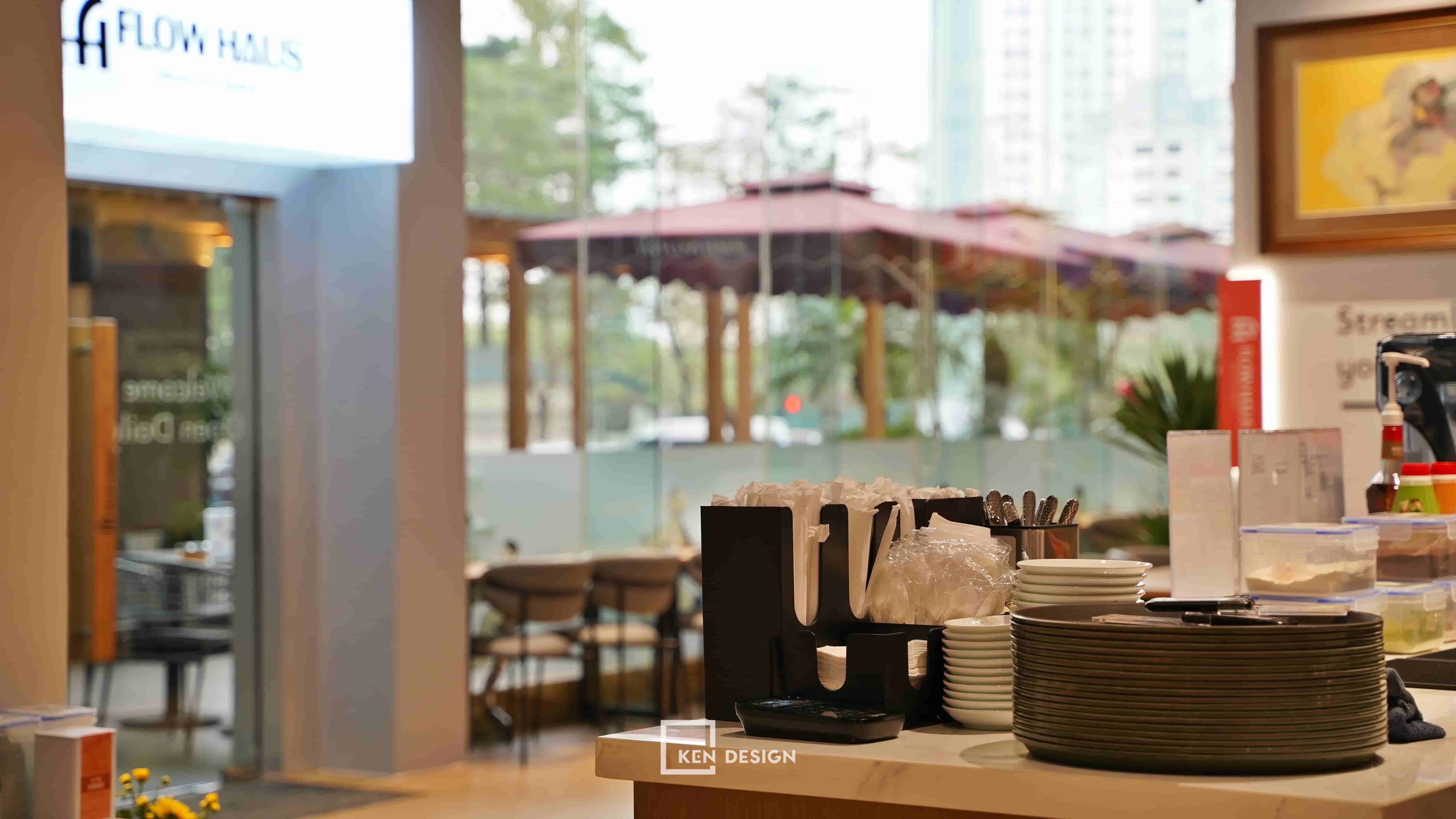
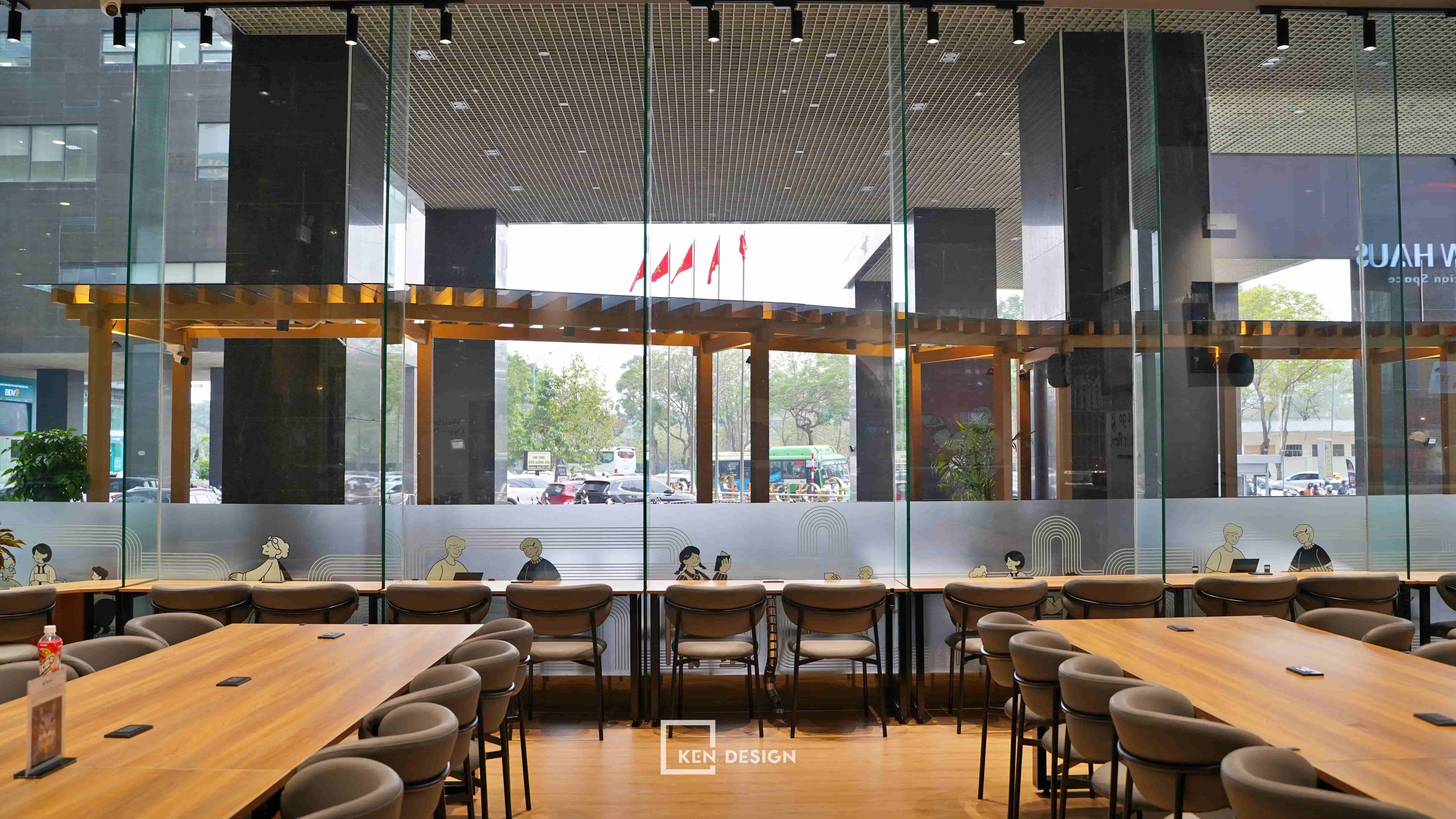
Instead, we utilized the front area and the building’s spacious reception lobby to create a semi-outdoor seating area with modern outdoor furniture, enhancing the construction of the Flow Haus cafe coworking in Hanoi, Vietnam.
Diverse interior layout
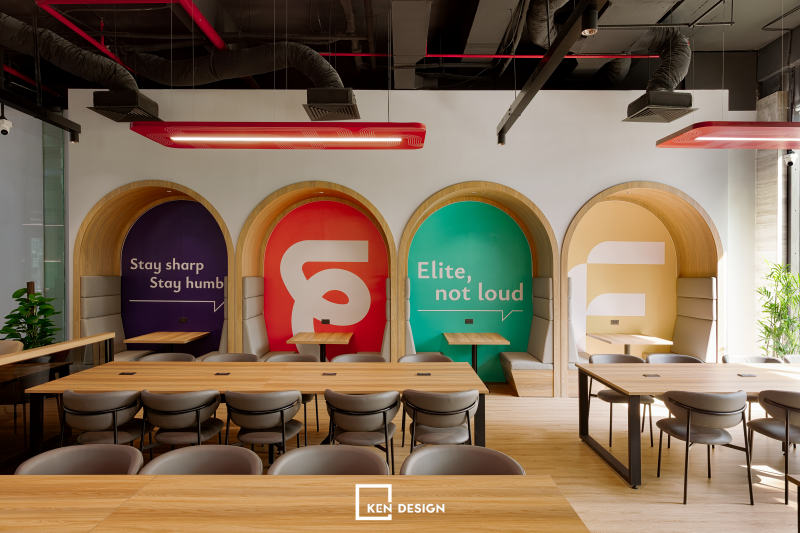
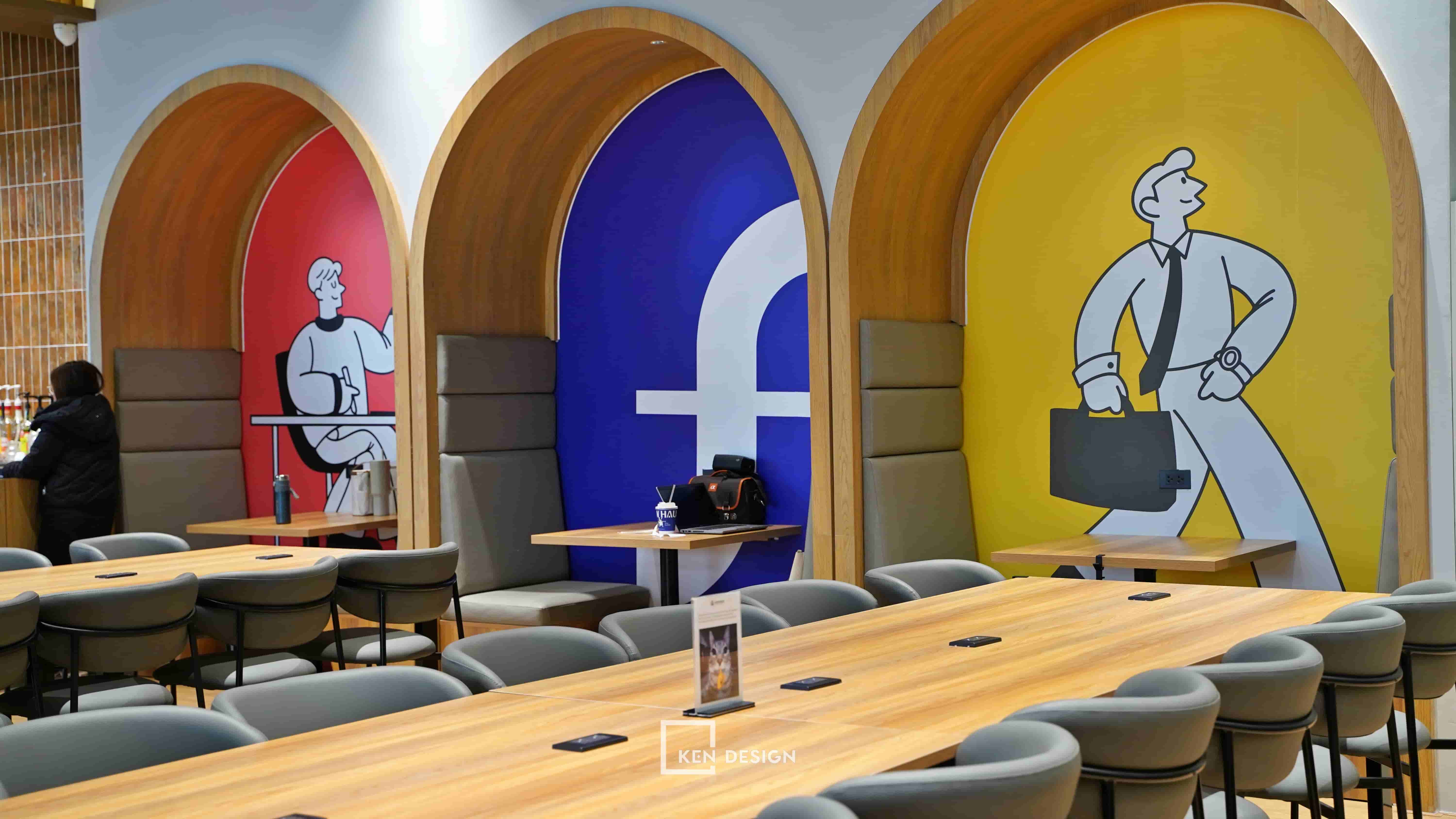
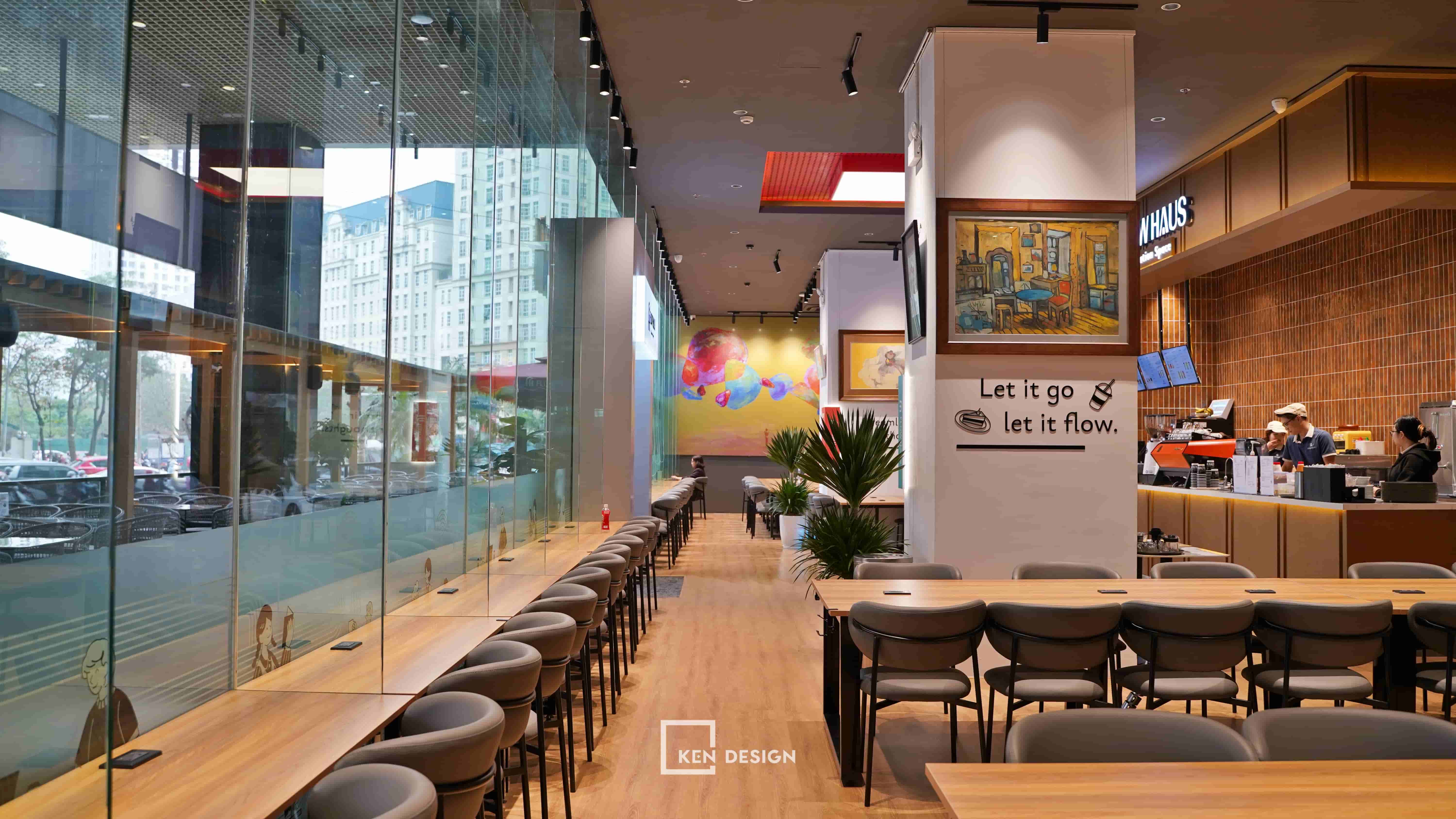
Inside, instead of using a single table type, we designed a multi-layer layout: private booths for 2-4 people, long communal tables for individuals who prefer a lively atmosphere, and a mix of double and small group tables to create spatial rhythm in the construction of the Flow Haus cafe coworking in Hanoi, Vietnam.
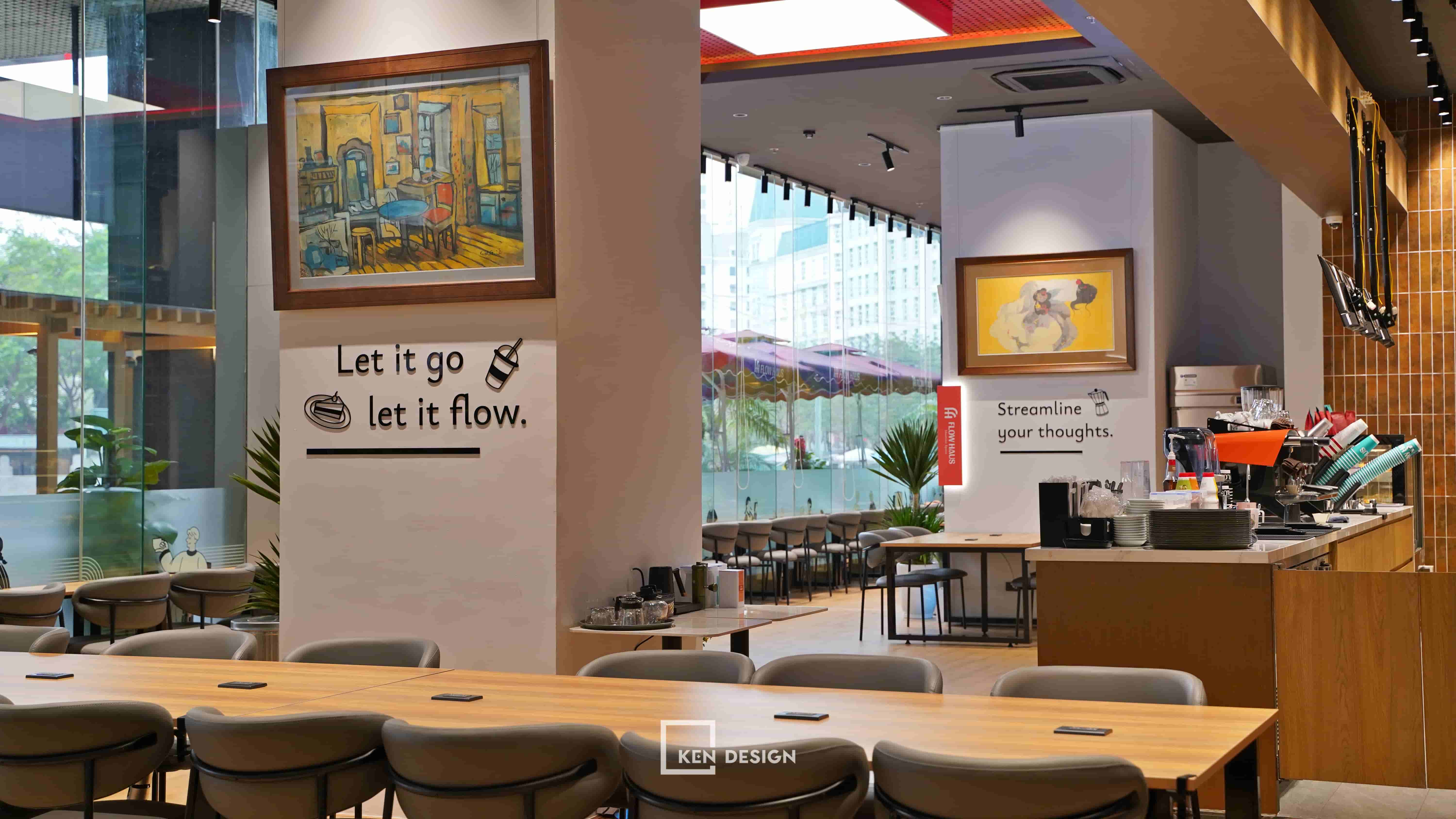
Results:
-
Inside the café: 19 tables and 102 seats
-
Expanded lobby and reception area: 64 tables and 128 seats
-
Total: 83 tables and 230 seats, fully meeting and exceeding the investor’s expectations
3.3. Specialized construction following Flow Haus style
This factor significantly shortened the construction timeline. The entire design language of Flow Haus had already been implemented in Branch 1. There was no need for material testing, supplier searching, or color trials. Everything was faster and more precise in the construction of the Flow Haus cafe coworking in Hanoi, Vietnam.
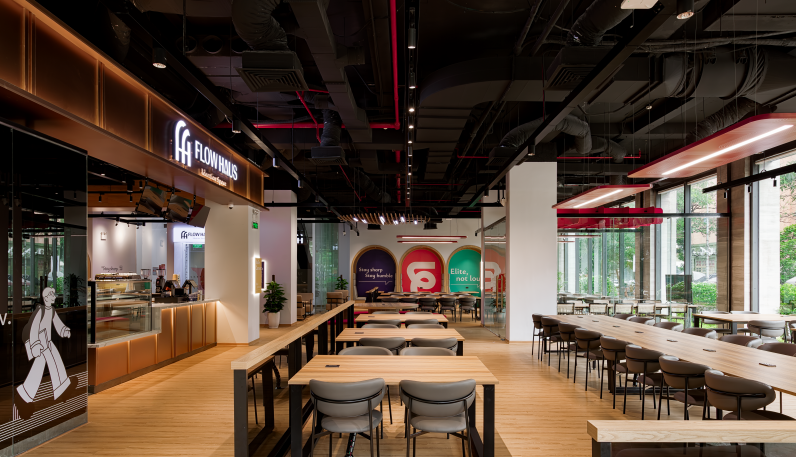
4. Overview after completion of the Flow Haus cafe coworking in Hanoi, Vietnam
The completed project achieved the following results in the construction of the Flow Haus cafe coworking in Hanoi, Vietnam:
-
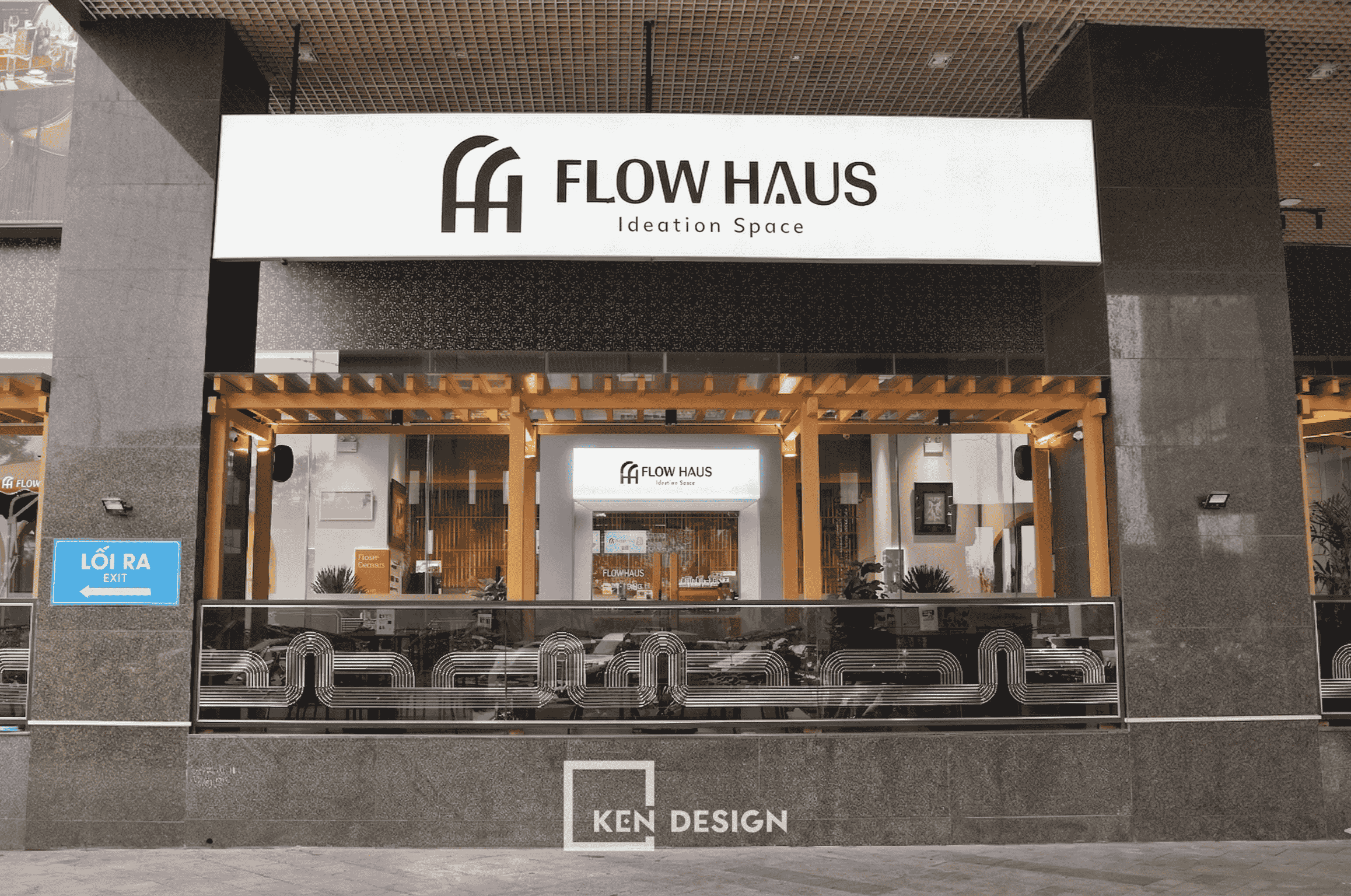
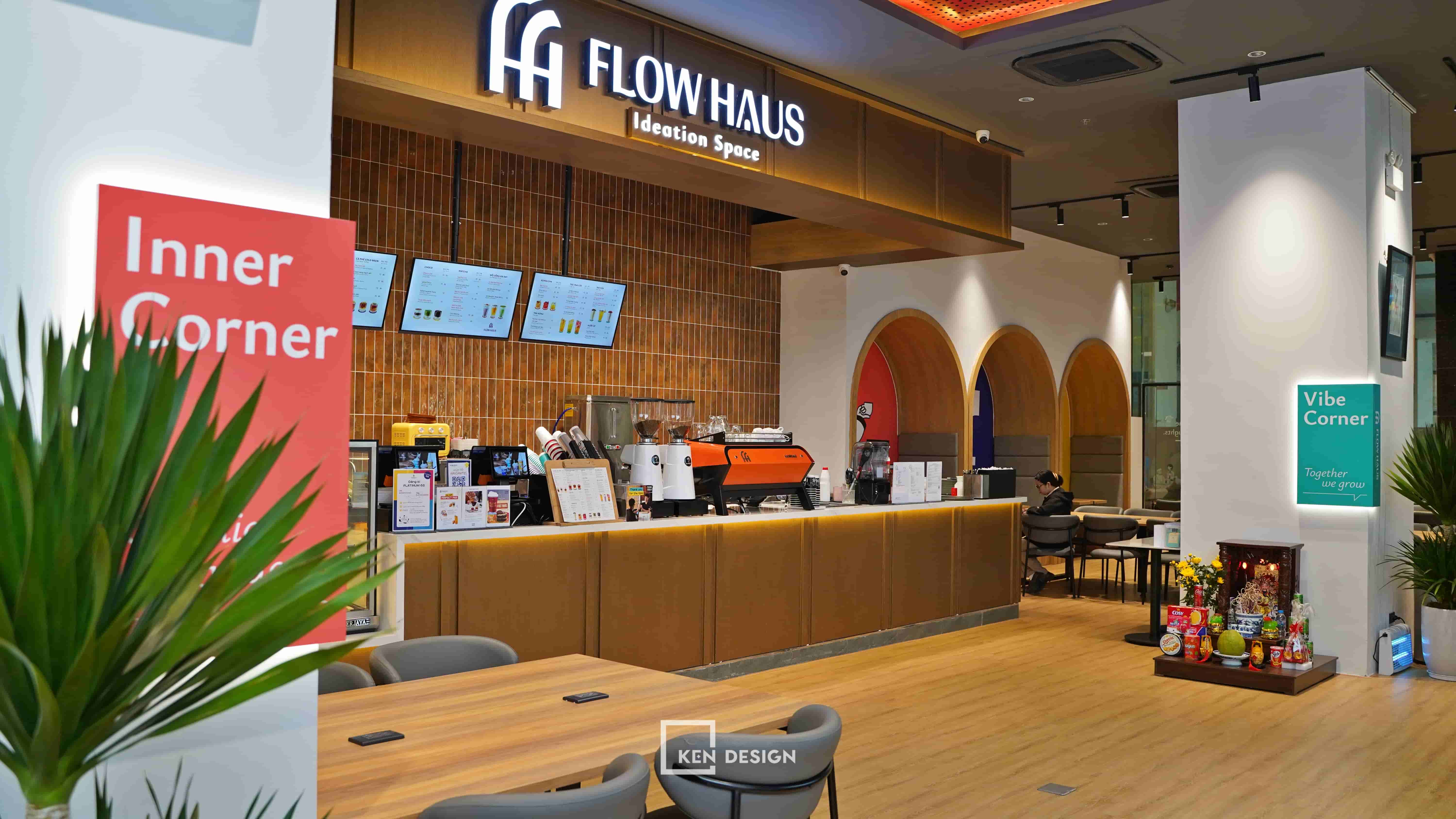
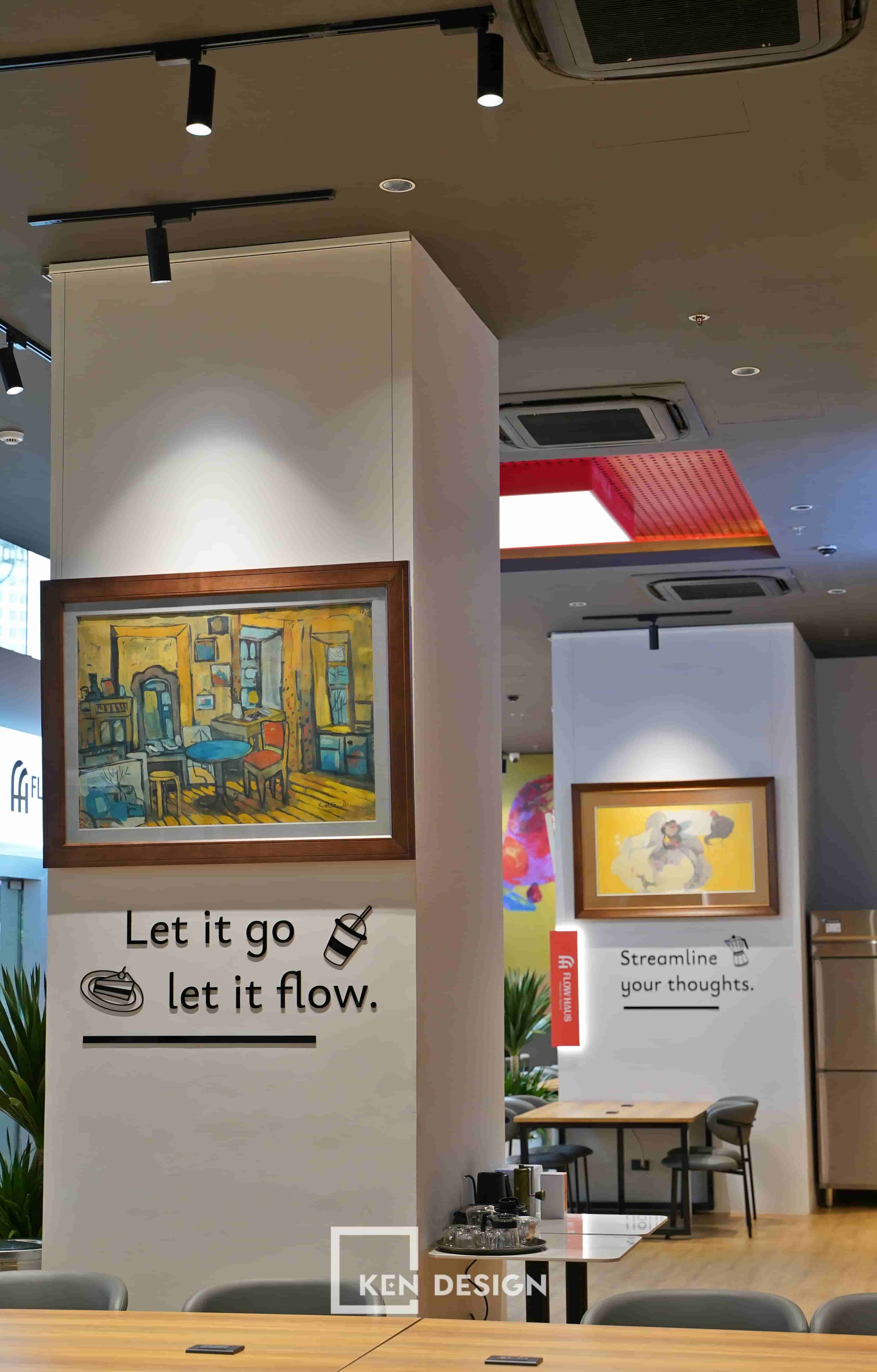
Concept consistency: The Flow Haus design DNA is preserved and consistent with Branch 1. Returning customers immediately recognize the brand.
-
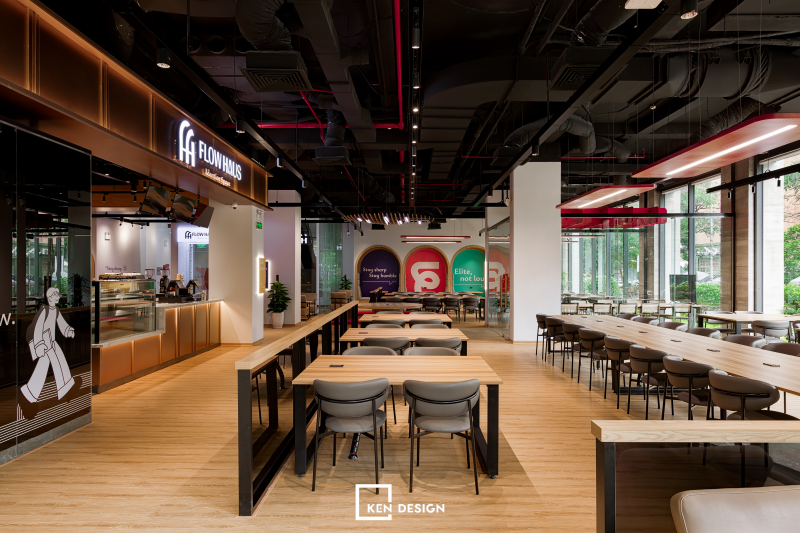
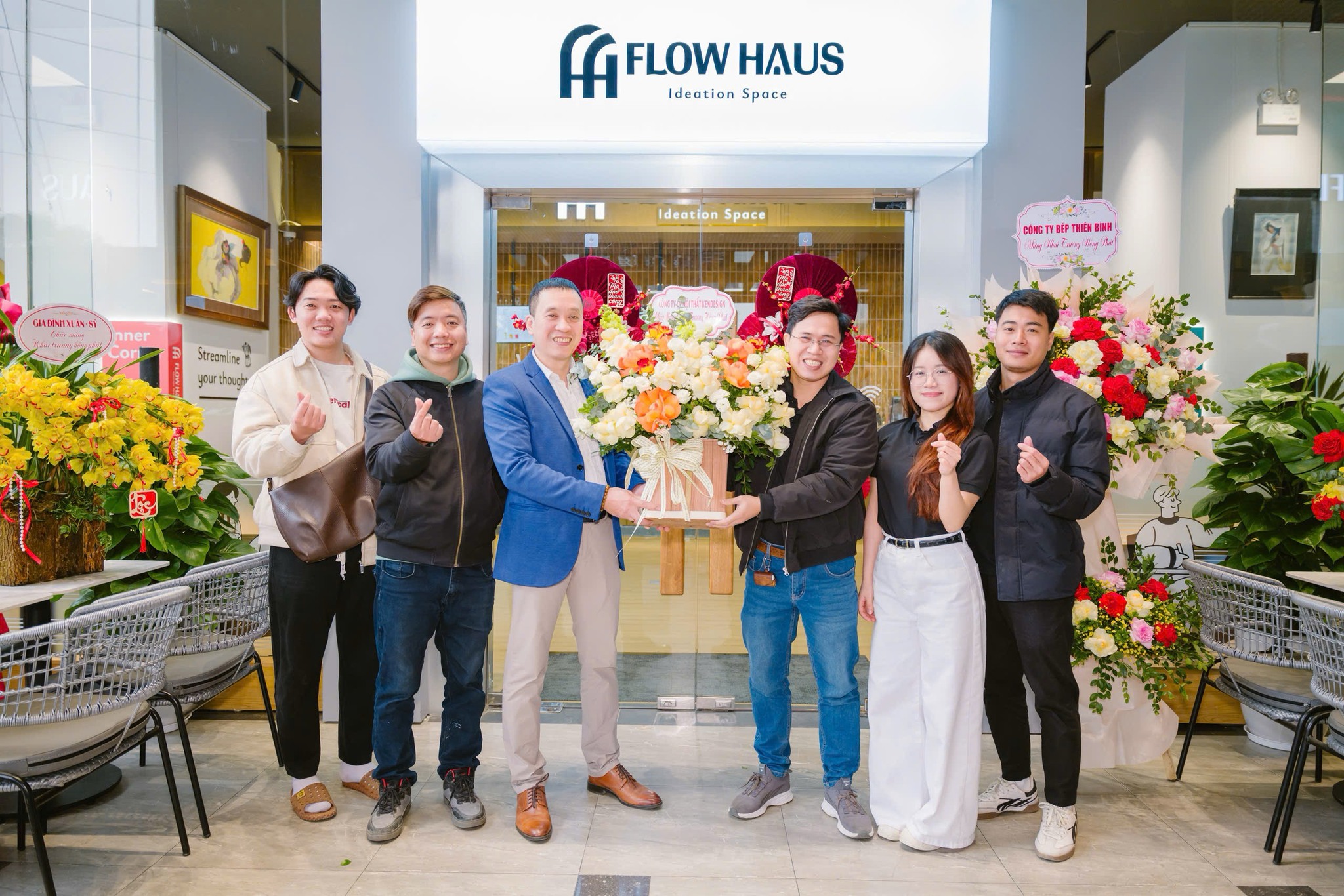
On-time delivery: The project was completed and handed over on schedule for the grand opening.
-
Enhanced customer experience: 230 diverse seating options accommodate various needs, individual work, small groups, casual coffee, or semi-outdoor seating.
-
Investor satisfaction: The completed project accurately reflects the approved 3D design.
-
Stable operation from day one: Electrical, plumbing, and lighting systems functioned properly without technical issues in the initial operation phase.
-
Effective waterproofing: After operation, there has been no recurrence of seepage or peeling.
Looking back at the entire project, there are several key lessons for anyone planning to invest in a coworking café or workspace model through the construction of the Flow Haus cafe coworking in Hanoi, Vietnam:
First, do not underestimate the initial site condition.
Second, coworking cafés have specific technical requirements.
Third, leverage experience from previous projects.
Fourth, good seating capacity comes not from large area but from the right layout.
All insights are based entirely on real experience that we want to share with those planning to invest in this model. We hope this article is helpful to you.
At KenDesign, we do not just create visually appealing spaces but also reflect your unique personality and style. Let us bring your vision to life with tailored design and construction solutions. Contact us today via:
Fanpage: KenDesign for FREE consultation!