When a coworking café model succeeds beyond expectations, expansion becomes inevitable. The Flow Haus Coworking Café Design Project at Golden Palace Mễ Trì is a clear testament to the sustainable growth of a brand that knows how to optimize space and meet market demands. Let’s explore what makes this project special with KenDesign!
From the Success of Branch 1 to the Decision to Expand
Less than three months after the first branch began operating, Flow Haus recorded an impressive occupancy rate, with seats frequently at full capacity. This success didn’t come solely from the spatial design but also from the team’s ability to understand the insight of its target users—young, dynamic individuals who need a flexible working environment in the heart of the city.
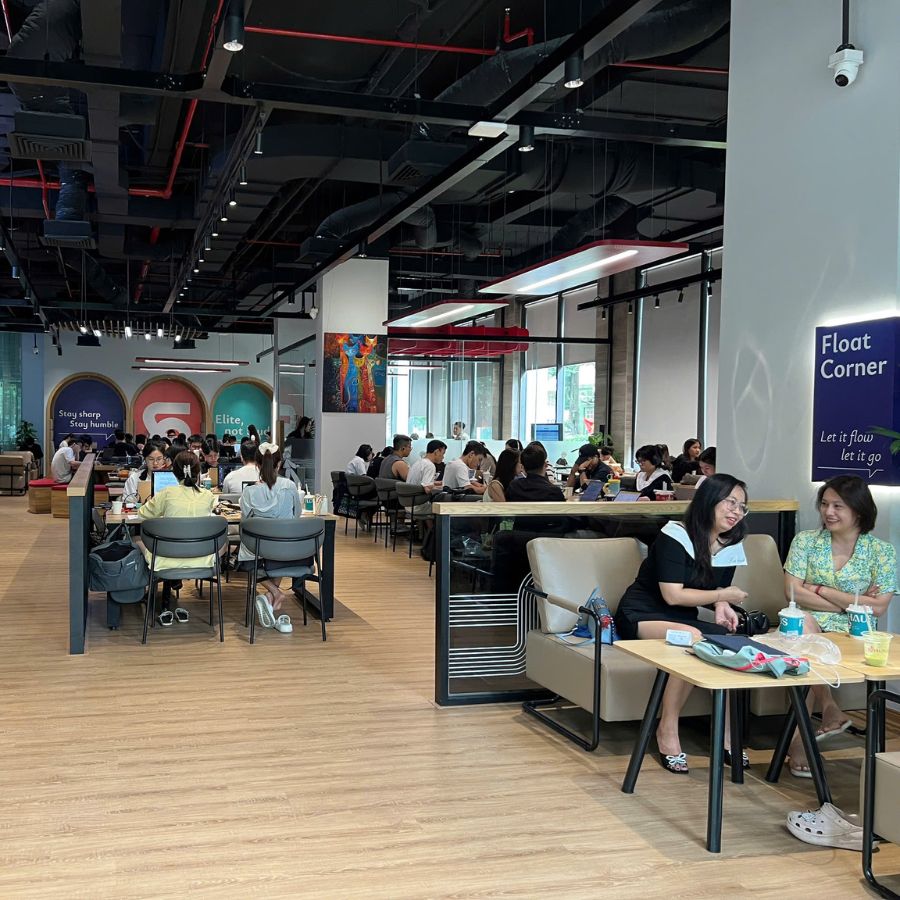
Recognizing the rising demand, the investor quickly seized the opportunity to expand to Golden Palace-an office tower with a dense concentration of office employees and high coworking space demand. This decision reflects sharp business acumen: taking advantage of momentum to strengthen the brand before the market becomes saturated.
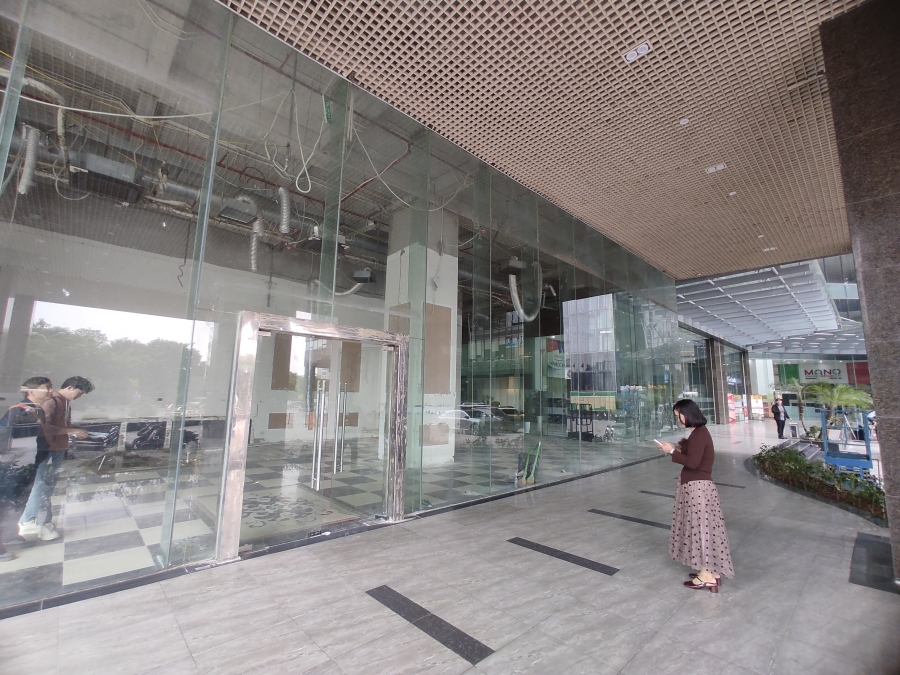
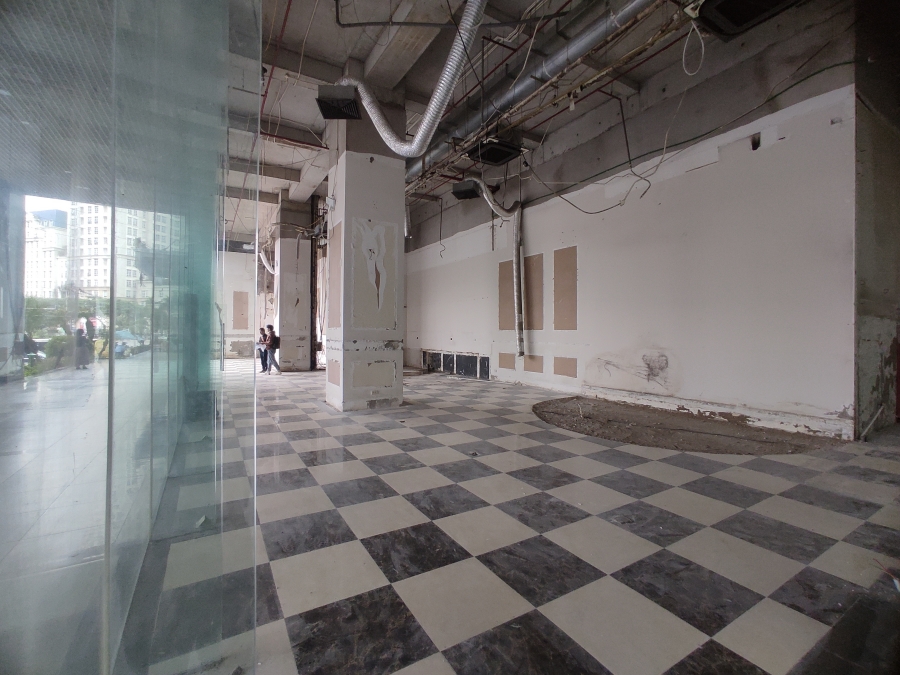
Challenges from the 400m² Existing Condition
Unlike many coworking café projects built on fresh, clean spaces, Flow Haus Branch 2 encountered significant challenges:
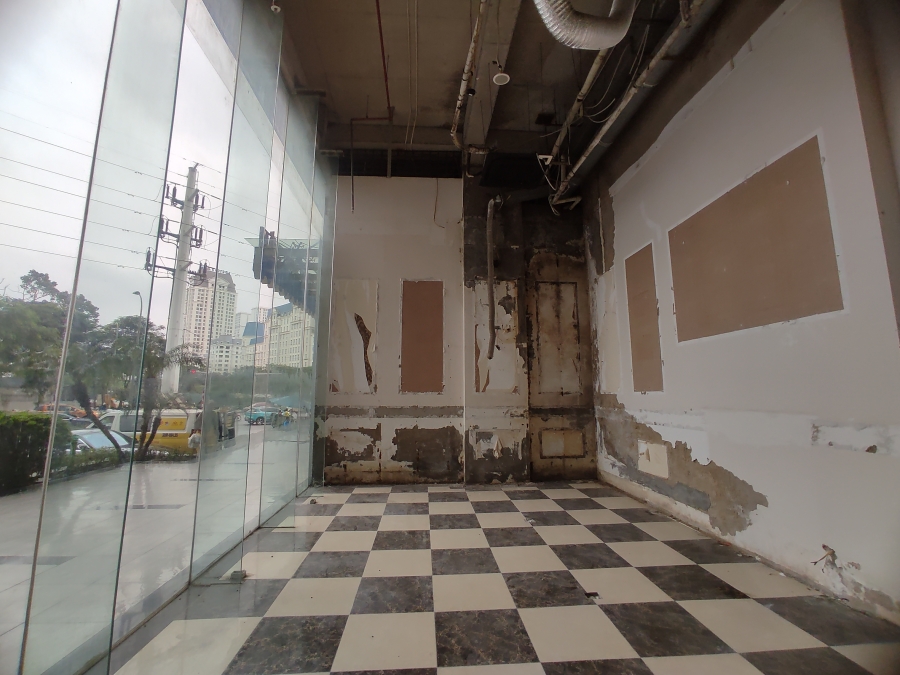
Severe deterioration:
The 400m² site had extensive wall leakage and mold damage, caused by the seafood restaurant next door. This required thorough waterproofing and structural treatment before the design phase could even begin.
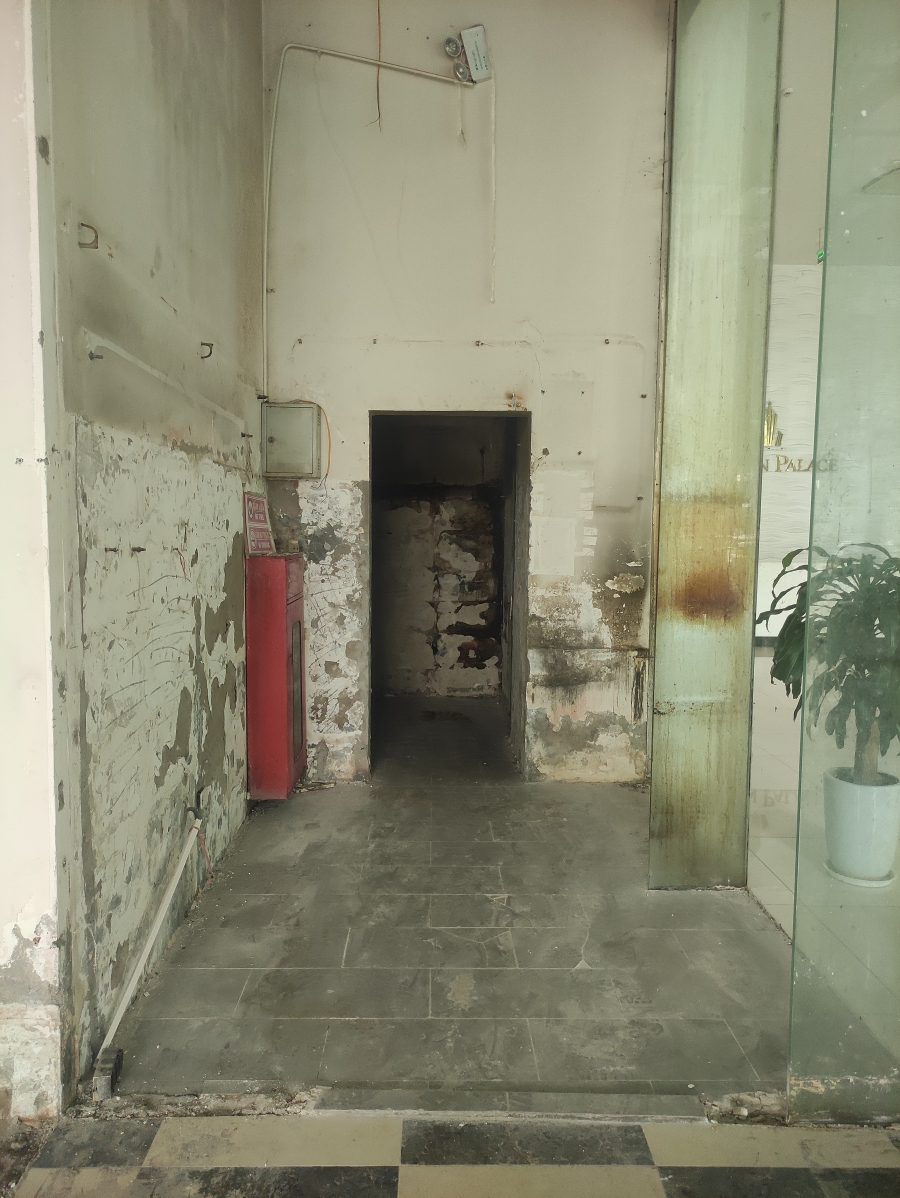
Fragmented layout:
Large columns and beams created interruptions in circulation flow, limiting visibility and spaciousness—a difficult challenge for any architect designing a coworking café that depends on seamless spatial connectivity.
Two separate areas:
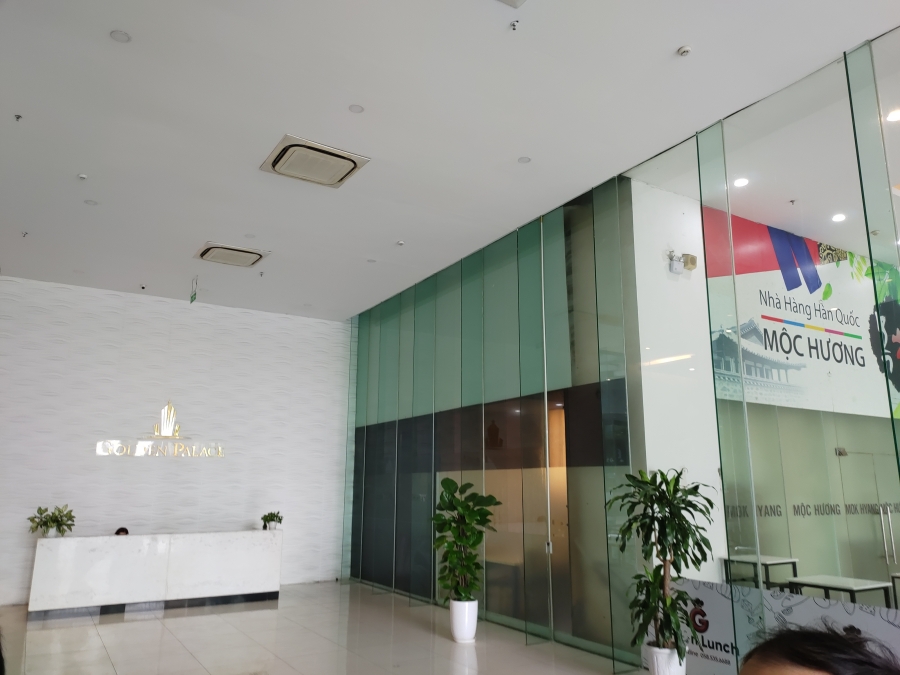
The combination of the main space and the building’s lobby created an opportunity for expanded usage but also raised questions about design consistency and user experience.
Flow Haus Coworking Design Identity – Branch 2
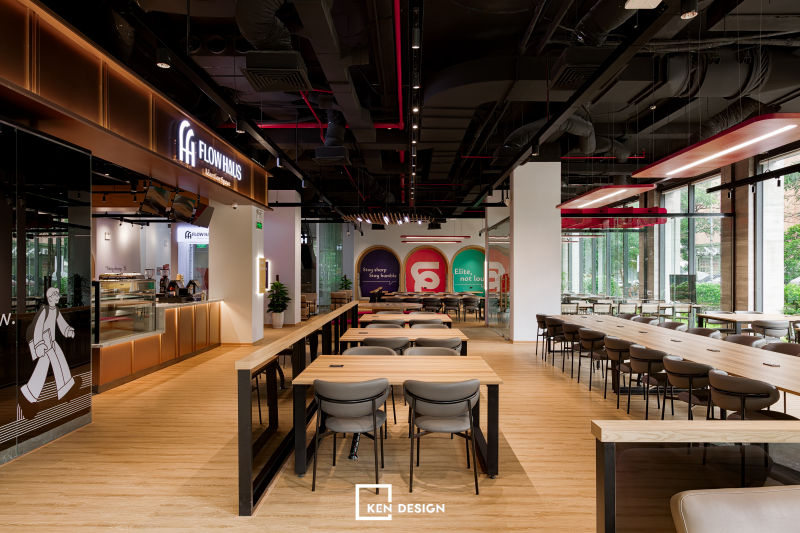
Instead of creating a completely new look, the design team smartly maintained the DNA of the Flow Haus brand. This choice came from two key reasons:
Brand consistency:
Customers already familiar with the cozy, modern, and energetic ambiance of Branch 1 would instantly feel connected and trusting when visiting Branch 2—an essential factor during expansion.
Cost and time optimization:
Applying a design style that has already proven its effectiveness reduces design risk and speeds up construction—a crucial advantage when coworking cafés need rapid ROI.
A Layout That Maximizes Every Square Meter
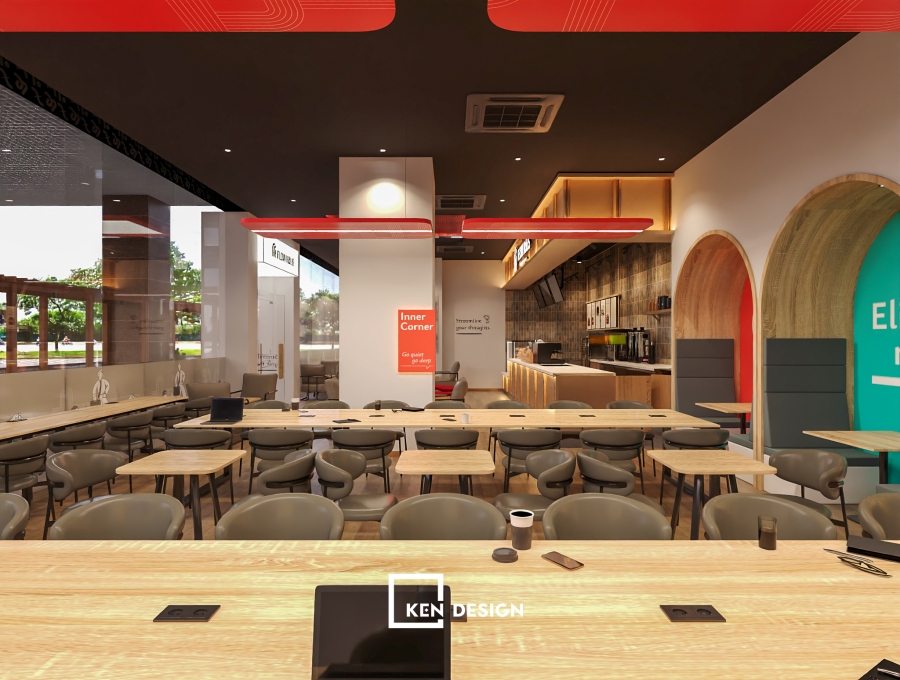
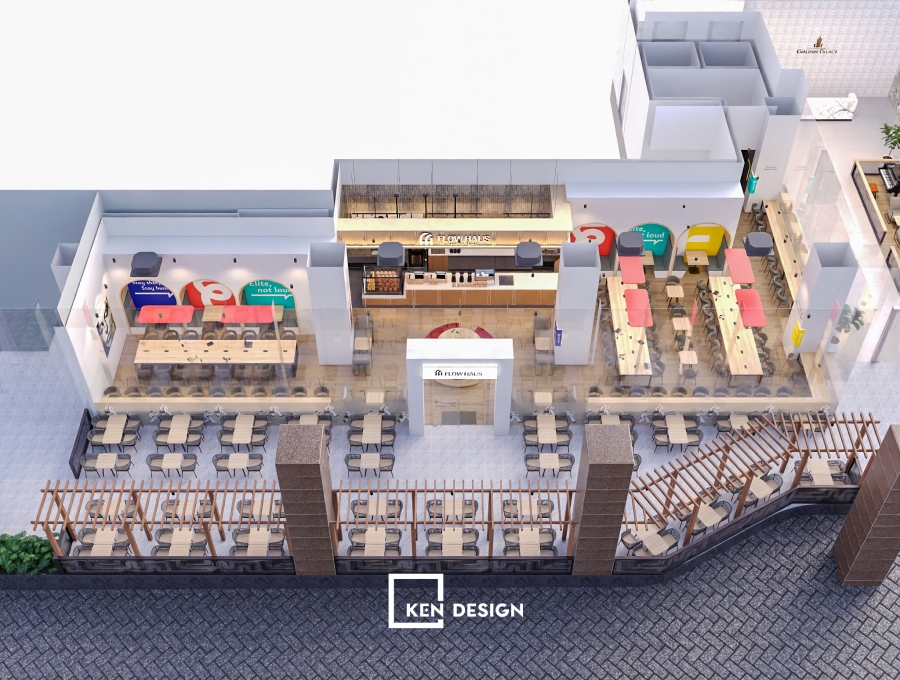
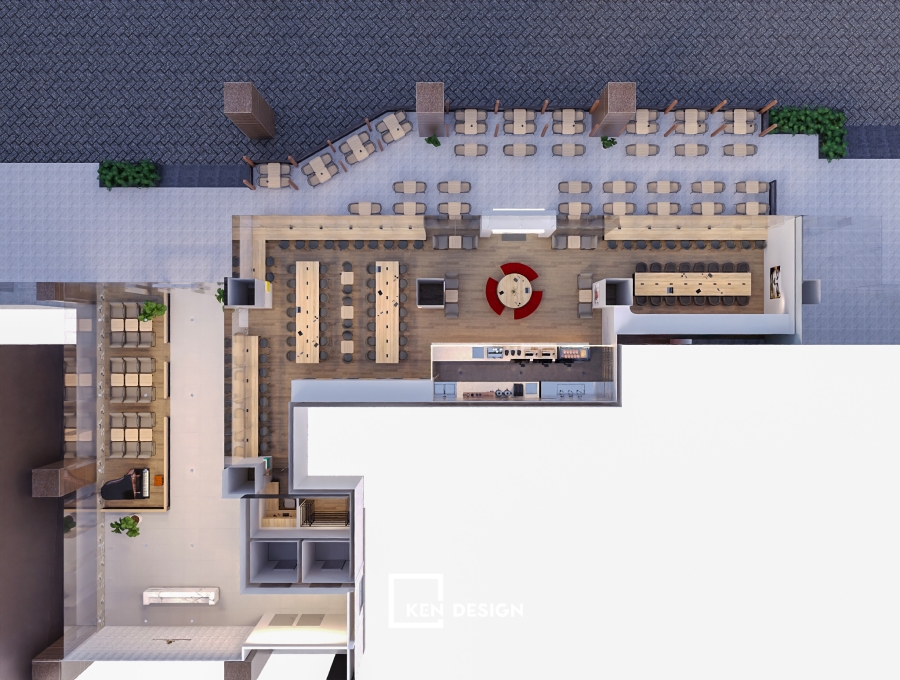
One standout element in the Flow Haus Branch 2 design is the efficient functional layout despite a more limited floor plan:
Diverse Workspaces
Although smaller than Branch 1 and without room for meeting spaces, the project still includes Flow Haus’ signature zones:
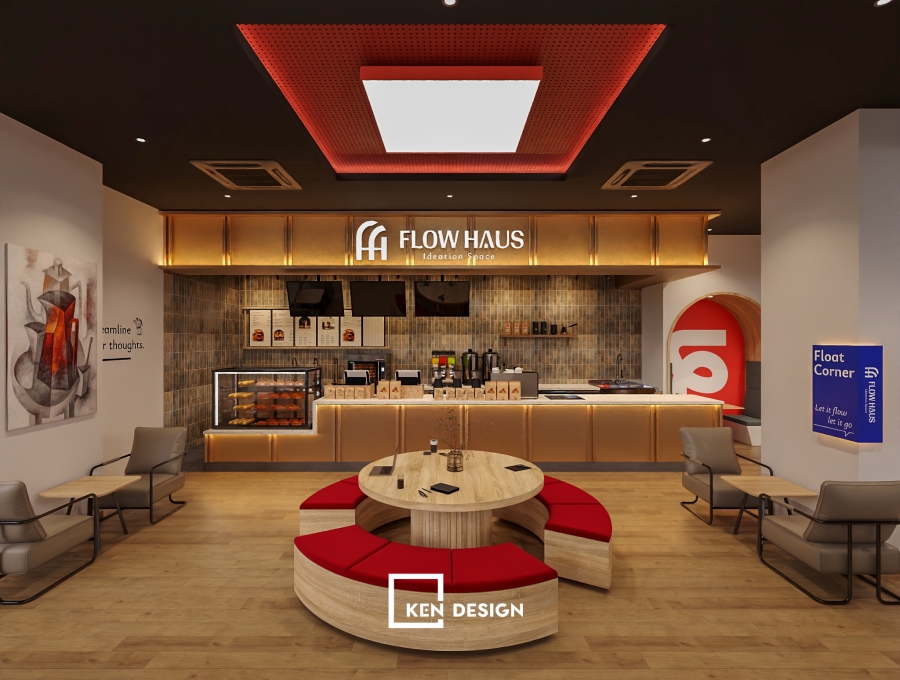
- Float Corner: An open, flexible area for those who enjoy changing work spots
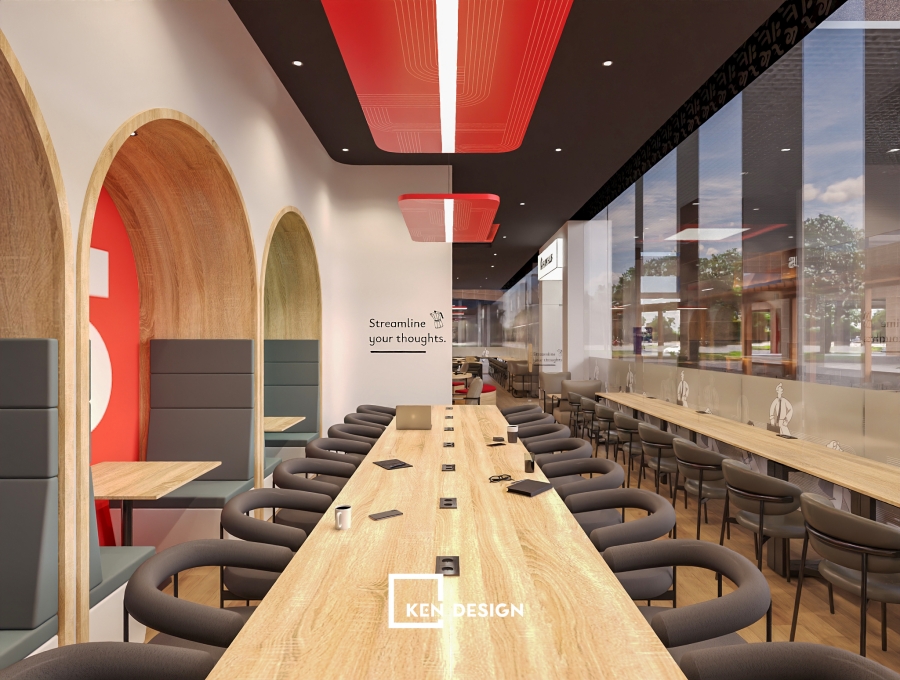
- Inner Corner & Indie Corner: More private zones for deep-focus work
- Clarity Corner: A quiet reading and thinking space
- Vibe Corner: A lively area encouraging interaction and group creativity
Each corner has its own identity through lighting, colors, and interior arrangement, delivering a diverse working experience within one location.
Smart Use of Outdoor Space
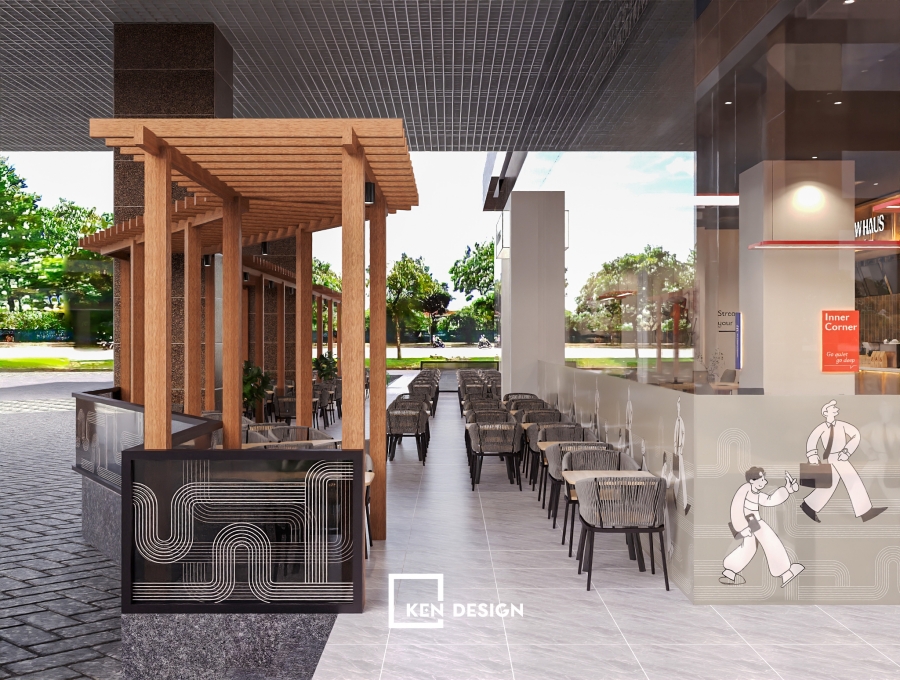
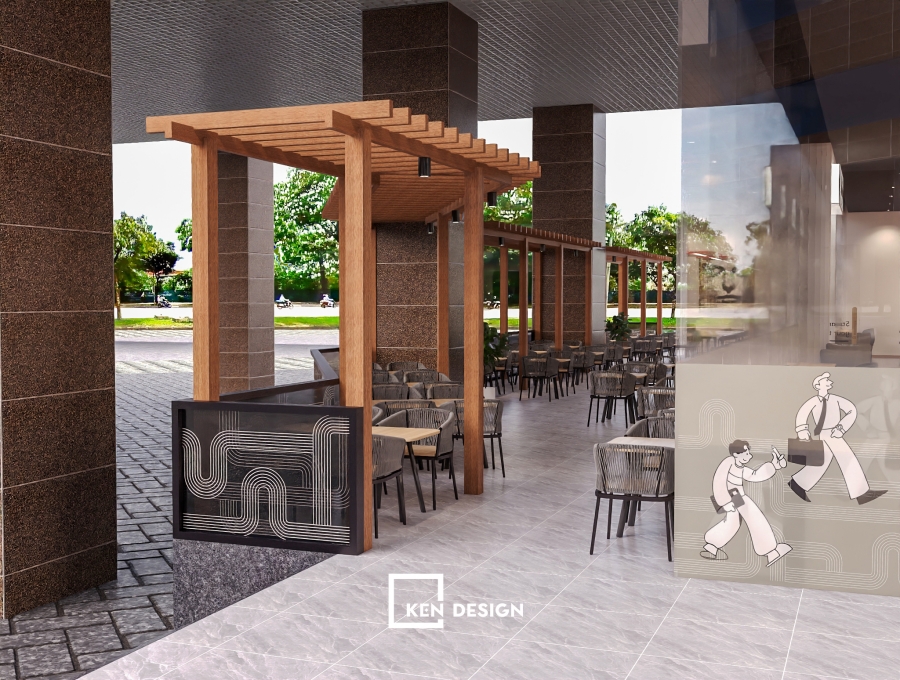
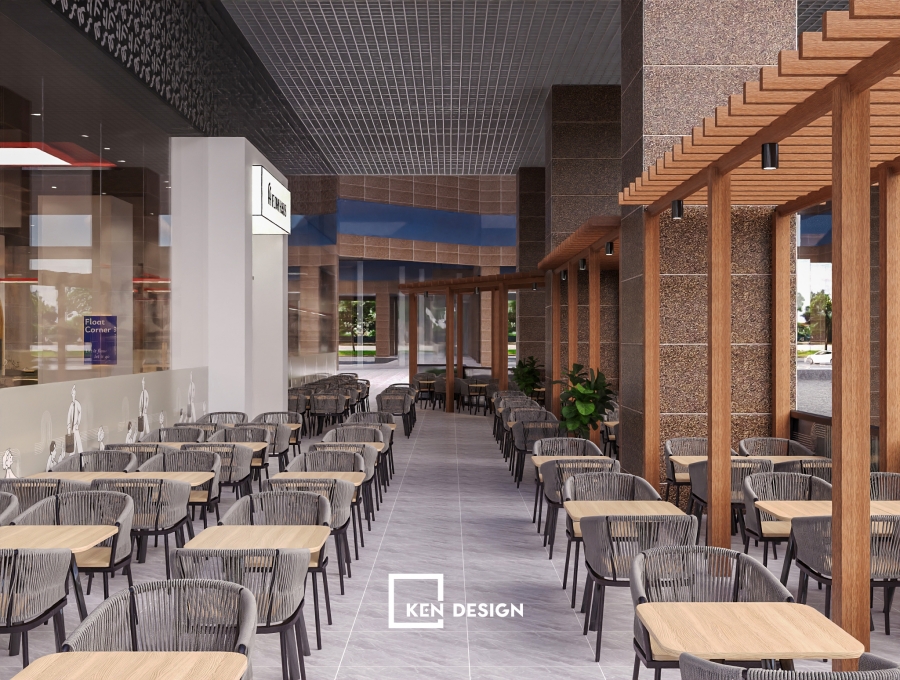
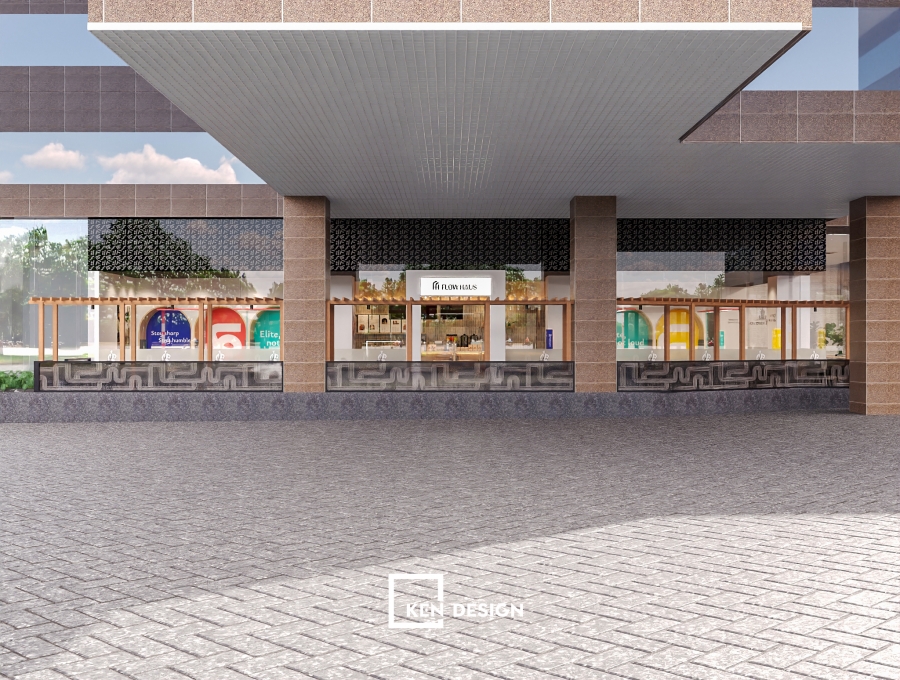
A major advantage of the Mễ Trì location is the spacious outdoor lobby. The design team turned it into a competitive edge:
- The outdoor area is equipped with ample seating, accommodating customers who prefer open-air working environments.
- This space not only increases capacity but also becomes a visual highlight that attracts passersby.
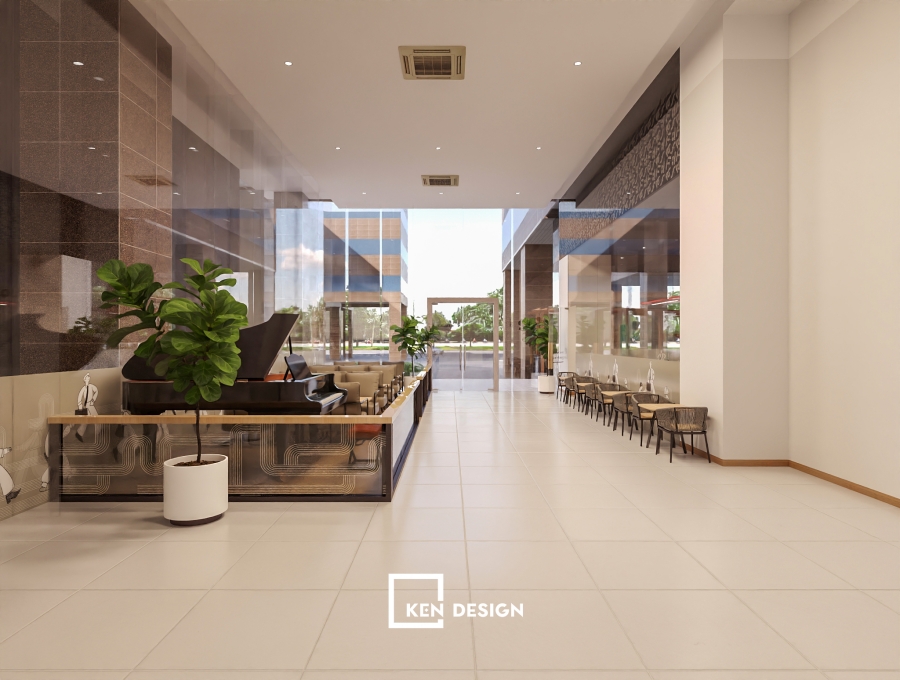
Leveraging the Shared Lobby
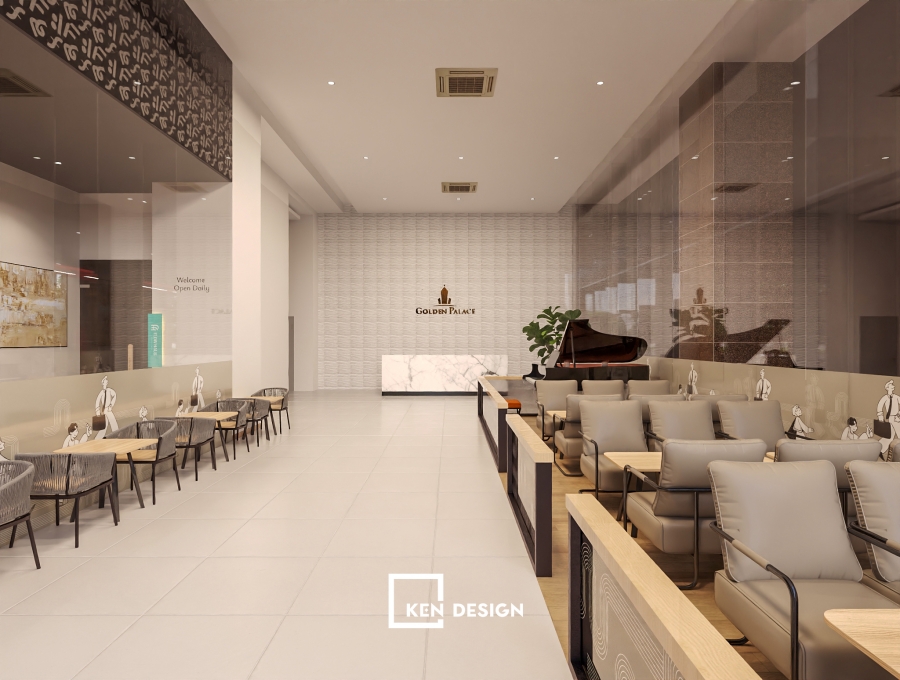
Utilizing part of the building’s reception lobby for low lounge seating was a strategic move.
It serves Flow Haus customers while also enlivening the entire building, indirectly boosting brand exposure among office employees.
Material Choices That Balance Durability and Function
Indoor Interior
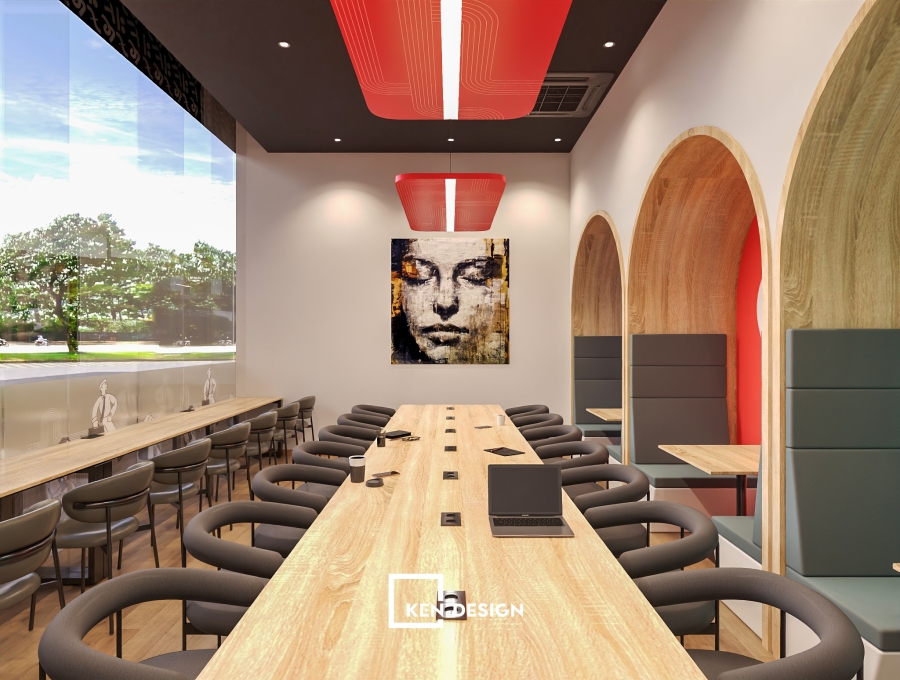
Similar to the Lê Văn Lương branch, indoor areas use natural wood combined with powder-coated metal and high-quality upholstery for sofas—offering aesthetic appeal and long-term durability.
Outdoor Interior
Understanding outdoor conditions, architects selected synthetic rattan furniture—weather-resistant, easy to clean, and long-lasting.
This differs from Branch 1, showcasing design flexibility based on real environmental needs.
Refined Decor and Thoughtful Details
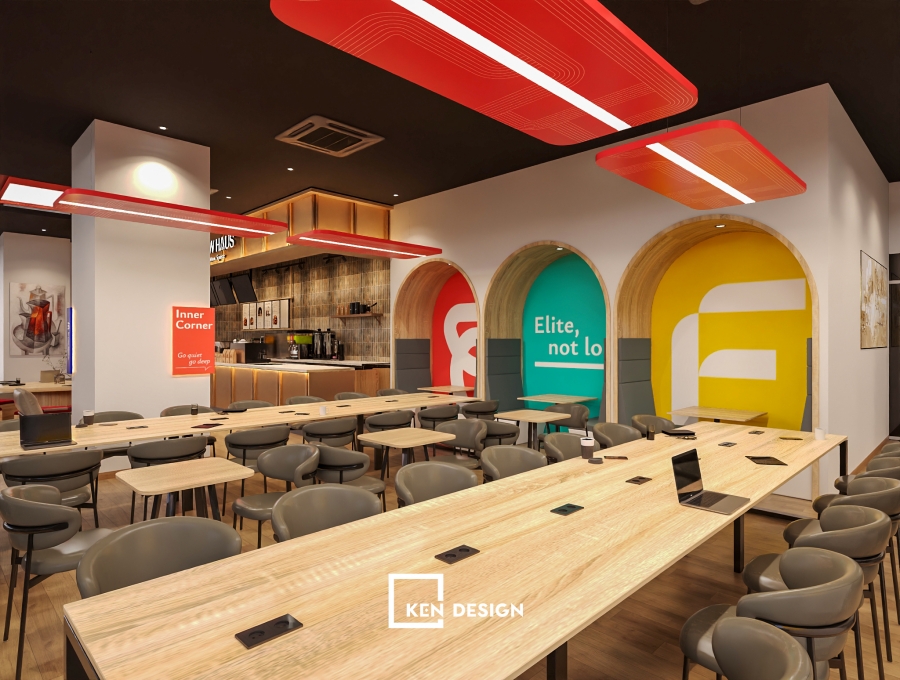
Instead of cluttered decorations, Flow Haus Branch 2 focuses on subtle highlights:
- Abstract art to boost creativity
- Brand logos integrated into wall cladding and decals
A Distinctive Color Palette
One element that sets Flow Haus apart is its bold and lively color coordination.
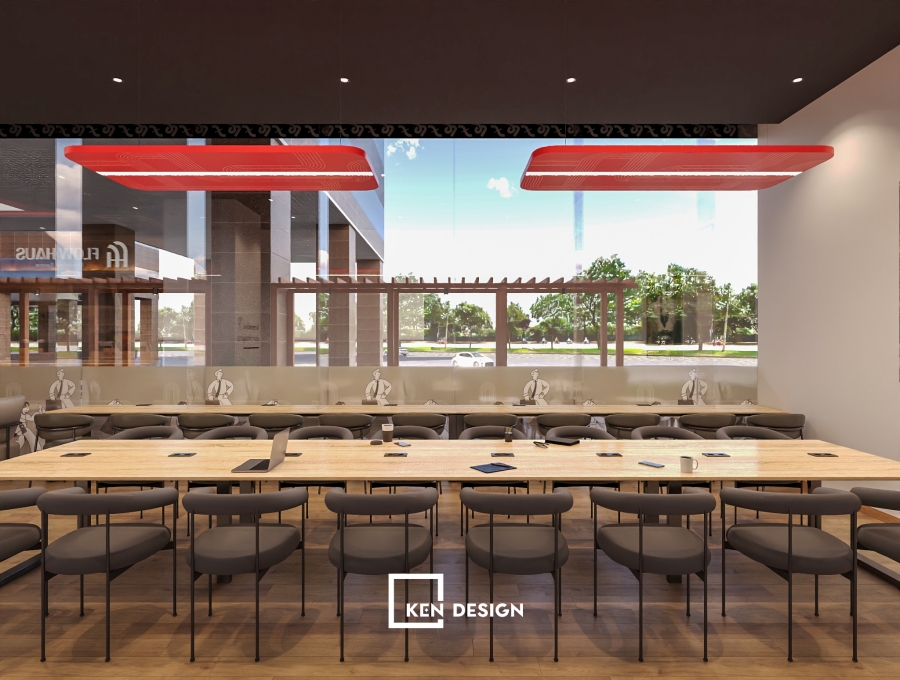
Warm beige wood tones create the foundation, while vibrant accent colors add personality:
- Red: Energizes and stimulates creativity in group zones
- Yellow: Brings positivity
- Blue: Supports concentration, ideal for individual work
- Green: Refreshes and connects with nature
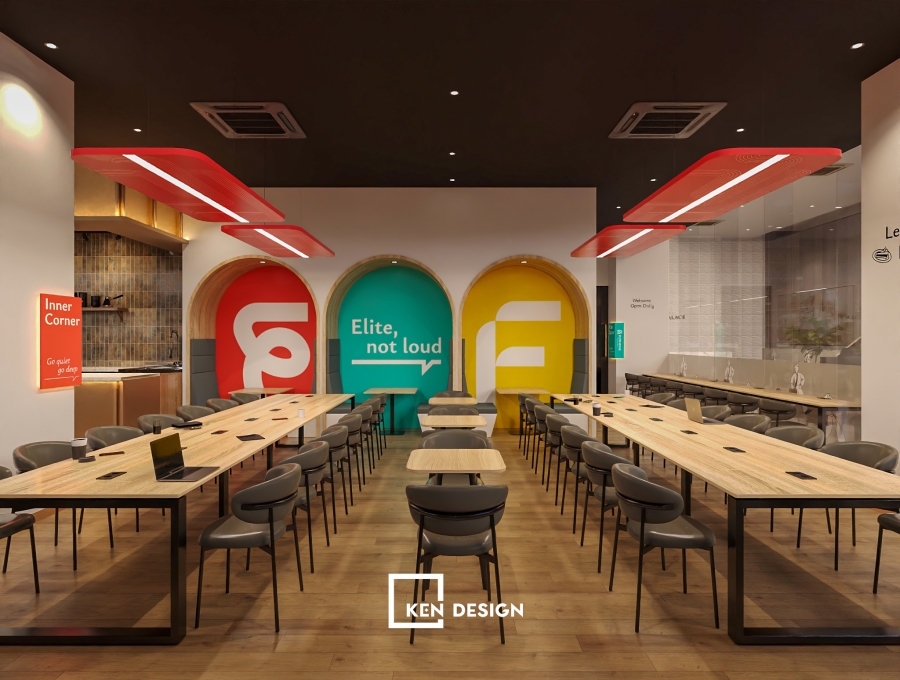
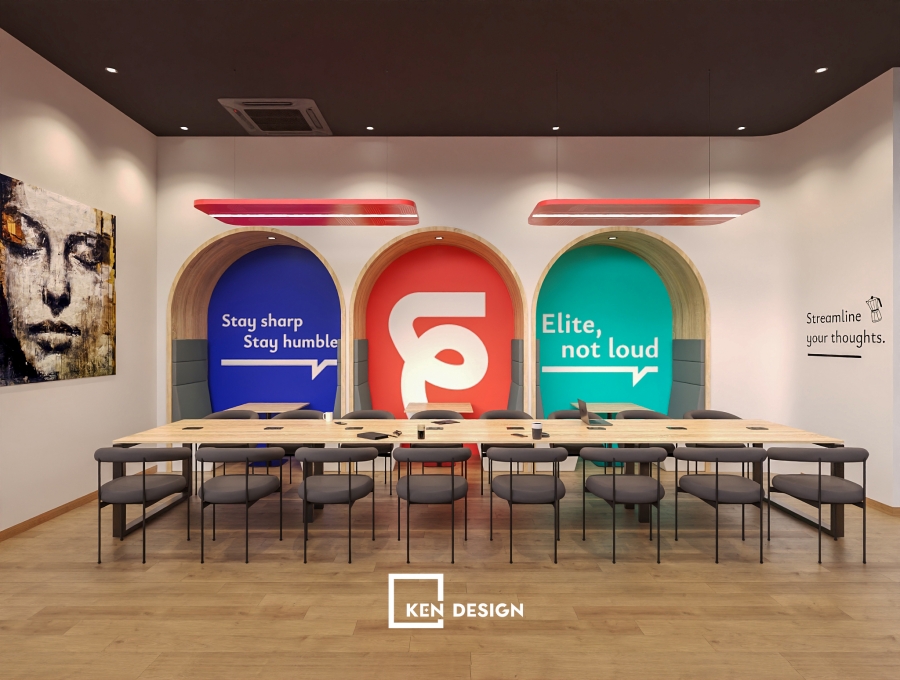
This combination could easily become overwhelming, yet through thoughtful proportion and placement, the architects achieved a vibrant yet comfortable balance-exactly what a modern coworking café needs.
This palette has also become the brand’s key visual identity, making Flow Haus instantly recognizable on social media and in customers’ minds.
Lighting: A Perfect Blend of Natural and Artificial Illumination
Coworking spaces require nuanced lighting to support reading, laptop work, meetings, and relaxation.
- Large glass façades were retained to maximize natural light—improving mood and productivity while saving energy.
- Artificial lighting is scientifically planned with layered systems, ensuring customers can work for long hours without eye strain.
Lessons for Anyone Planning to Open a Coworking Café
Don’t be afraid to expand when you’re winning
Many owners wait too long to open a second branch and lose momentum. Flow Haus proved that with the right model, rapid expansion is not only possible but advantageous.
Make use of every available space
You don’t need a perfect floor plan. Outdoor lobbies, reception areas, and small corners can all become valuable assets when used creatively.
Consistent brand, flexible execution
Consistency doesn’t mean duplication. Branch 2 adjusted materials (outdoor furniture), layout (no meeting rooms), and space usage to fit the site conditions.
Invest in professional design
With deteriorated conditions and structural challenges, an experienced design and build team is essential. The higher upfront design cost pays off through durability and customer experience.
The Flow Haus Coworking Café Design at Mễ Trì is powerful evidence that a brand can grow sustainably through quality design and a deep understanding of market needs. Its success comes not just from aesthetics but from functional decisions that enhance user experience and boost business efficiency. This is the essence of a truly successful coworking café design in the new era.
At KenDesign, we don’t just create visually stunning spaces - we craft environments that reflect your personality, identity, and unique style. Let us bring your vision to life with bespoke interior solutions tailored specifically to your needs.
Contact us today for a FREE consultation:
Fanpage: KenDesign