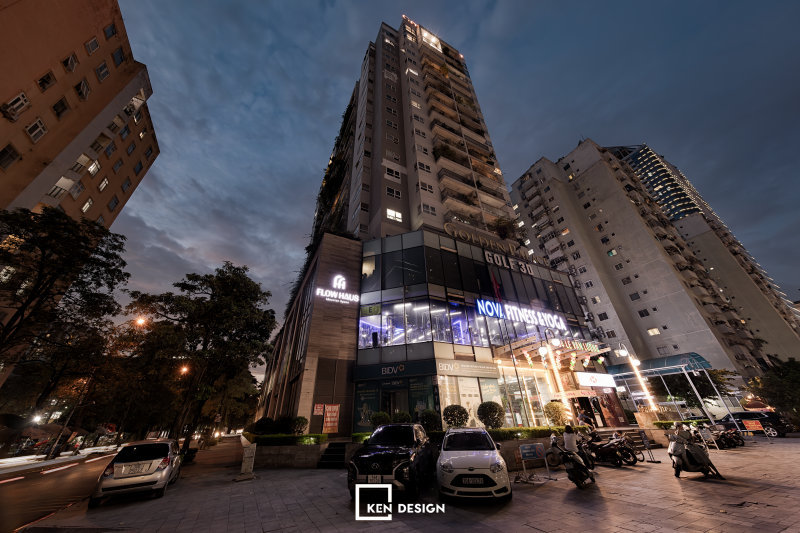
Construction of the FLOW HAUS coworking café was a project that required meticulous planning from preparation to completion. With a total area of 600m² formed by combining three adjacent retail units on the first floor of an office building on Lê Văn Lương, this was not a project that could be executed in a conventional manner. This article will break down each construction stage, the real challenges encountered, and the practical solutions applied-giving you a comprehensive insight before starting a similar project.
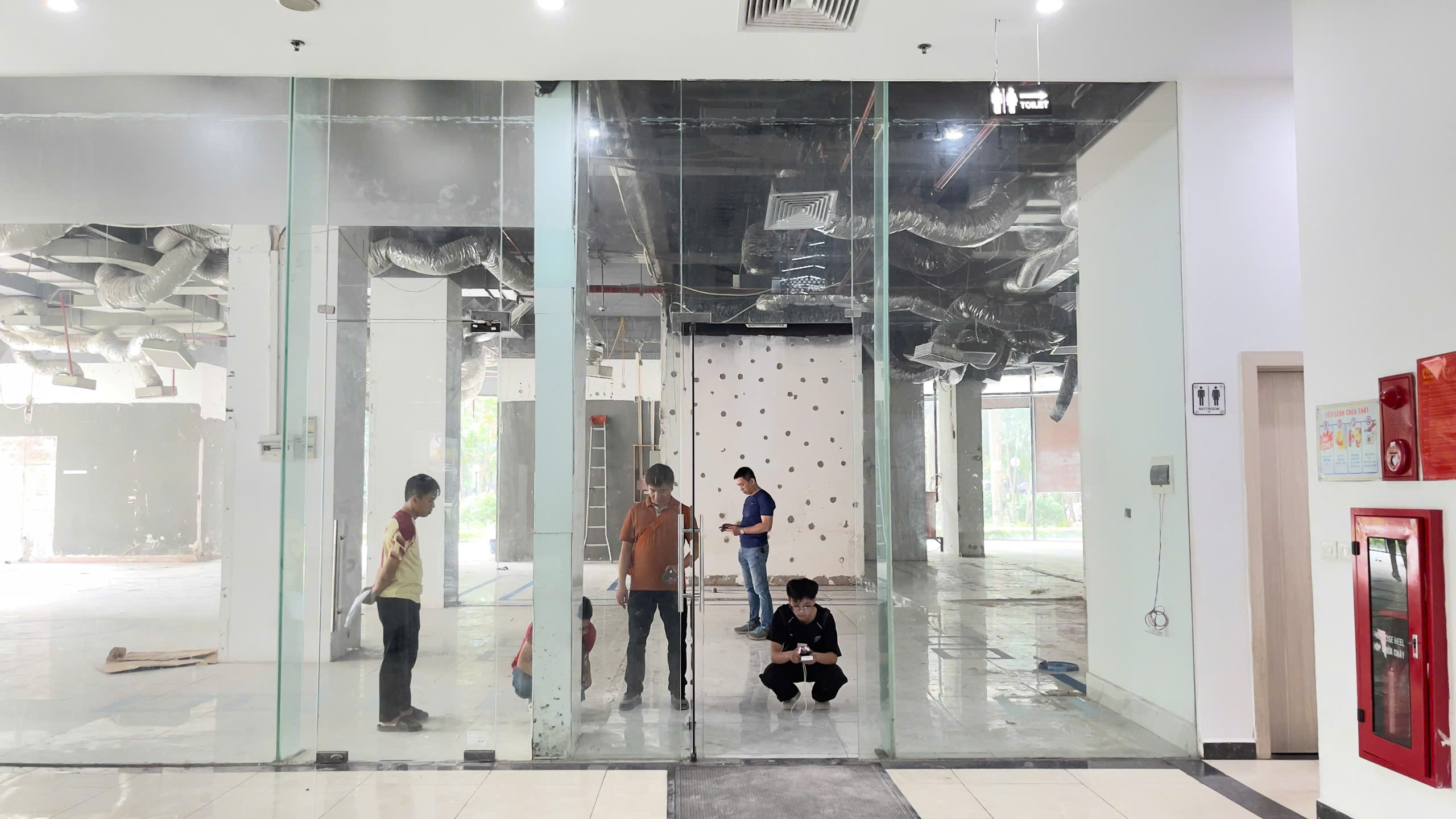
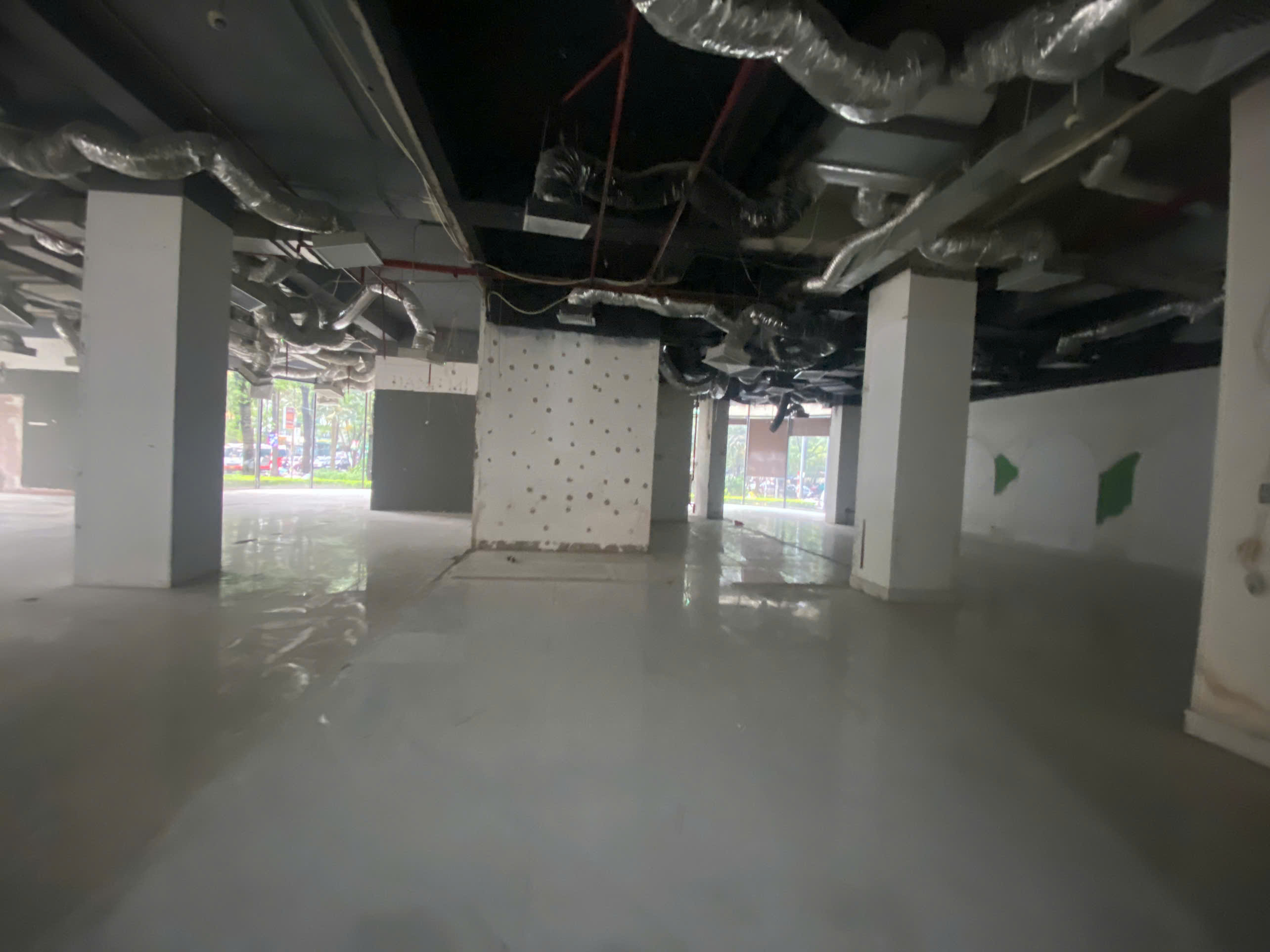
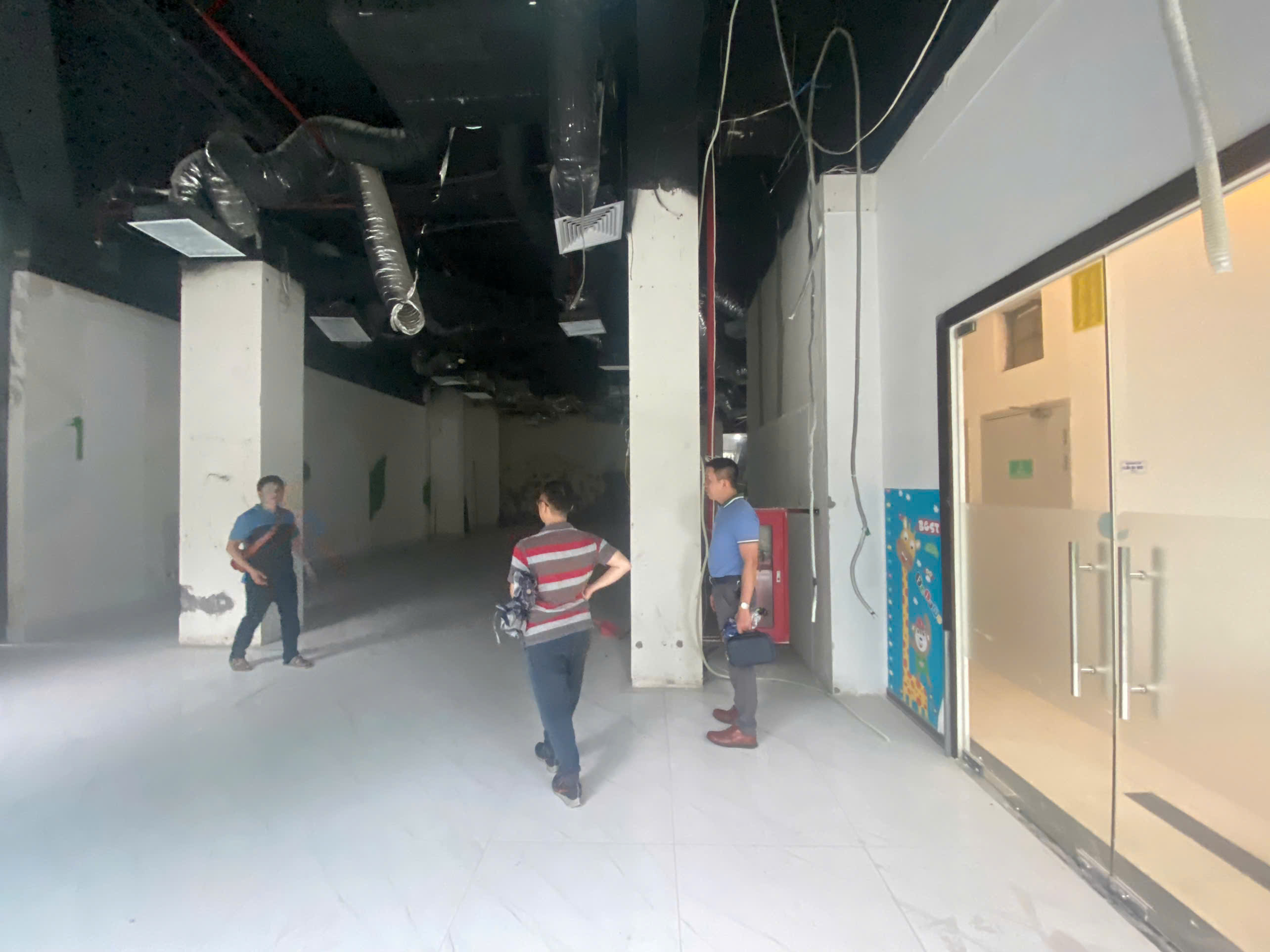
Assessing Existing Site Conditions Before Construction of FLOW HAUS Coworking Café
Key Site Characteristics
Before starting construction, the technical team conducted detailed evaluations of several critical factors:
The U-shaped floor plan, formed by merging three adjacent shop units, created a unique structural layout. This required dismantling old partitions, synchronizing electrical and plumbing systems originally separated into three independent units, and ensuring continuous circulation throughout the space.
Two completely different access points also required distinct construction solutions:
-
The direct entrance from the small road needed to be built as an eye-catching highlight.
-
The indirect entrance through the building lobby needed signage and façade treatment compliant with building regulations.
Mandatory Technical Survey
Since this project is located inside an office building, the pre-construction survey included:
-
Checking load-bearing walls to determine possible demolition or expansion points.
-
Reviewing the building’s electrical system, connection capacity, and approved load.
-
Evaluating the drainage system and main pipeline locations to properly place the bar counter and restrooms.
-
Measuring actual ceiling height after accounting for building MEP systems.
Overall Look After Completion
First Impressions
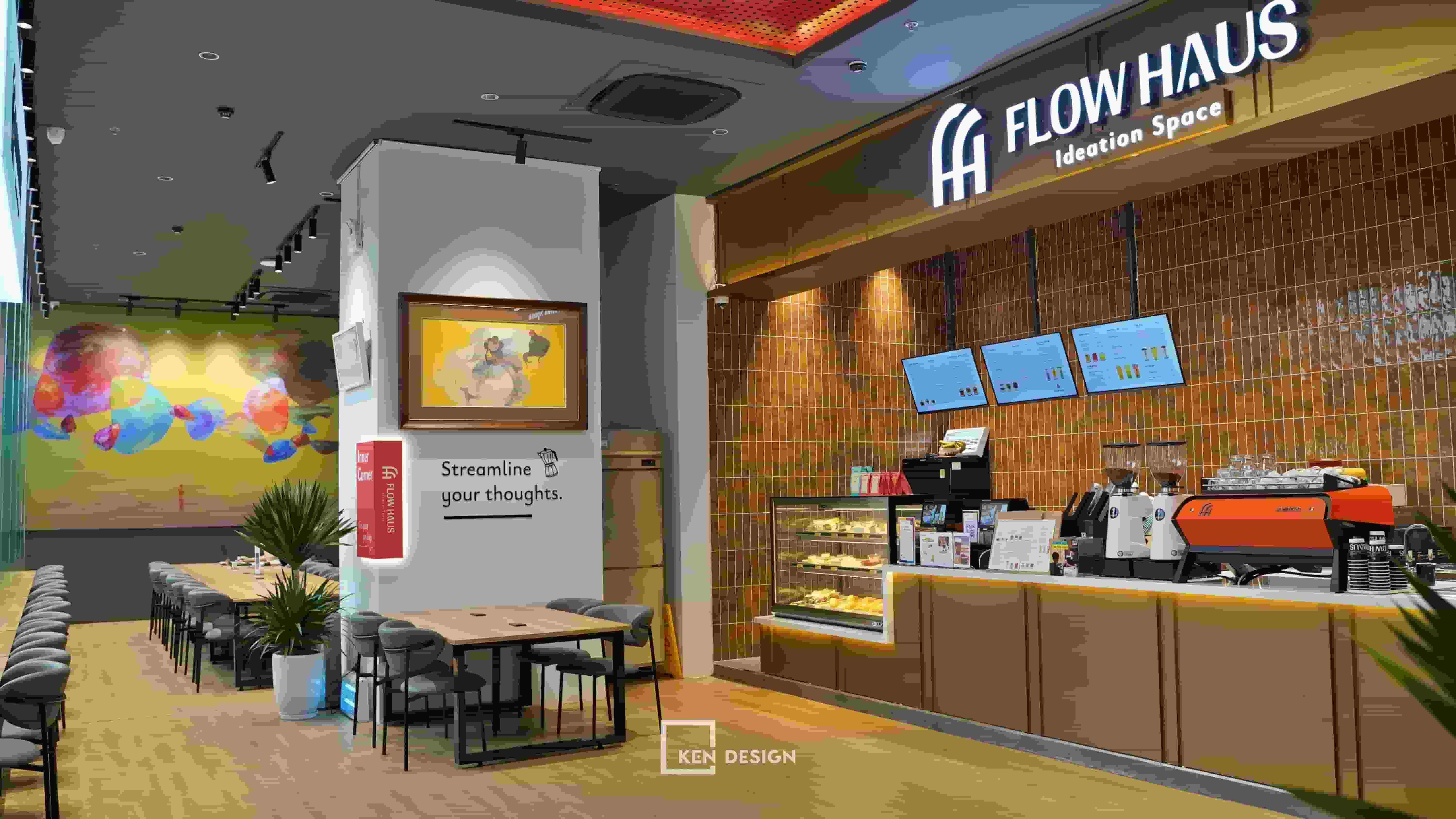
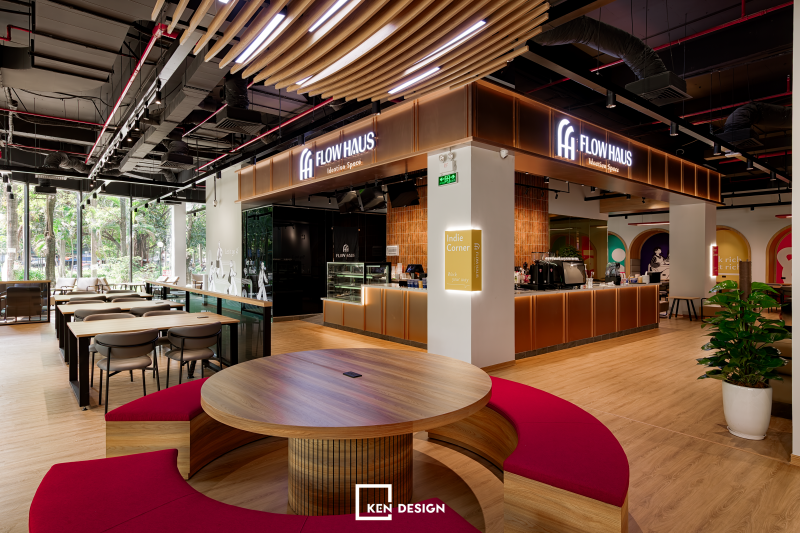
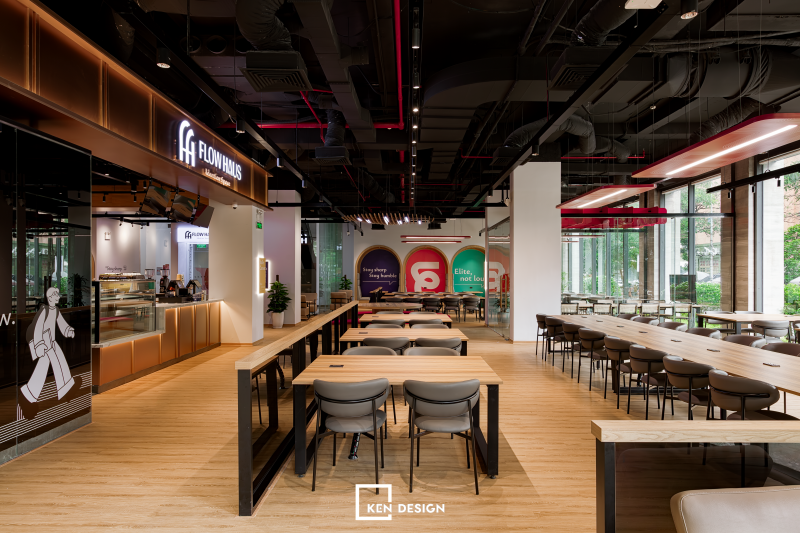
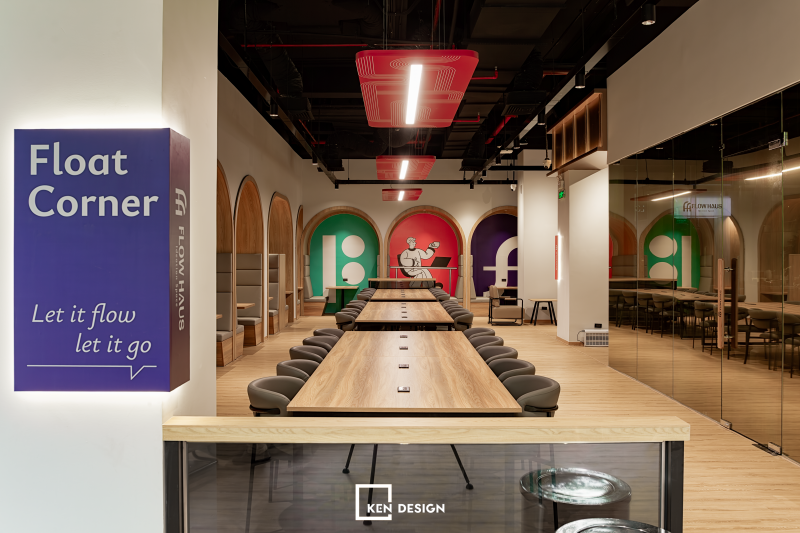
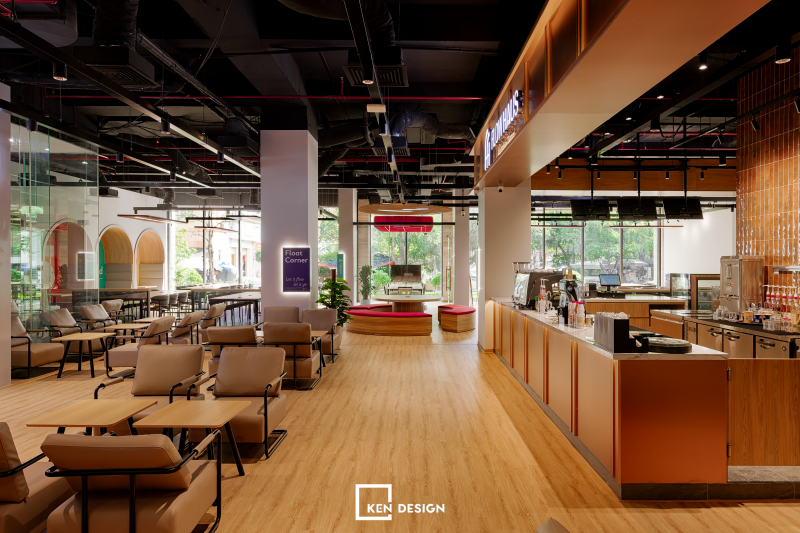
Upon entering FLOW HAUS, the most striking impression is the spacious and airy feel of the 600m² space. Although originally three separate units, the construction was executed so seamlessly that all previous boundaries completely disappear.
The dominant beige tones combined with natural light from large glass façades create a bright, pleasant atmosphere—an important factor for productivity and visual comfort.
Design vs. Reality
One of the most important criteria in construction quality evaluation is how closely the actual build matches the design. FLOW HAUS was assessed by the client as being up to 98% identical to the 3D design.
Actual completed project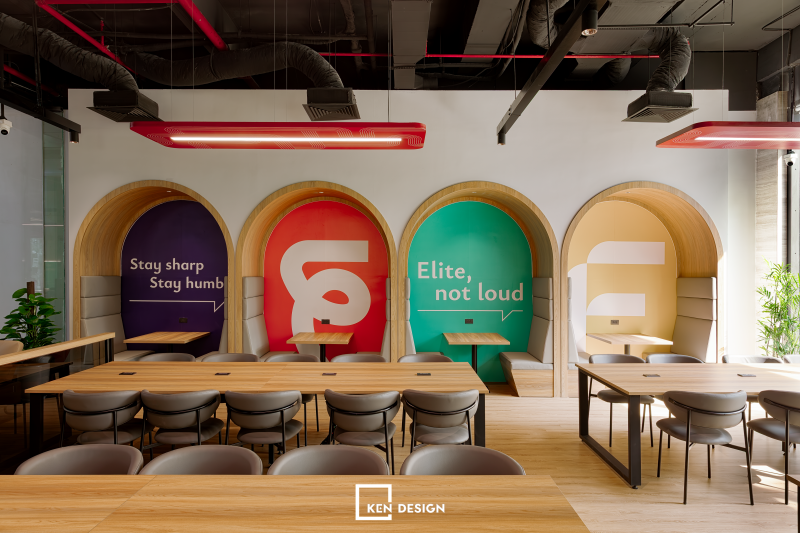 3D design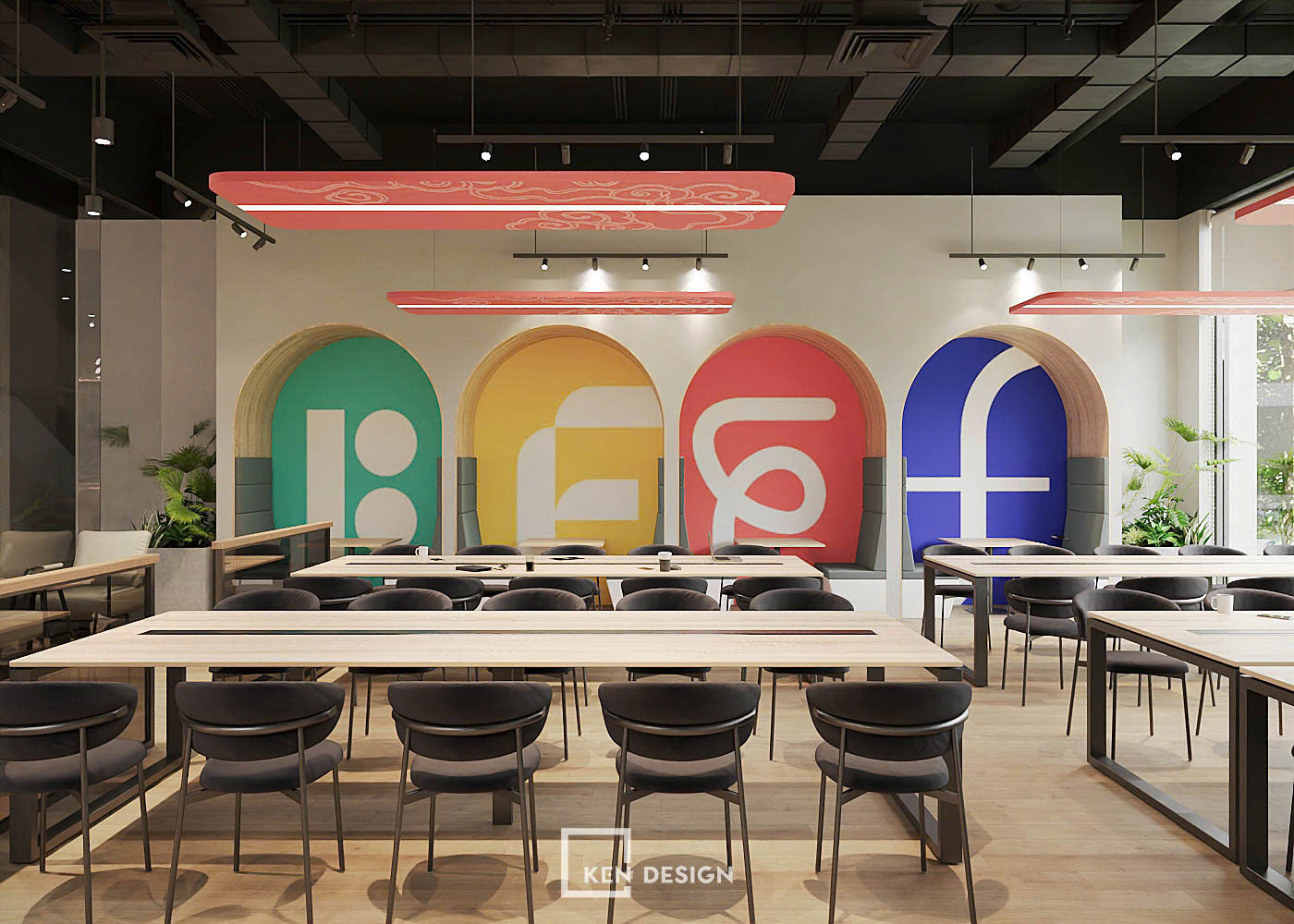
Detailed Evaluation of Each Category
Construction Quality
Exposed Ceiling
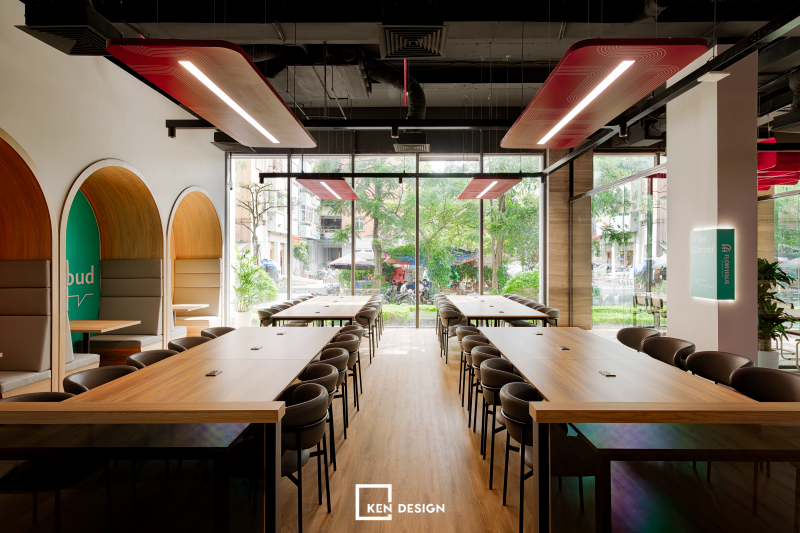
The exposed ceiling contributes to a more open and spacious feel by eliminating unnecessary layers and intentionally revealing MEP structures. Pipes and steel beams were arranged neatly, painted uniformly, and contributed to a modern industrial aesthetic. This approach optimizes ceiling height, reduces unnecessary material cost, and still maintains strong visual appeal.
Flooring
The flooring was executed with high precision—flat, sturdy, and without any squeaking. The wood-tone finish adds warmth and modernity.
Joint lines were treated cleanly, and the bar area includes a well-calculated drainage slope with no pooling issues.
Partitions & Doors
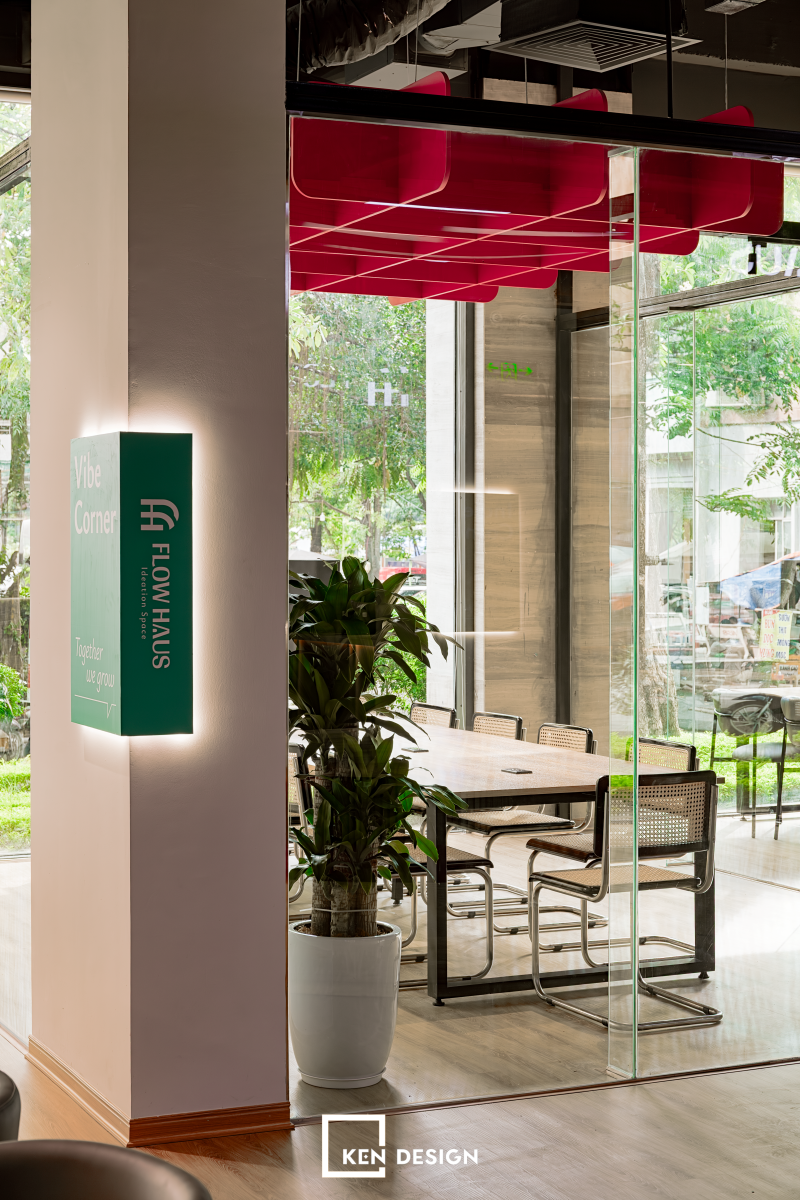
Glass partitions for meeting rooms were installed with excellent stability using dày cường lực (tempered glass), with proper soundproofing—voices inside VIP meeting rooms are barely audible from outside.
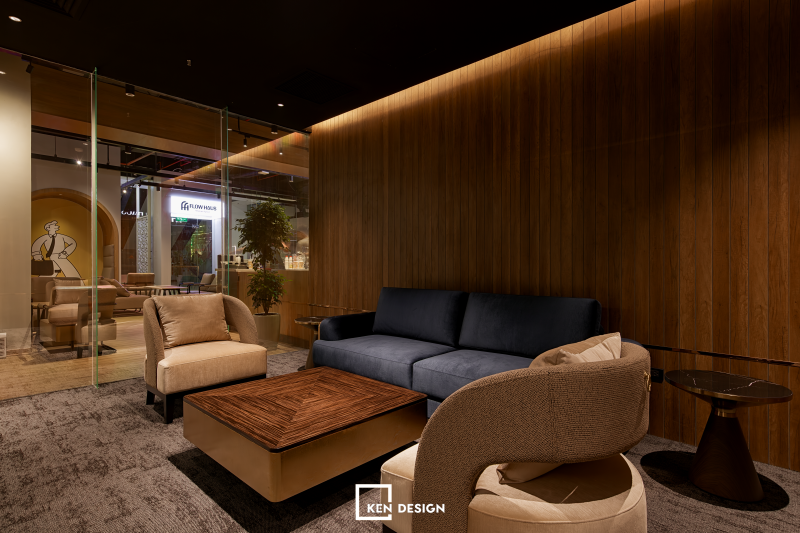
The VIP meeting room, designed with darker tones to contrast the main space, was constructed with elevated craftsmanship.
Furniture Installation
Work Desks
A major highlight of the project is the work desk system made with superior finishing quality.
-
MDF veneer tops remain perfectly flat with no warping.
-
Veneer colors are consistent due to careful material selection.
-
Corner joints are precise with no gaps.
-
Integrated power outlets are secured firmly, and all wiring is concealed neatly.
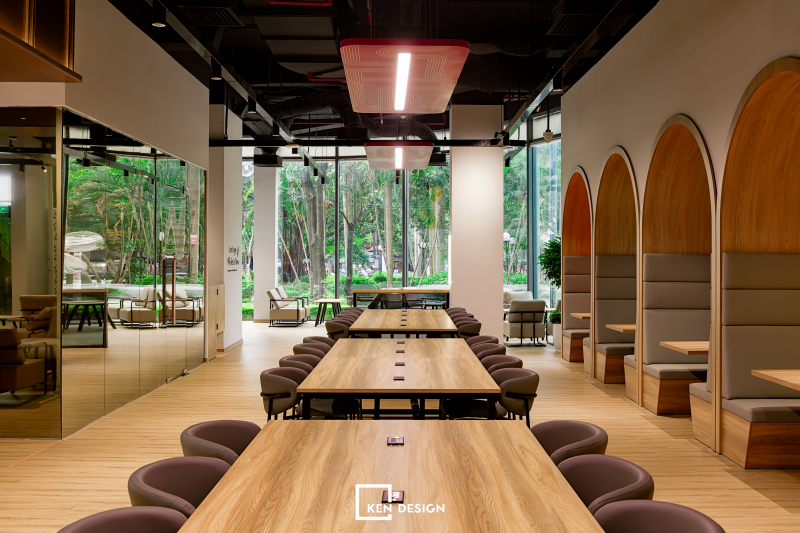
The 75cm ergonomic height is comfortable for most Vietnamese users. After more than two months of operation, the surface still retains its gloss and shows minimal scratching thanks to a high-quality protective coat.
Chairs
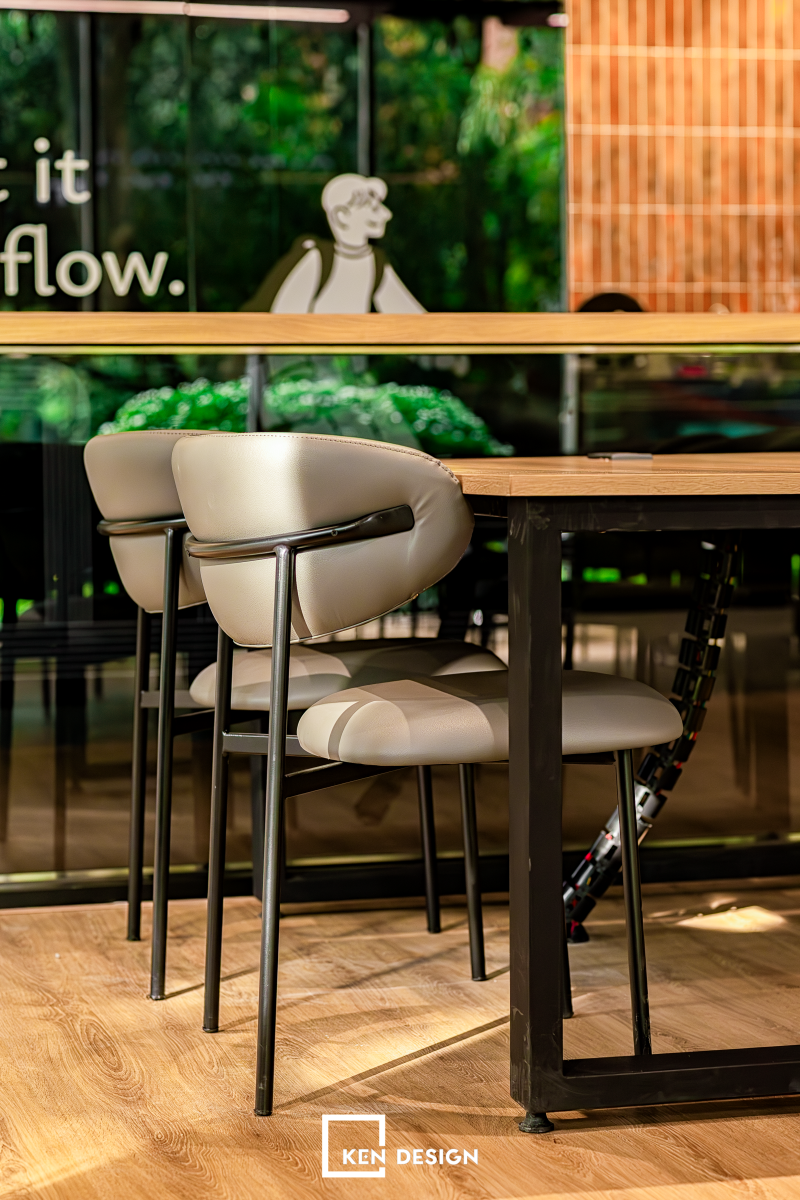
Chairs were chosen according to each functional zone. Work chairs have comfortable but firm cushioning, with a backrest shaped to support long working hours.
Sofas
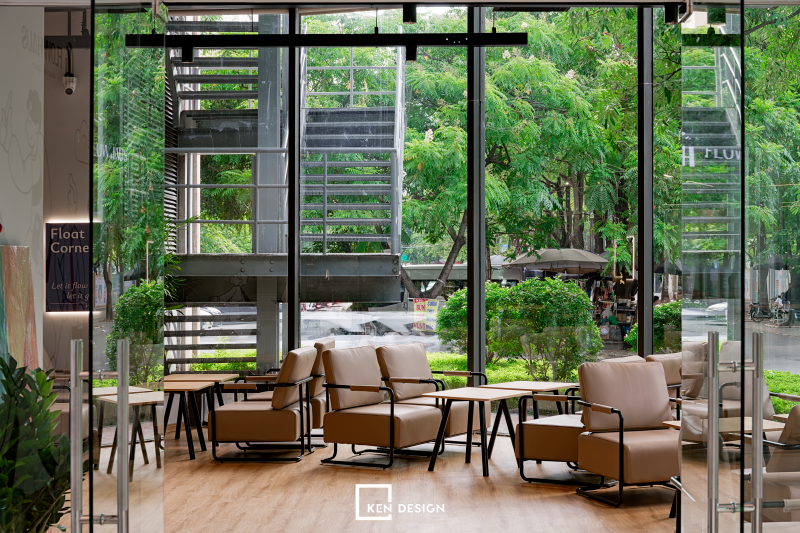
Sofas in the café zone are 40–45cm in height for a relaxed posture. Upholstery fabric is water-resistant—important for spill-prone zones.
Electrical & Lighting System
The electrical system was constructed professionally with stable and safe operation.
The lighting system is multi-layered and well-optimized:
-
Daytime: maximum natural light to reduce energy consumption.
-
Nighttime: a mix of LED panels, spotlights, and LED strips creates a bright yet warm working environment.
Pendant decorative lights are used selectively as accents without overwhelming functionality. Dimmers operate smoothly, allowing flexible brightness control throughout the day.
Color & Decoration
Color Palette
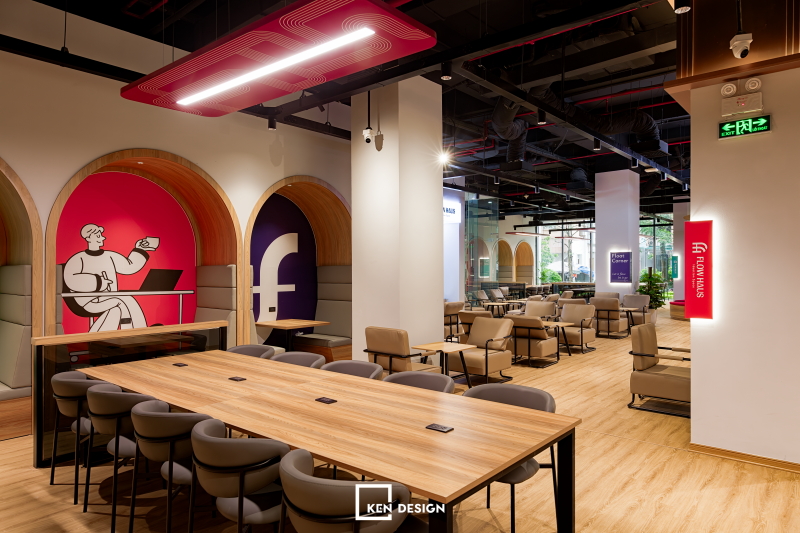
The 70% beige – 20% white – 10% natural wood palette is reproduced with high consistency. Accent colors in blue, teal, yellow, and red were placed strategically to add visual interest without distraction—especially blue in high-concentration zones, demonstrating good understanding of color psychology.
Branding
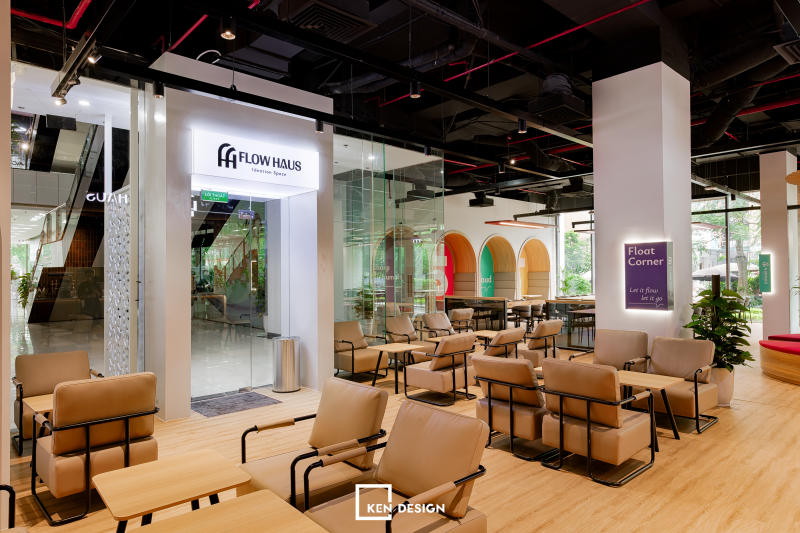
Branding elements were subtly integrated without feeling intrusive. Artwork is installed at optimal eye level, enhancing the experience while maintaining focus.
The “less is more” approach in decoration proves effective—ensuring a clean, uncluttered environment ideal for work.
Functional Zoning
Float Corner
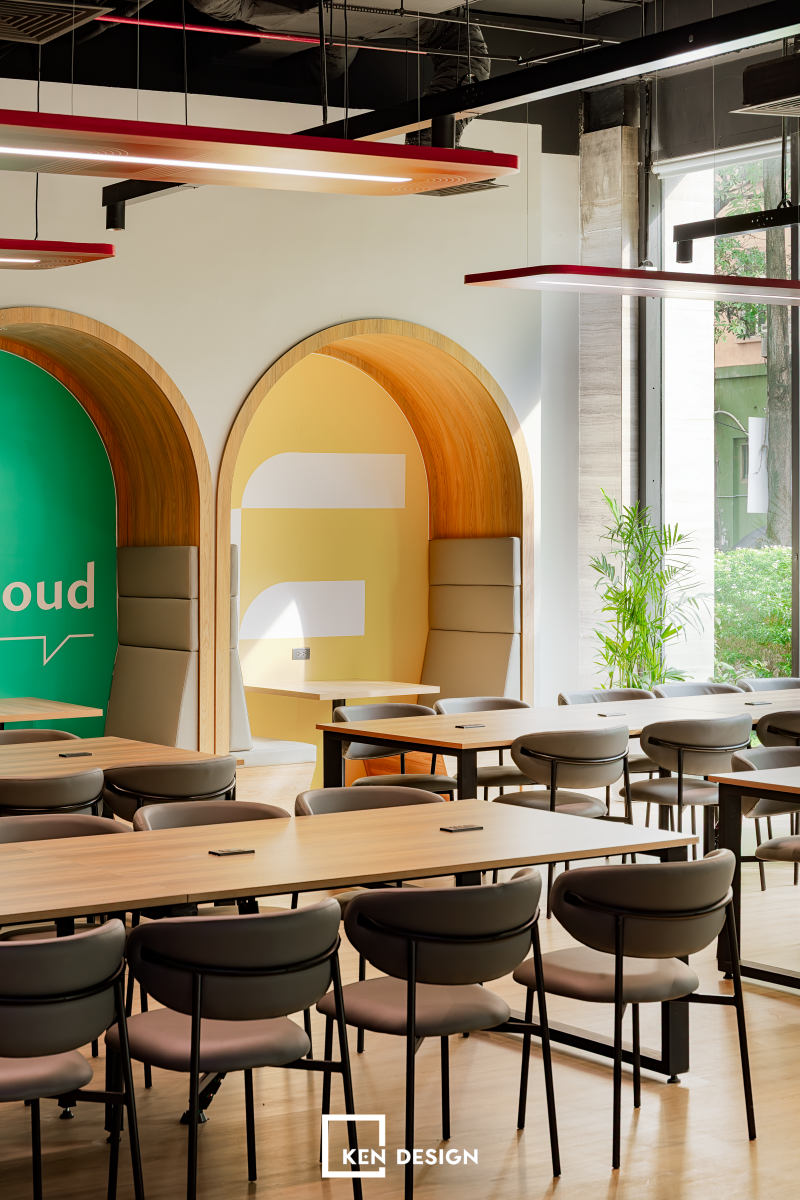
Located near the large glass façade, maximizing natural light—perfect for casual conversations or informal group meetings.
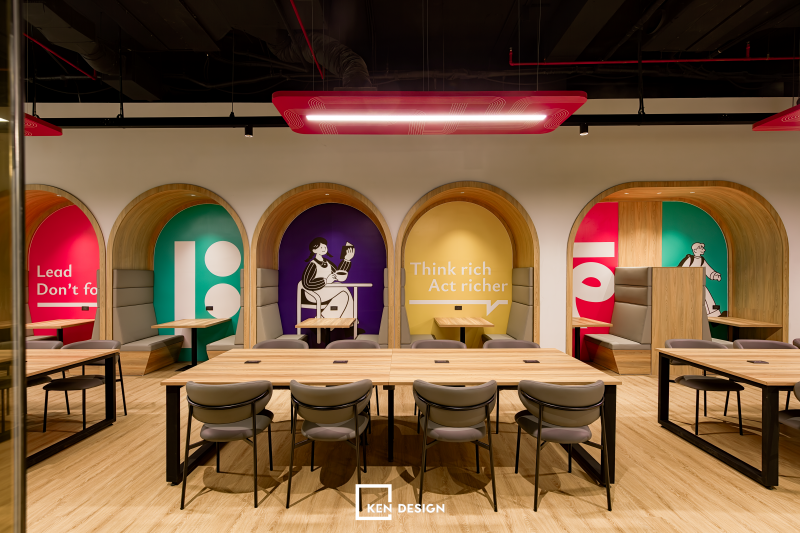
Inner Corner - Indie Corner
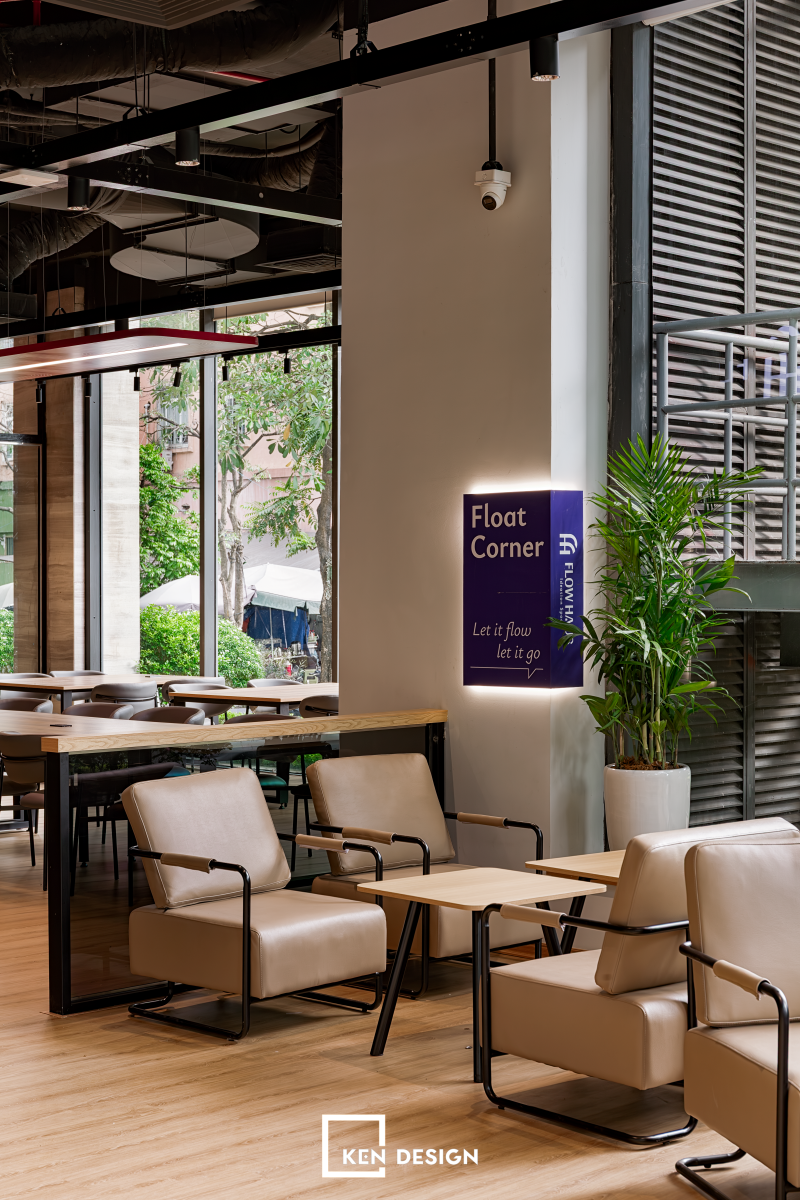
Privacy booths with medium-height partitions provide focus without feeling enclosed.
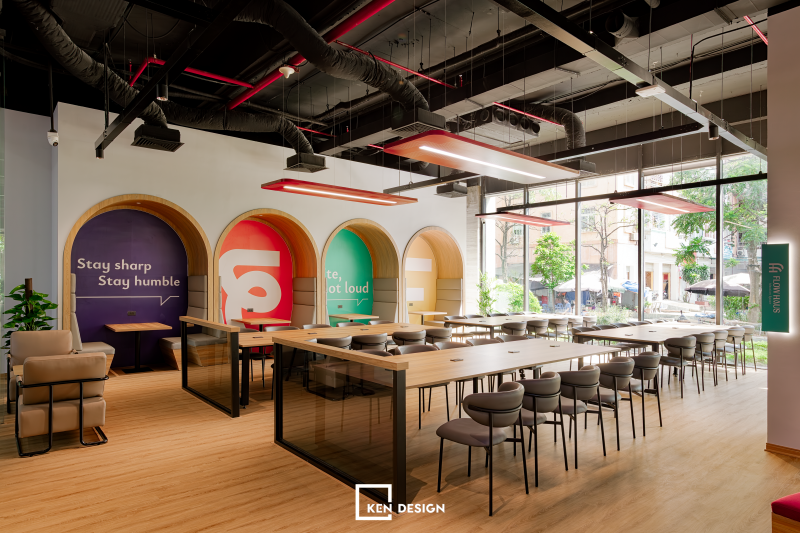
Clarity Corner
Long communal desks installed firmly, with reasonable spacing between seats.
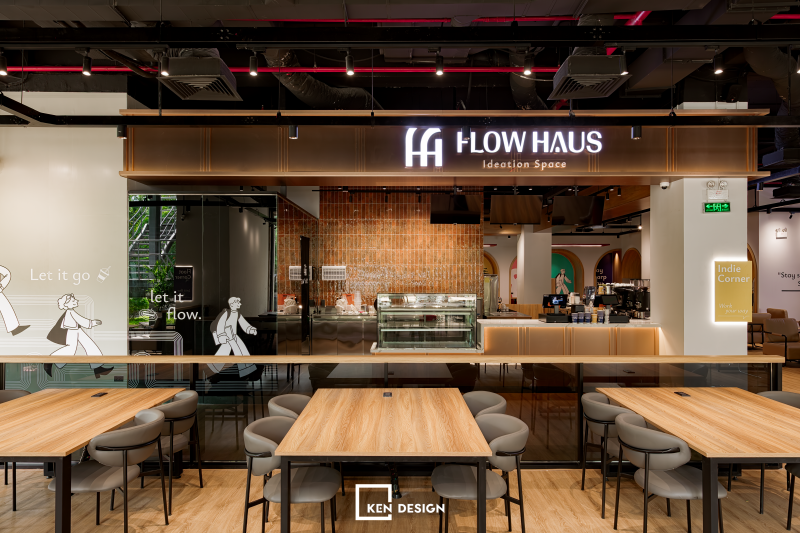
Vibe Corner
Tables sized for 4–6 people, with easily movable chairs for flexible group work.
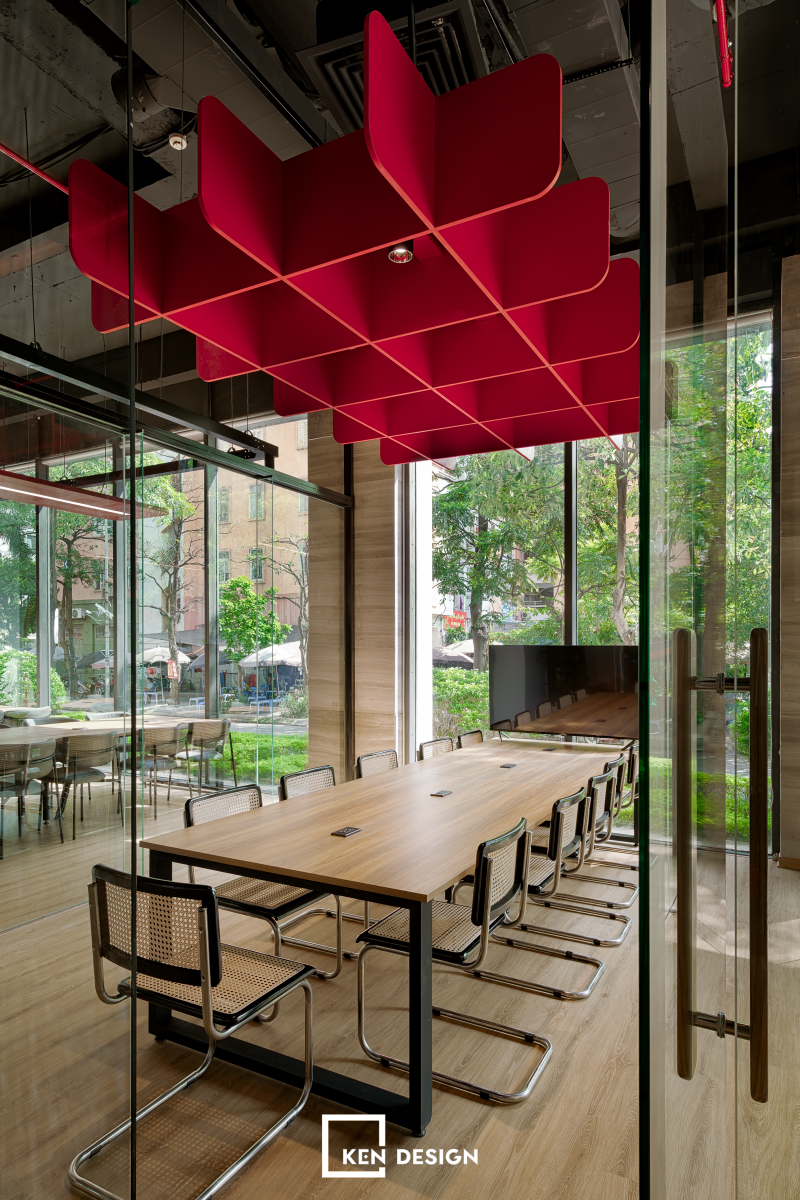
Meeting Rooms & VIP Room
These are the most meticulously executed areas with excellent soundproofing, premium materials, and carefully designed lighting. The VIP room’s dark palette creates a formal, premium atmosphere.
Overall Evaluation
FLOW HAUS is a well-executed coworking café project with high-quality finishing and optimal functionality. After more than two months of operation, the space remains in excellent condition with no signs of premature wear.
Who Is This Model Suitable For?
FLOW HAUS is a valuable case study if you plan to invest in a coworking café with:
- Area: 400–800m²
- Mid-to-high investment budget
- Target: office workers & freelancers needing a professional work environment
FLOW HAUS demonstrates that with proper planning, design, and execution, you can create a visually appealing and operationally efficient coworking café.
If you need design and construction services for a café coworking model similar to FLOW HAUS, feel free to contact KenDesign-the team behind this project from concept to completion.
Contact Information:
Fanpage: KenDesign
>> See more: Design of FLOW HAUS coworking café