Are you planning to open a café with a unique identity but do not yet know how to turn your ideas into a space with real soul? This article offers a detailed and vivid case study through the design of Fu.yn.ka cafe in Phuc Yen, Vietnam, helping you better understand how a concept can be transformed into a practical and emotionally engaging space. Let us explore this project together.
1. Investor Insight & Challenges
The investor of Fu.yn.ka had a very clear vision of the desired style. They were not searching for direction; instead, they knew exactly what they wanted: a raw, rustic space that feels close to nature, warm, and emotionally comforting. This was a significant advantage, because alignment between the design team and the investor is the foundation of every successful project.
From the very beginning, the brief for the design of Fu.yn.ka cafe in Phuc Yen, Vietnam was clearly defined: to create a café located on the 4th floor and the rooftop of a newly built building, harmoniously combining indoor and outdoor areas to deliver a true multi-level experience for customers in Phúc Yên.
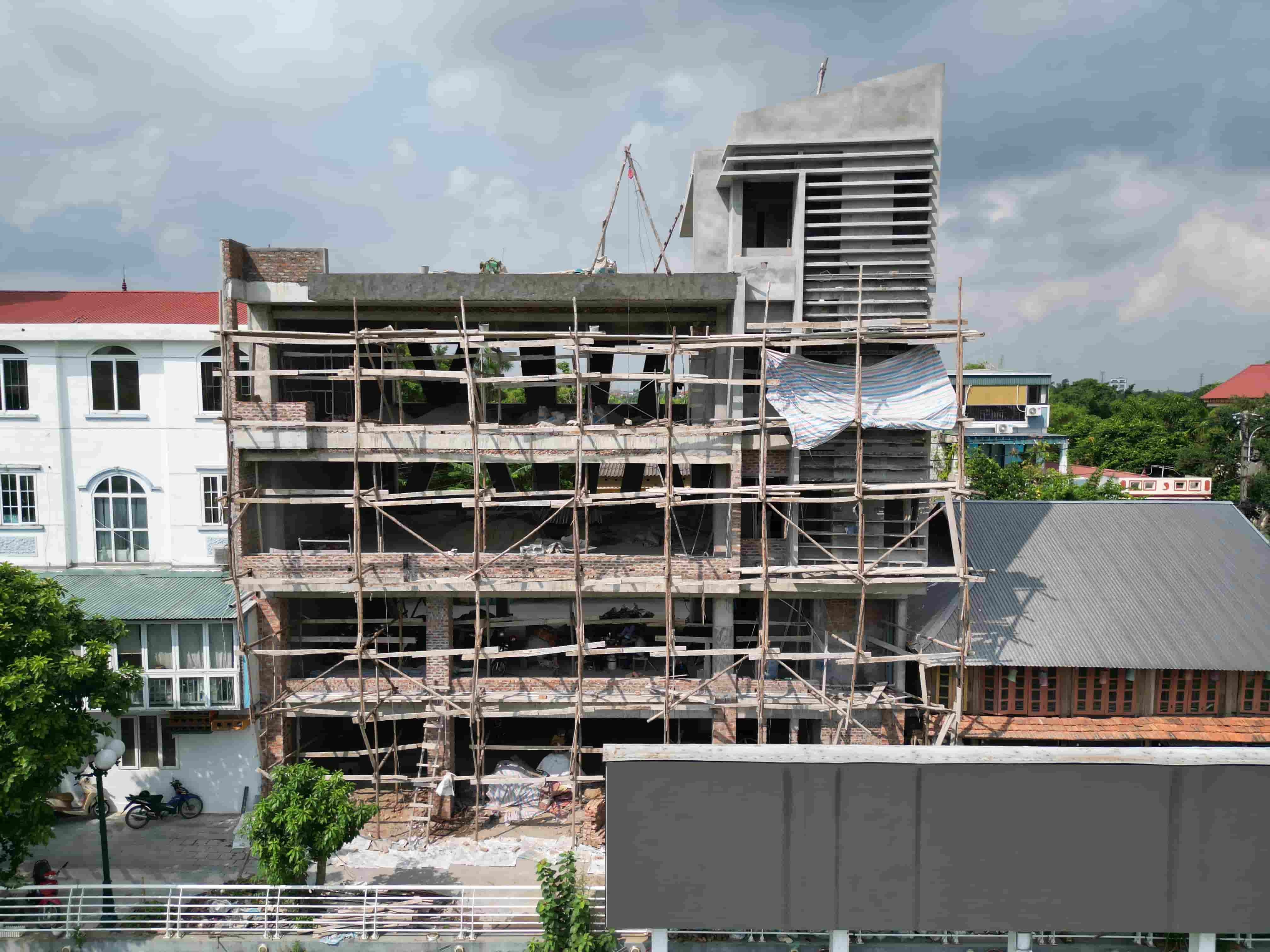
2. Assessment of the Existing Site
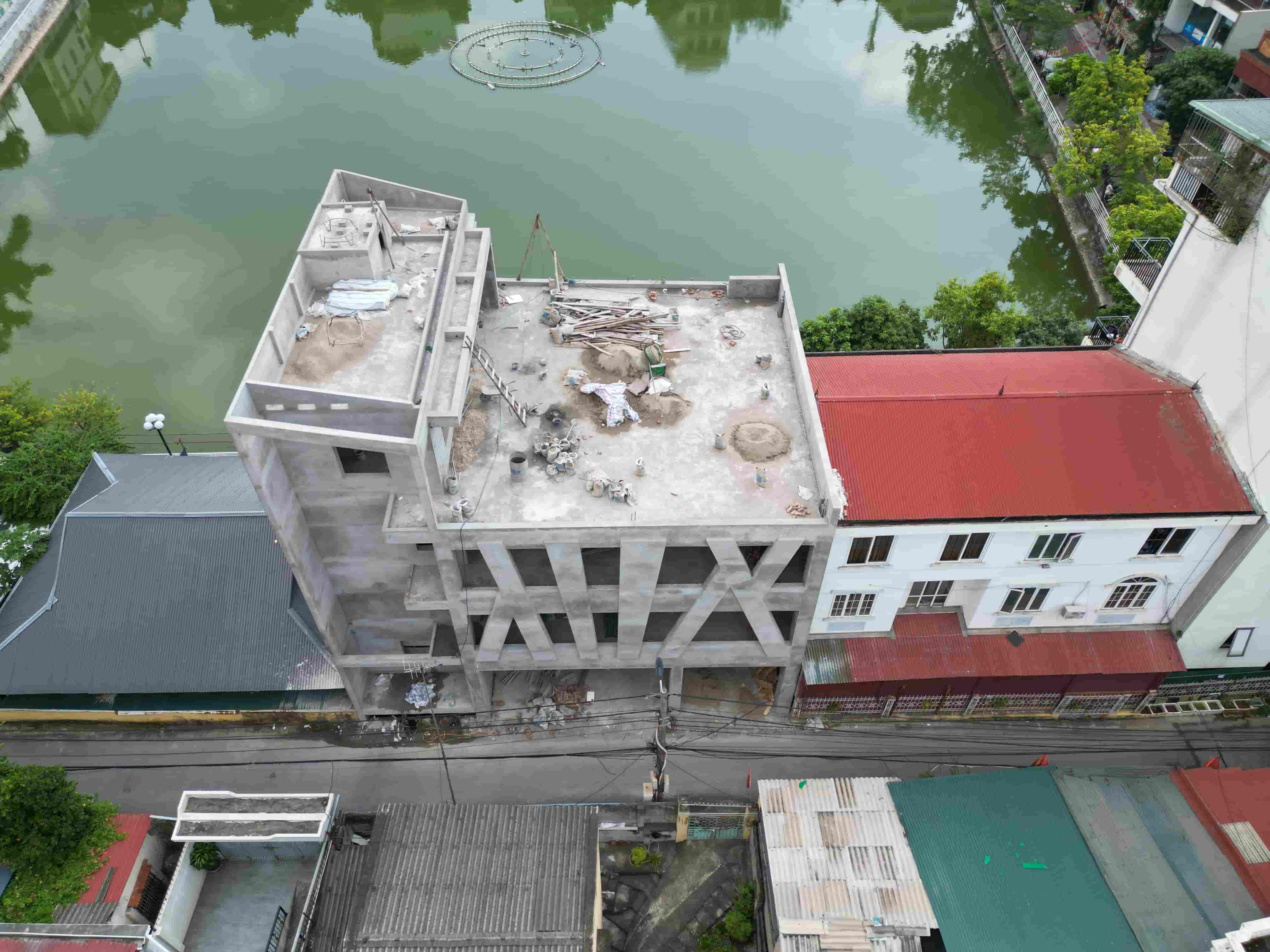
The Fu.yn.ka site has a total area of 400 m², including the 4th floor and the rooftop, within a building that has completed its structural phase. This condition is ideal for design implementation: the structure is stable, while still allowing flexibility in interior treatment and surface finishing in line with the chosen concept.
3. Design Concept & Style
The decision to choose a rustic style came directly from the investor’s desire to bring the atmosphere of Da Lat to the northern midland region. Rustic style does not simply mean leaving materials unfinished and considering the job done. It is a design philosophy that emphasizes authenticity, celebrates the natural beauty of materials, and creates a space where people feel healed the moment they step inside.
4. Layout Solutions
4.1. 4th Floor
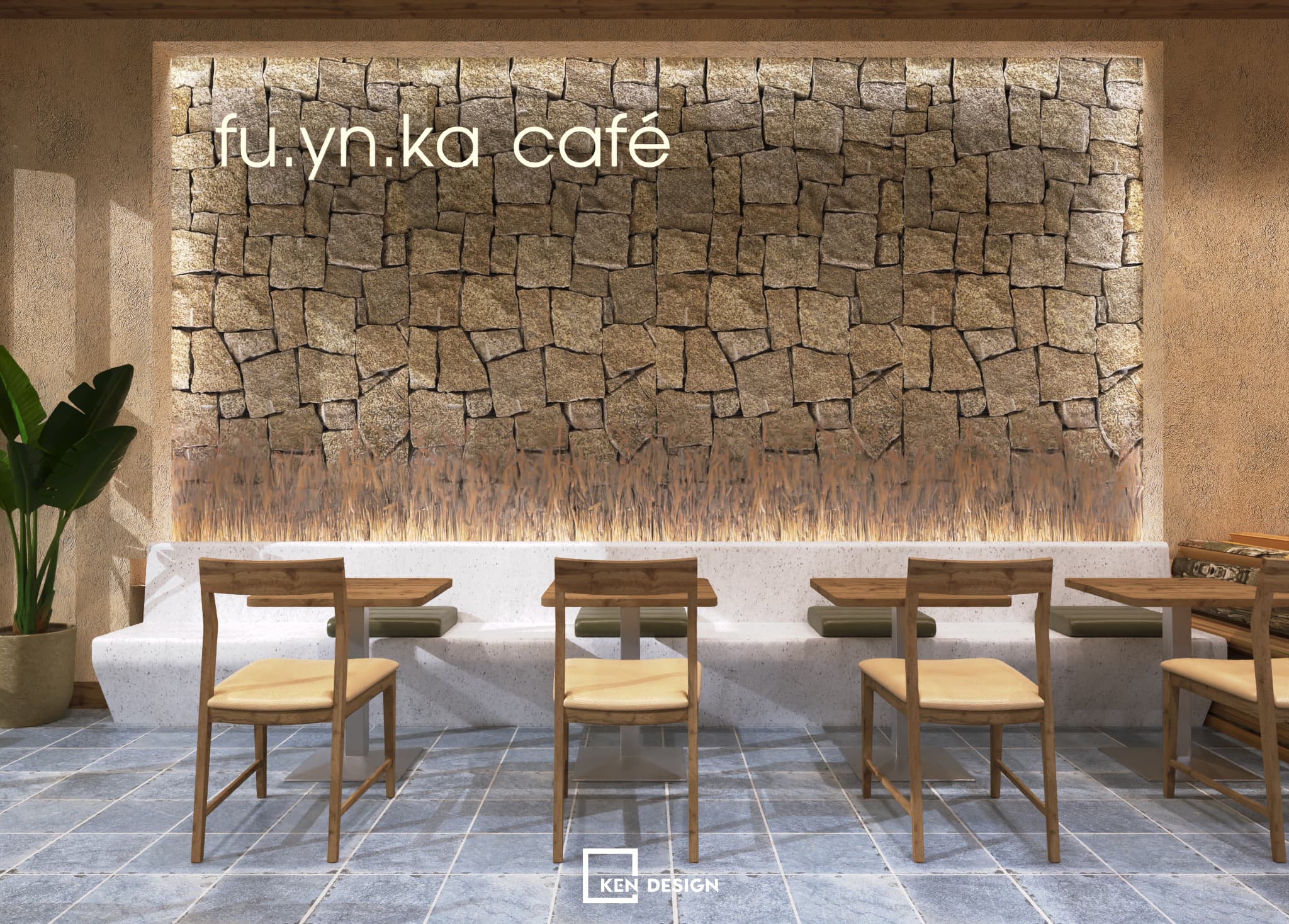
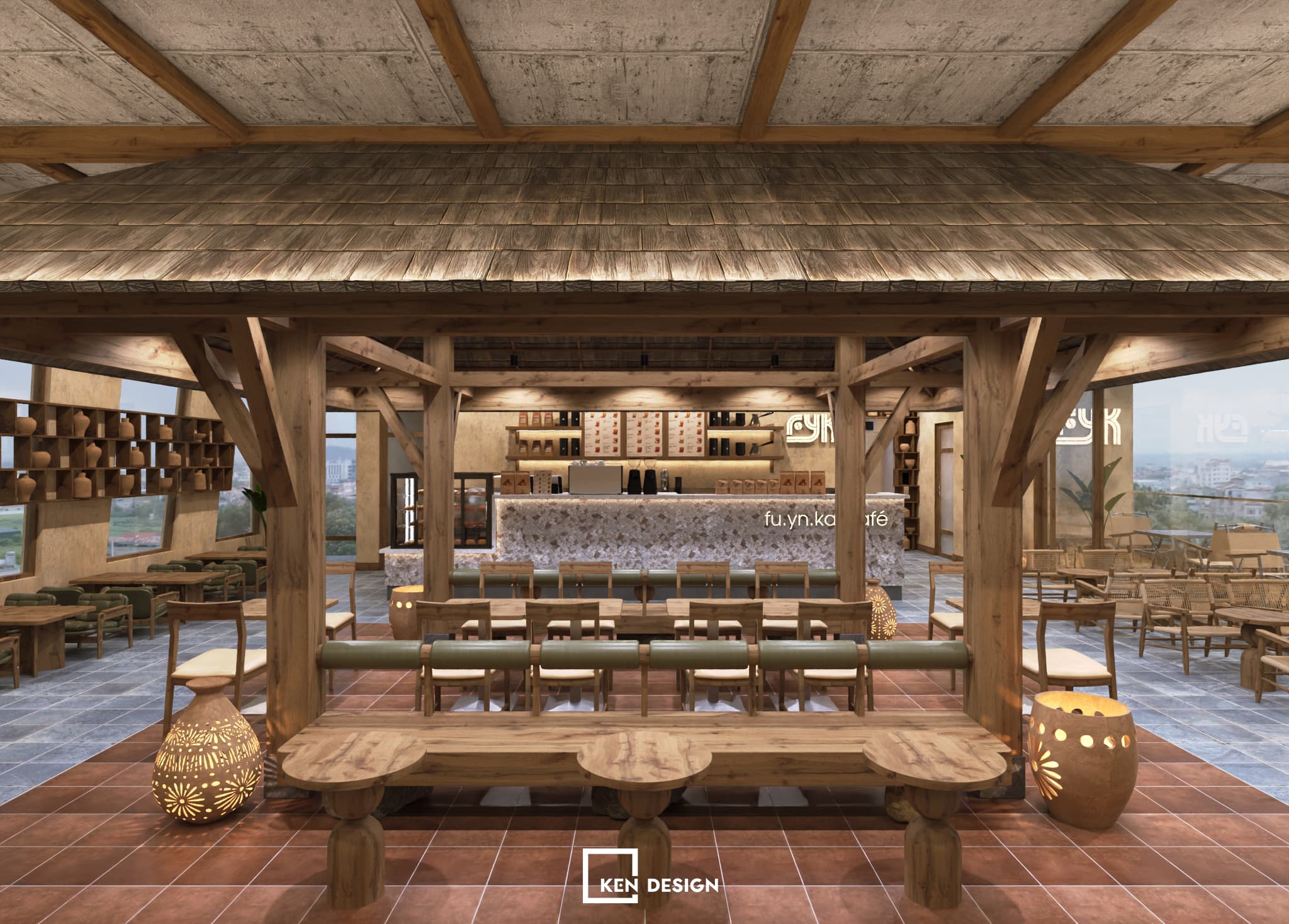
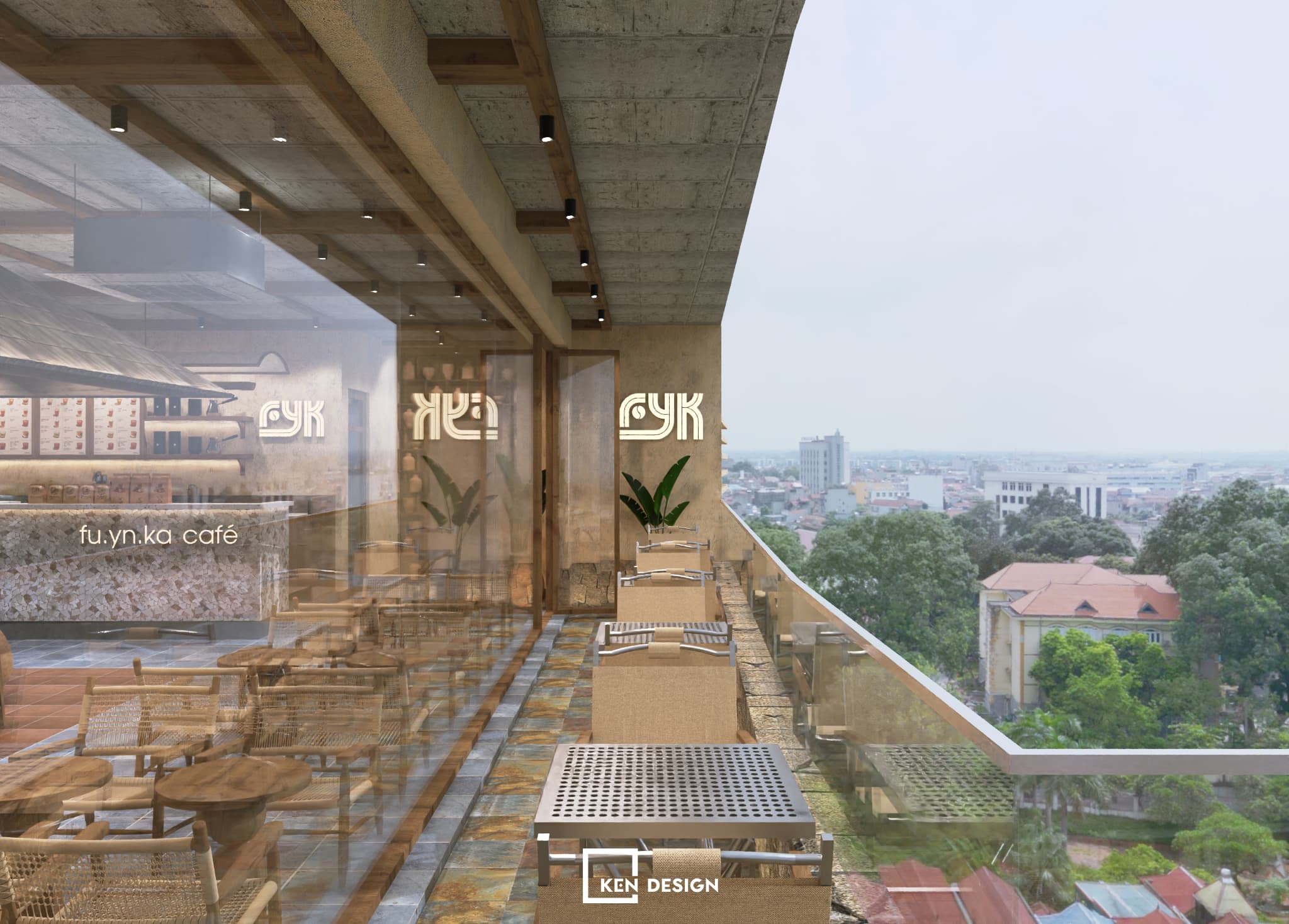
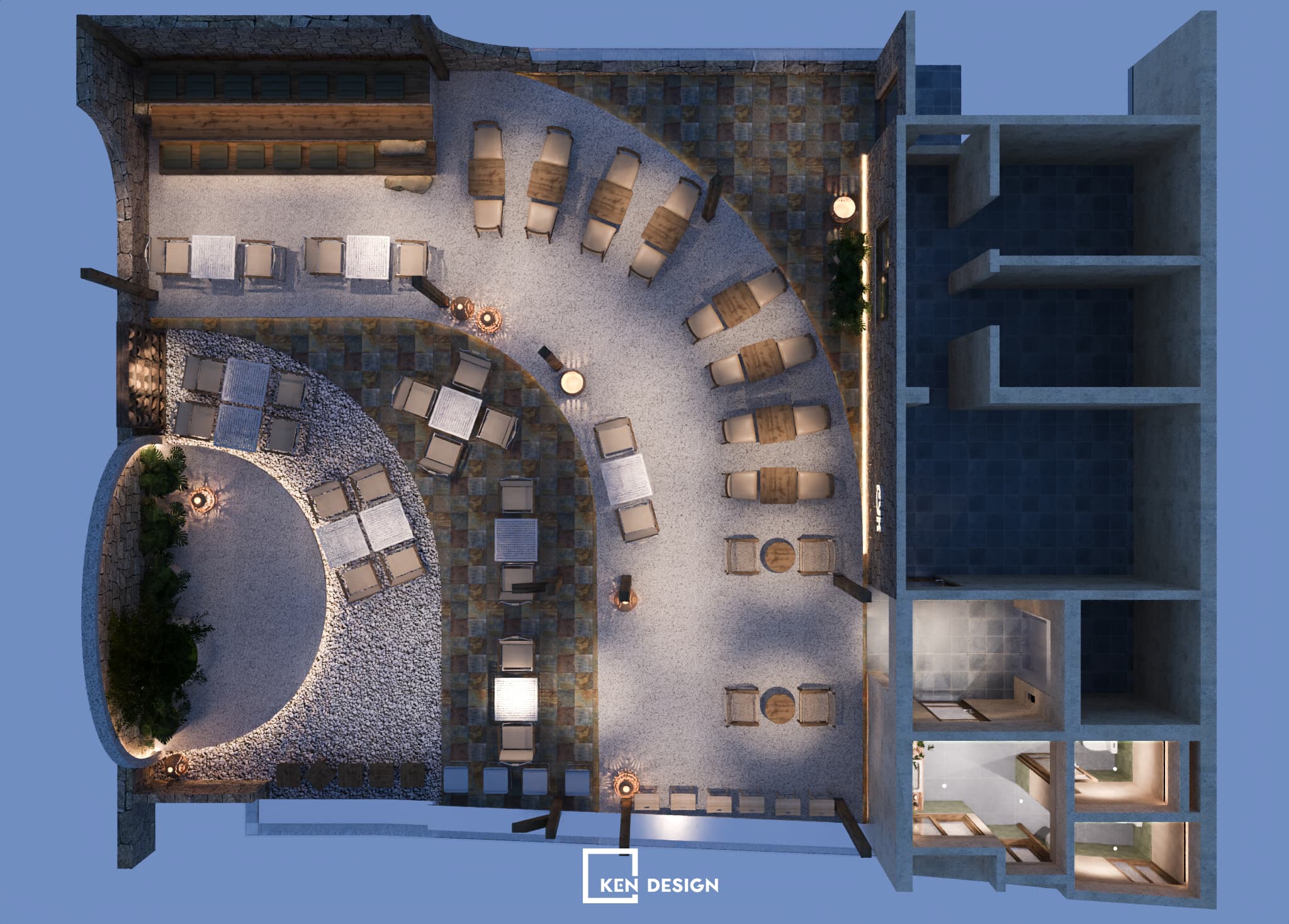
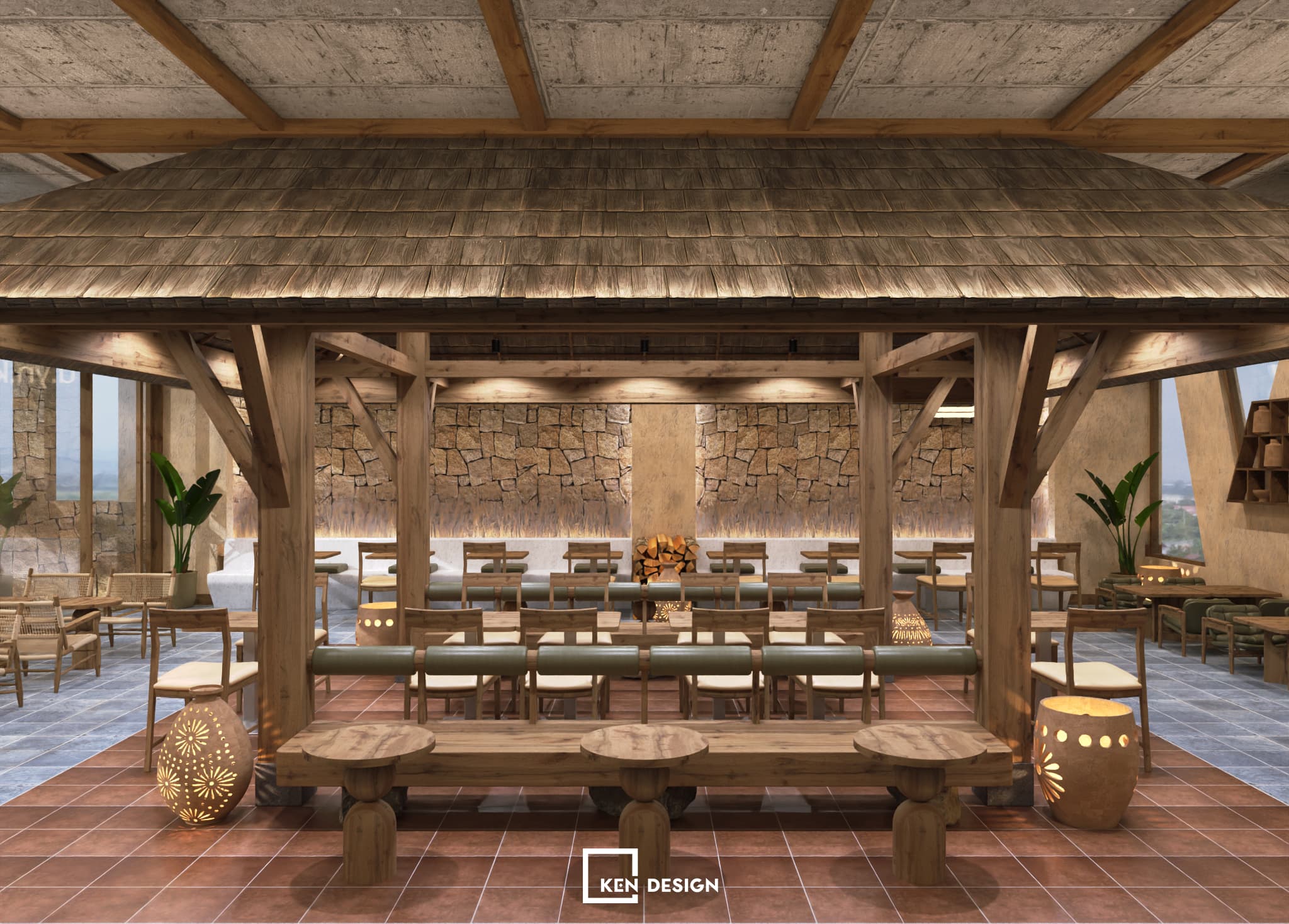
When viewed from a sectional perspective, the 4th-floor layout appears clearly structured and logically organized. The central area is the main seating zone, featuring long communal tables placed on red brick flooring, serving as the gathering point of the entire space. Surrounding this core are smaller seating areas with diverse table and chair types, naturally distributed along the walls.
The bar counter is positioned conveniently, allowing service across the whole floor. On the right side are auxiliary rooms, including restrooms and the staircase.
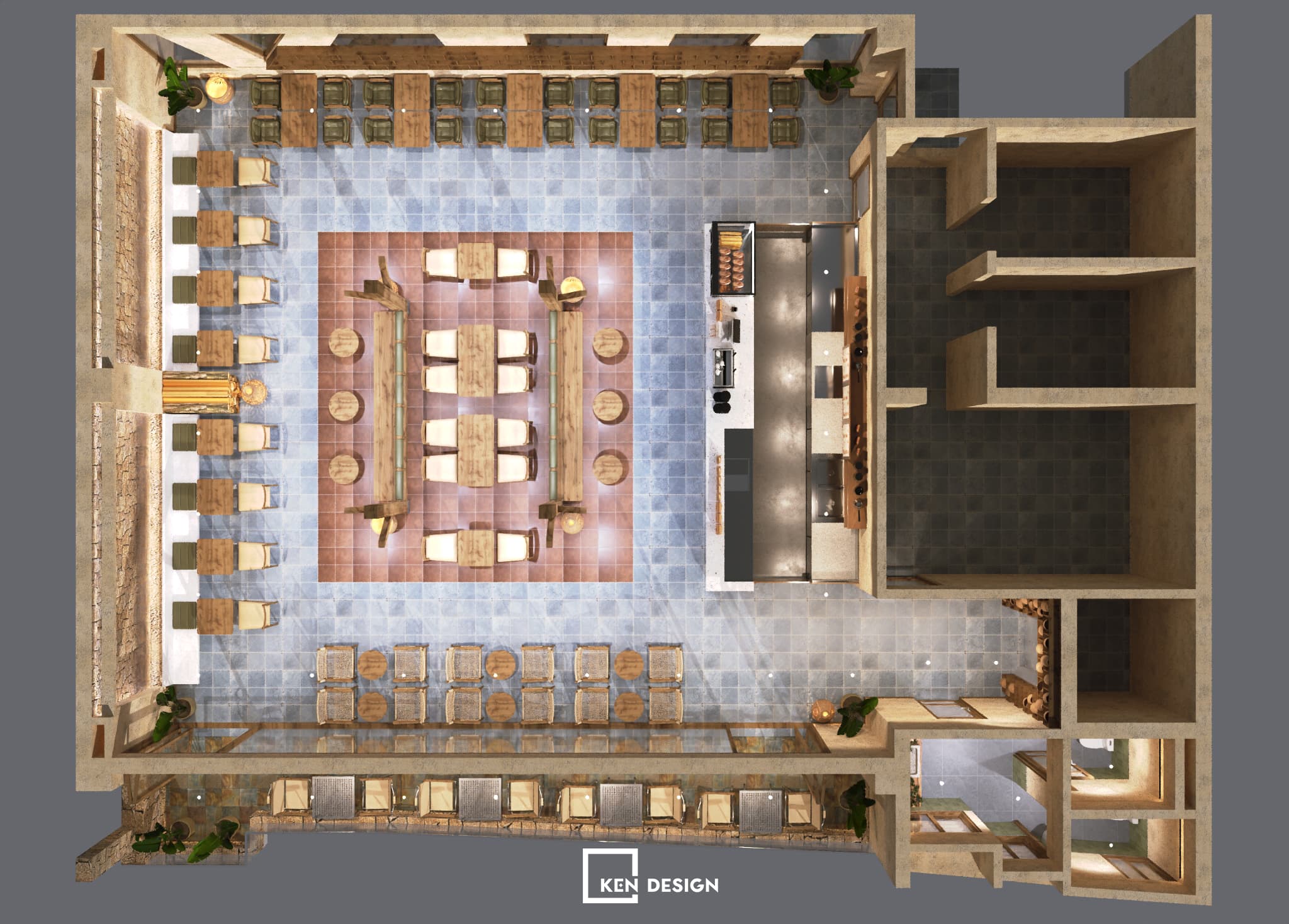
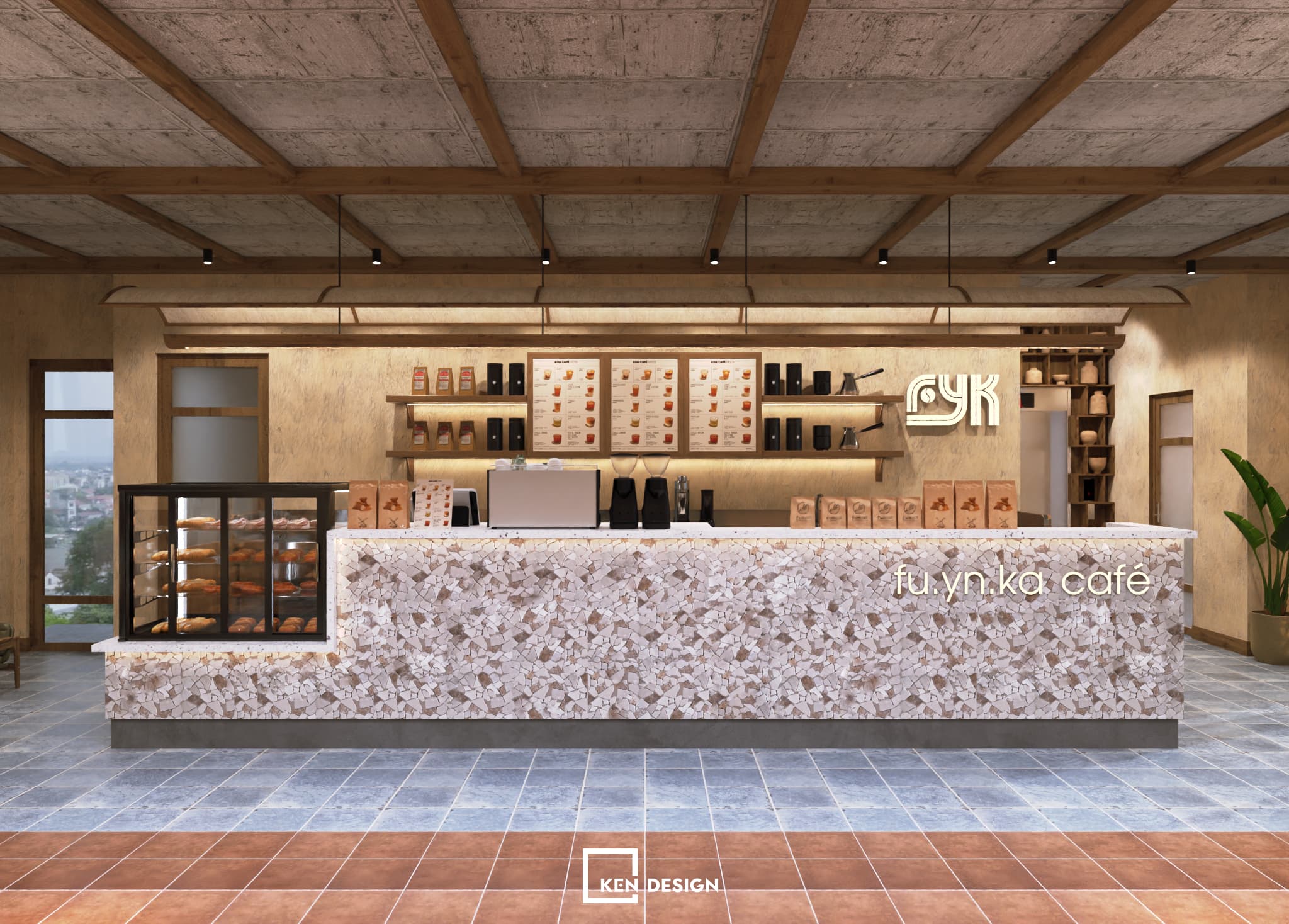
The indoor seating area follows the principle of creating many “small private zones” within a larger space. The balcony on the 4th floor functions as an extension of the interior while remaining protected by the building structure.
4.2. Rooftop
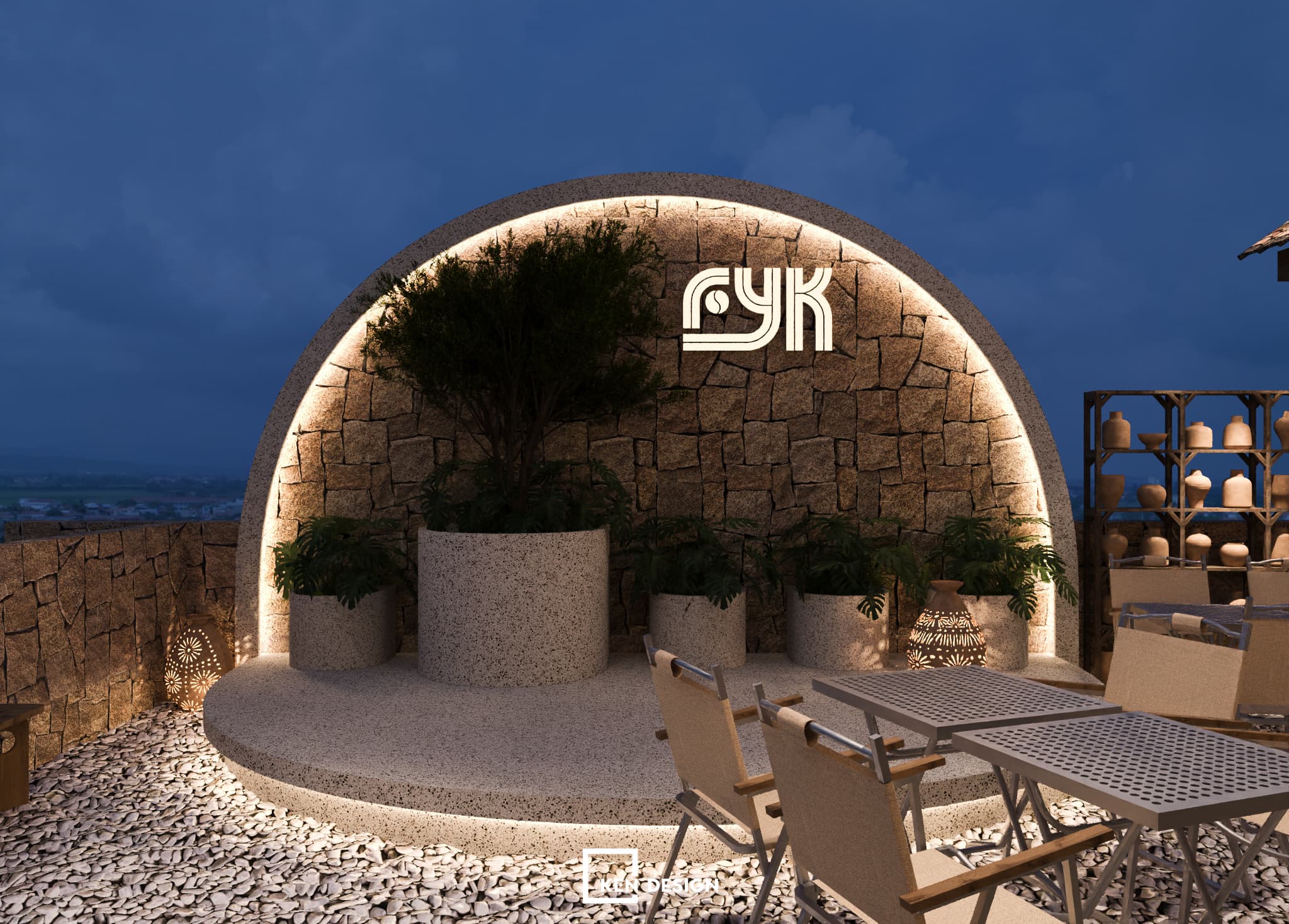
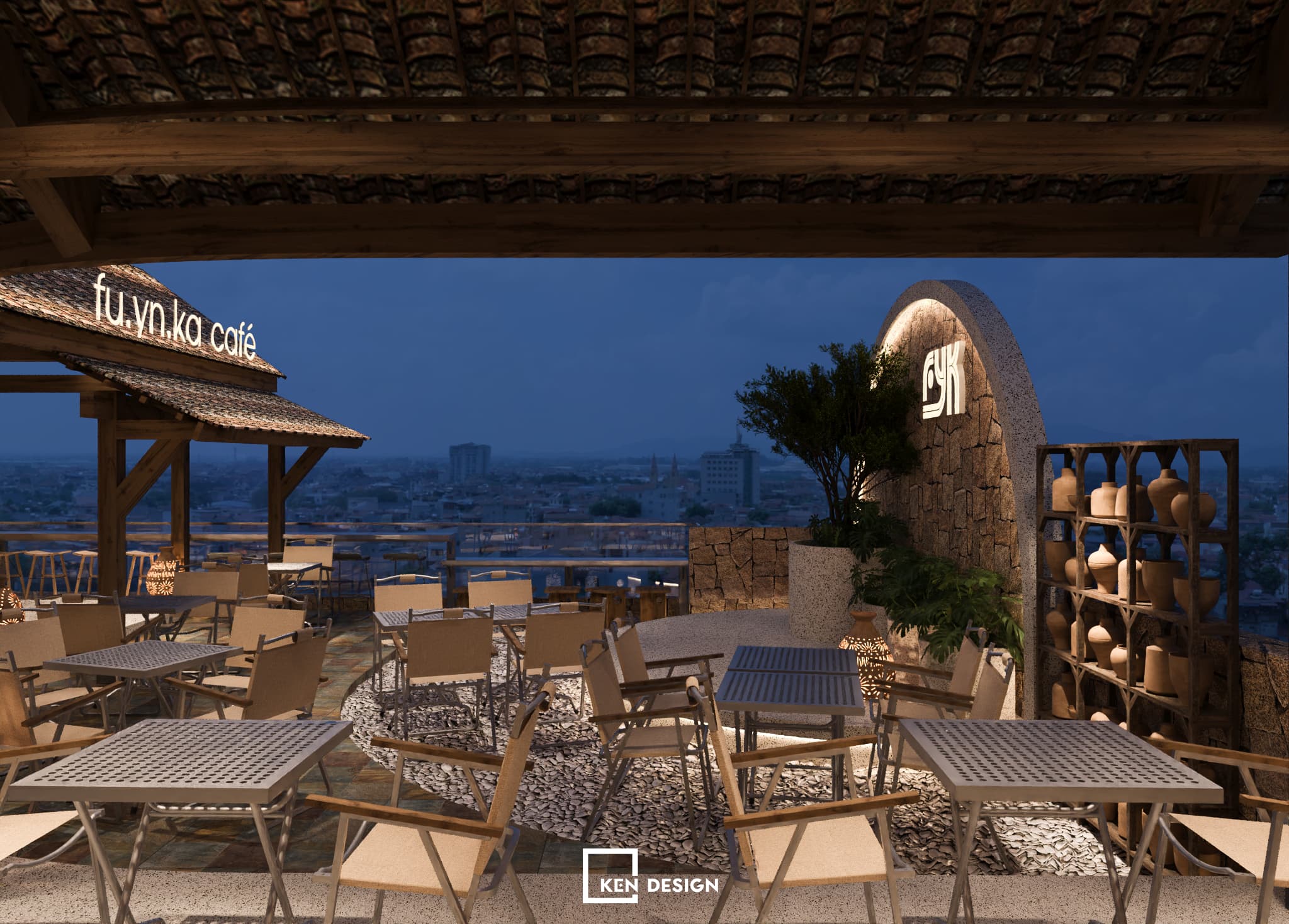
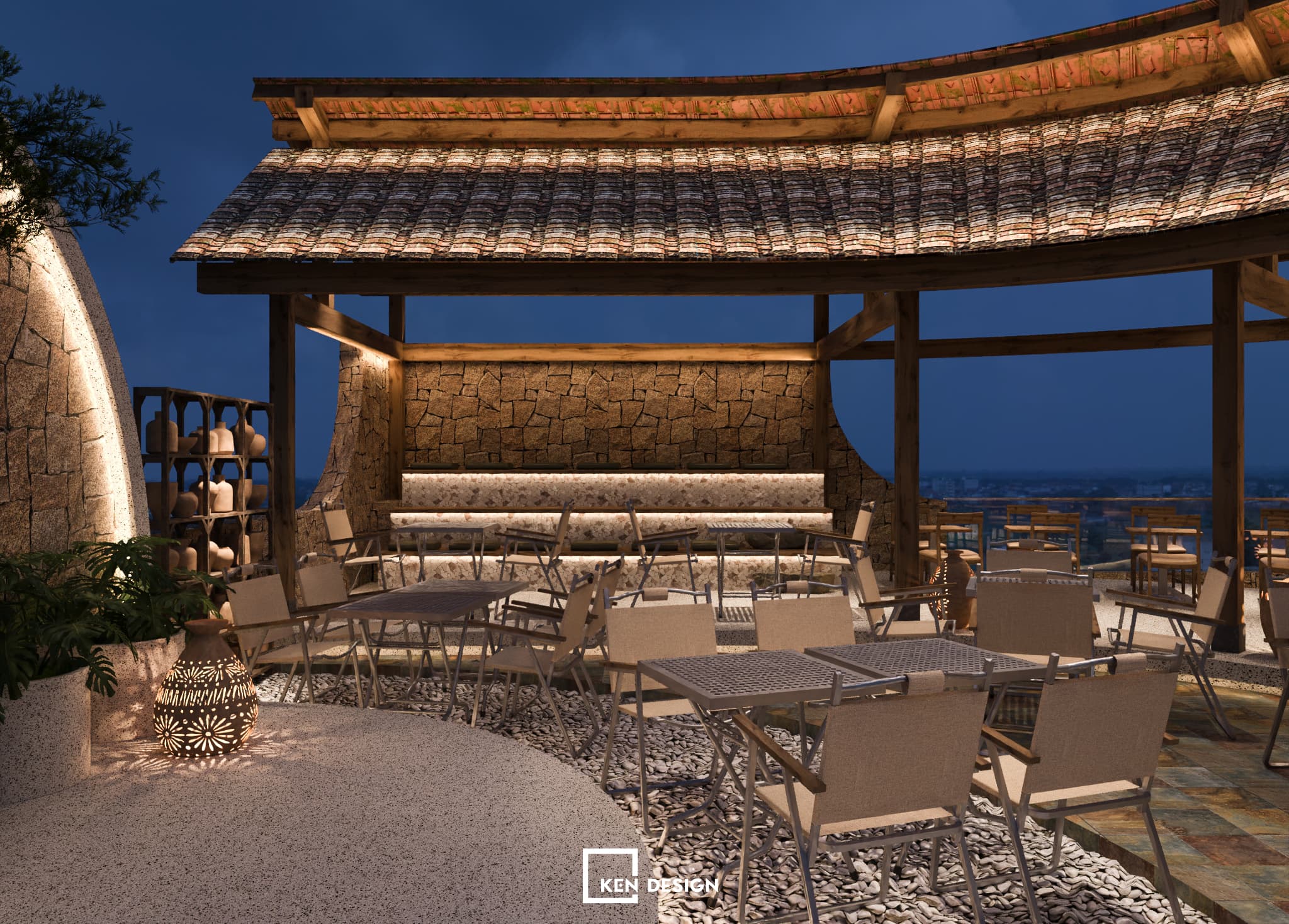
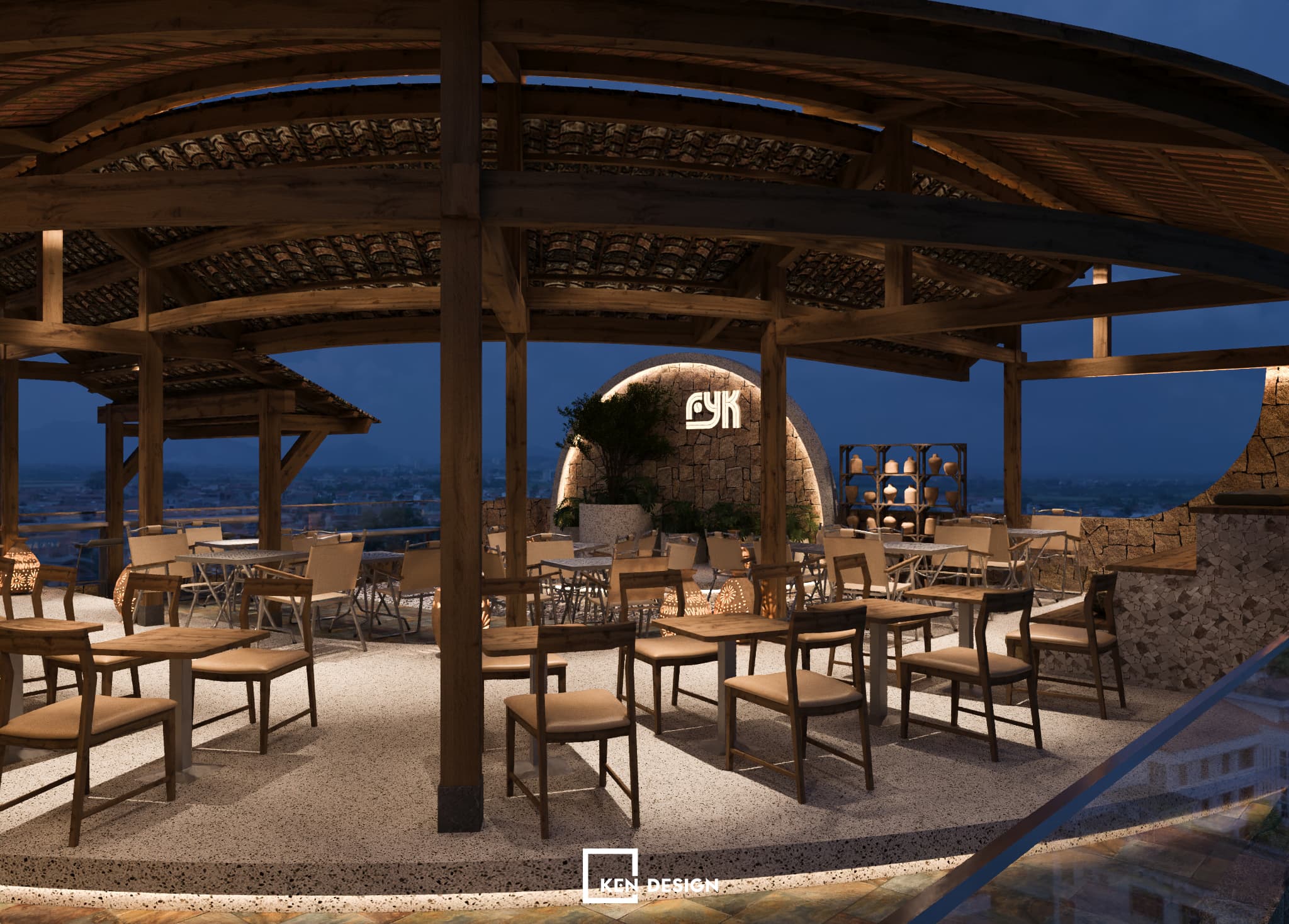
This is the most distinctive feature of the design of Fu.yn.ka cafe in Phuc Yen, Vietnam compared to typical rooftop cafés. Seen from above at night, the rooftop is divided into two clear zones: covered and uncovered areas.
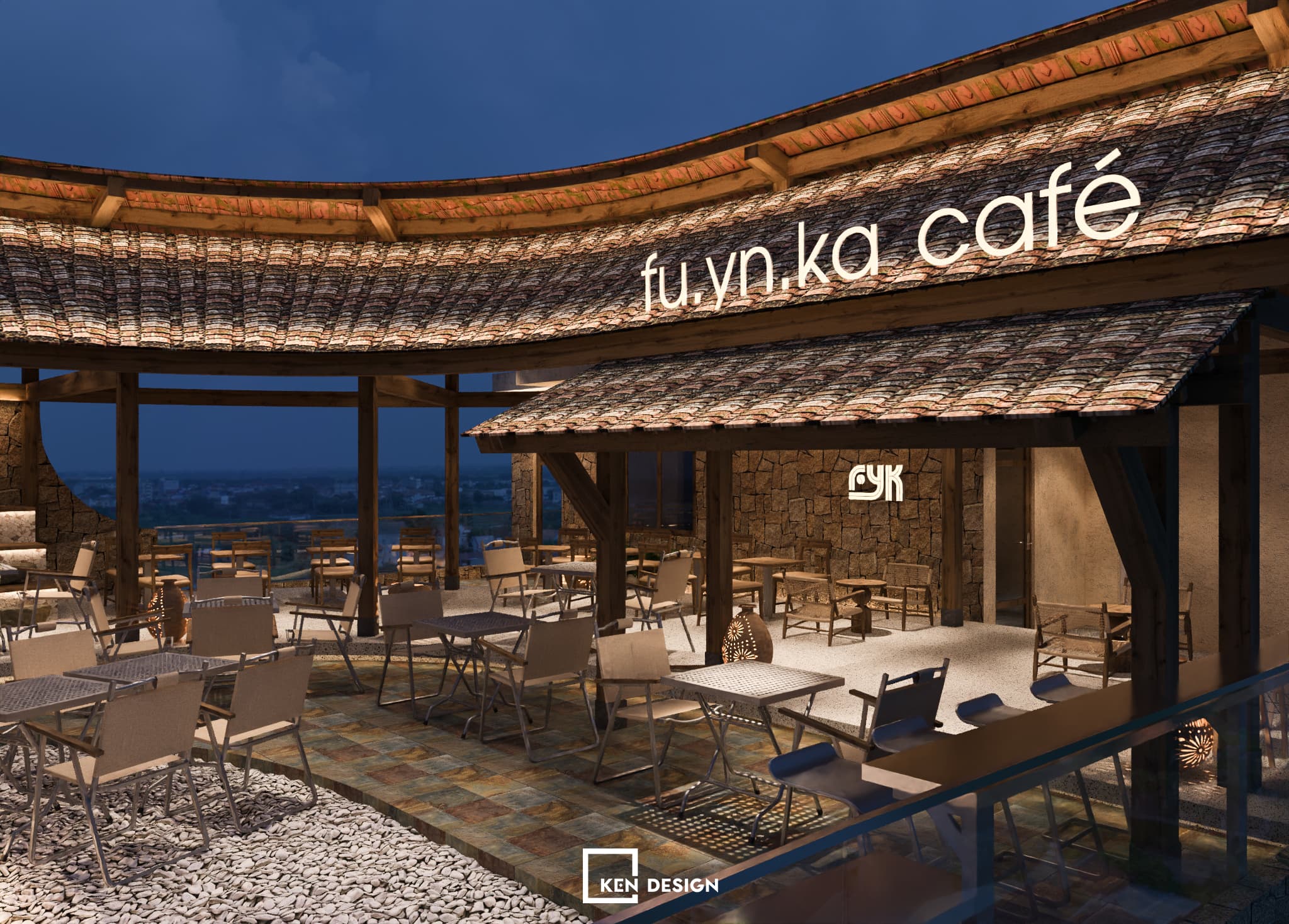
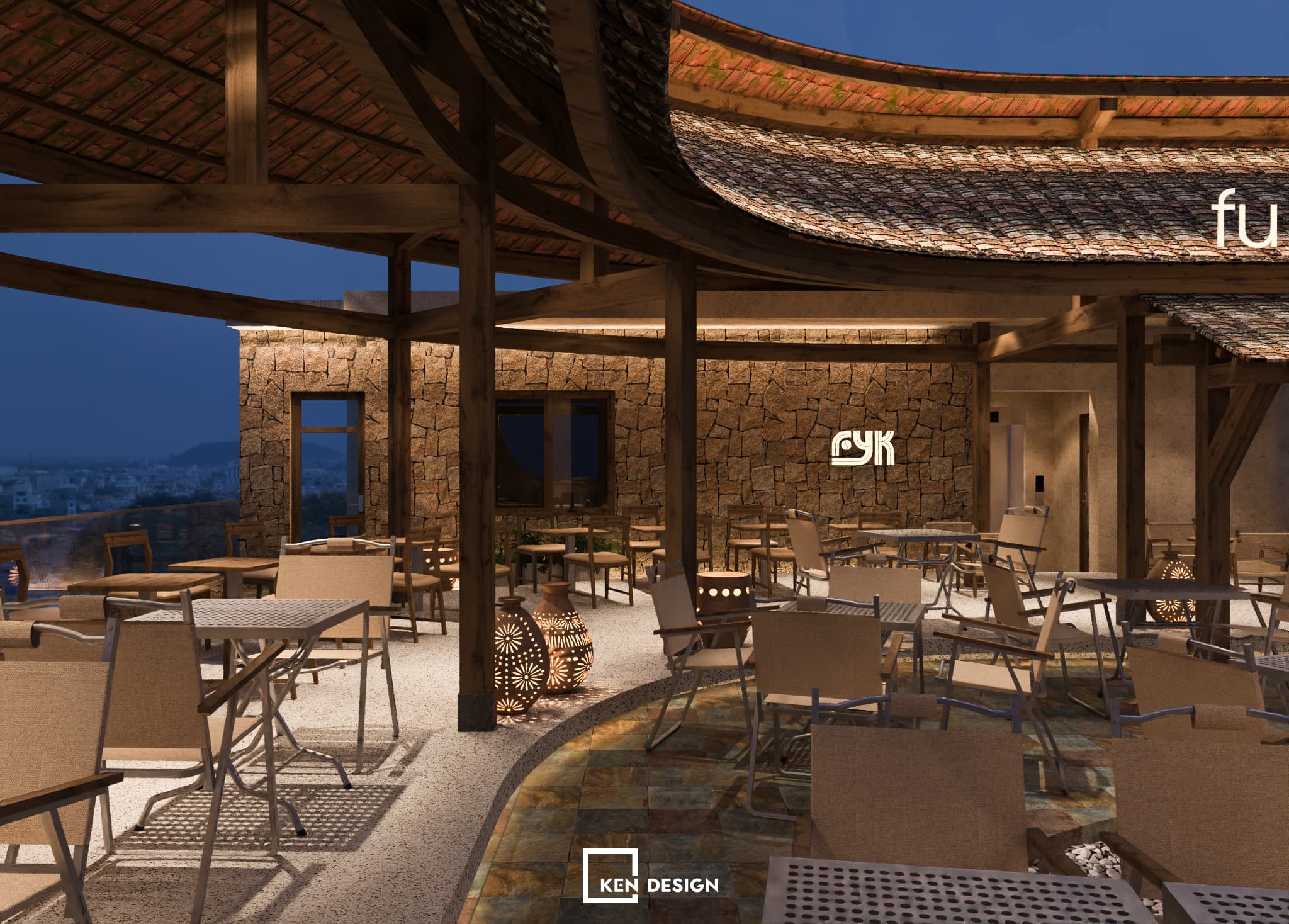
The undulating roof prevents the rooftop from becoming a monotonous flat plane. Its curves create different “zones” within the same level. There is a fully open area for stargazing, as well as partially covered areas for light rain or strong sunlight.
A small stage is placed in a suitable position to host acoustic nights, mini concerts, or birthday events without occupying too much customer seating area.
4.3. Functional & Revenue Optimization
Every layout decision was considered in parallel between customer experience and operational efficiency. Circulation paths for customers moving between floors are clearly organized to avoid congestion during peak hours.
5. Interior Materials
5.1. Diverse Furniture Styles
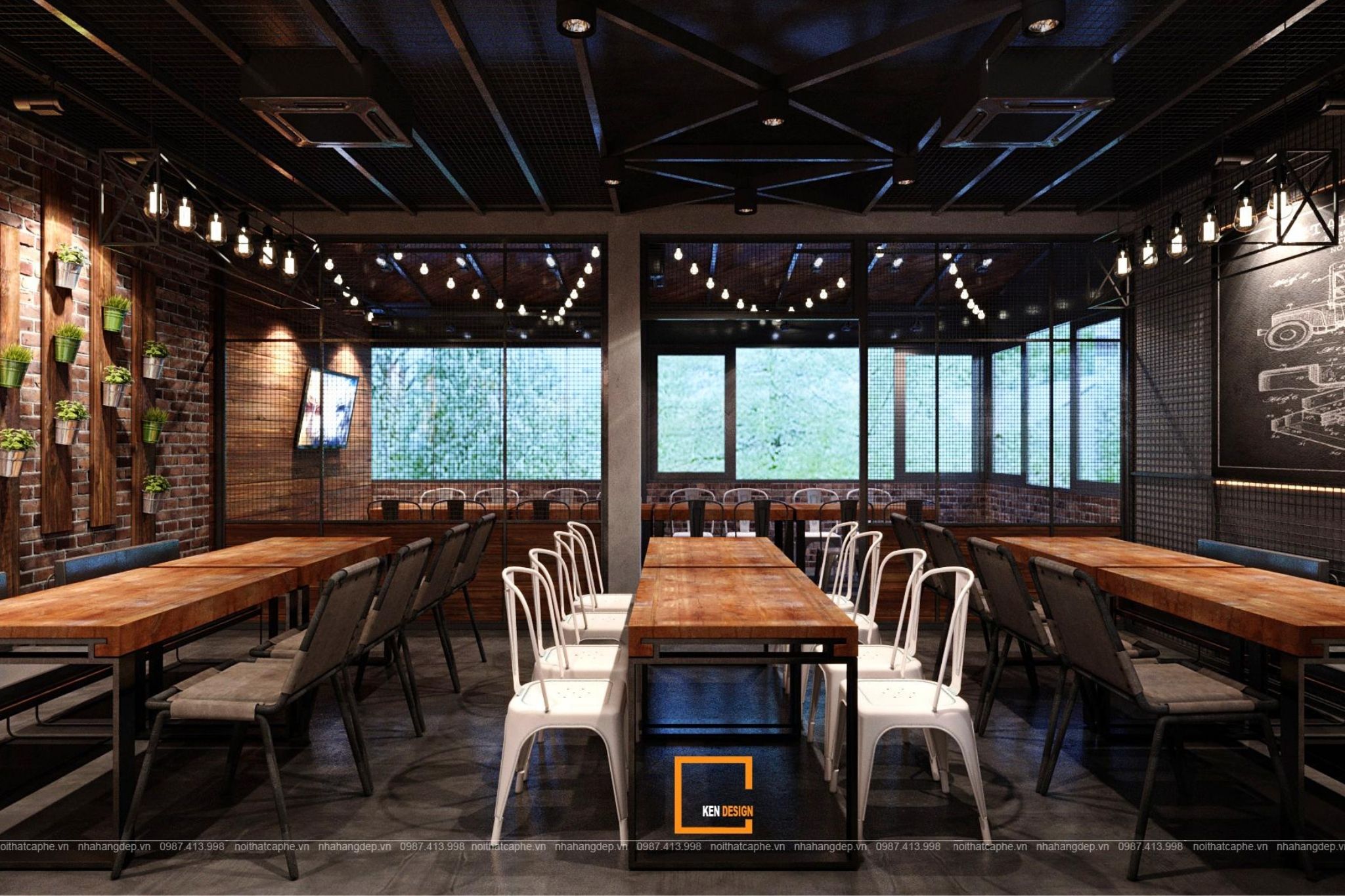
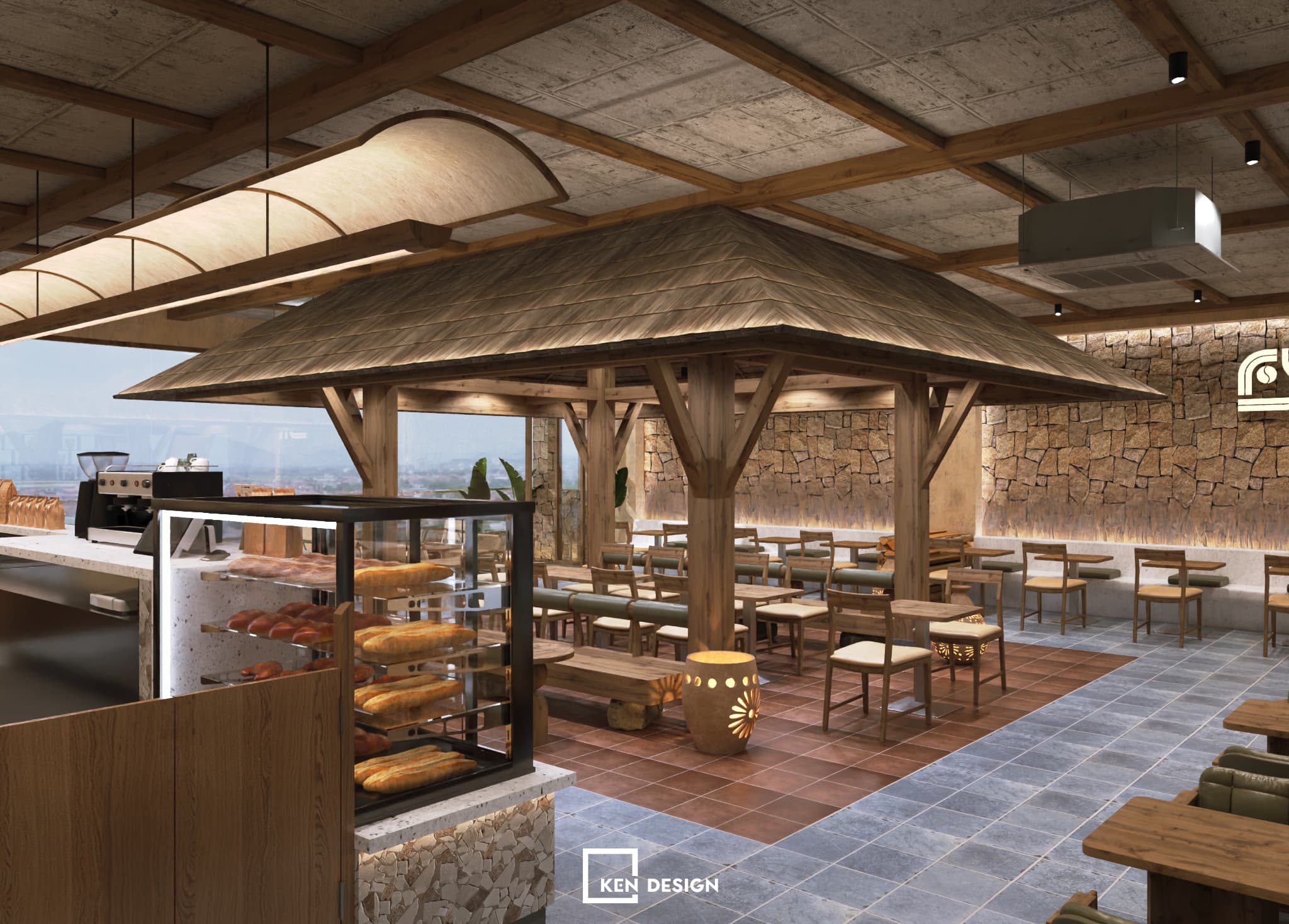
The most striking element is the grand pơ mu wood roof, with a fully exposed raw timber truss system extending outward to embrace the entire central space. Beneath it is a long table made of solid wood, combined with rustic bench seating, creating an ideal gathering spot for groups of friends or small meetings.
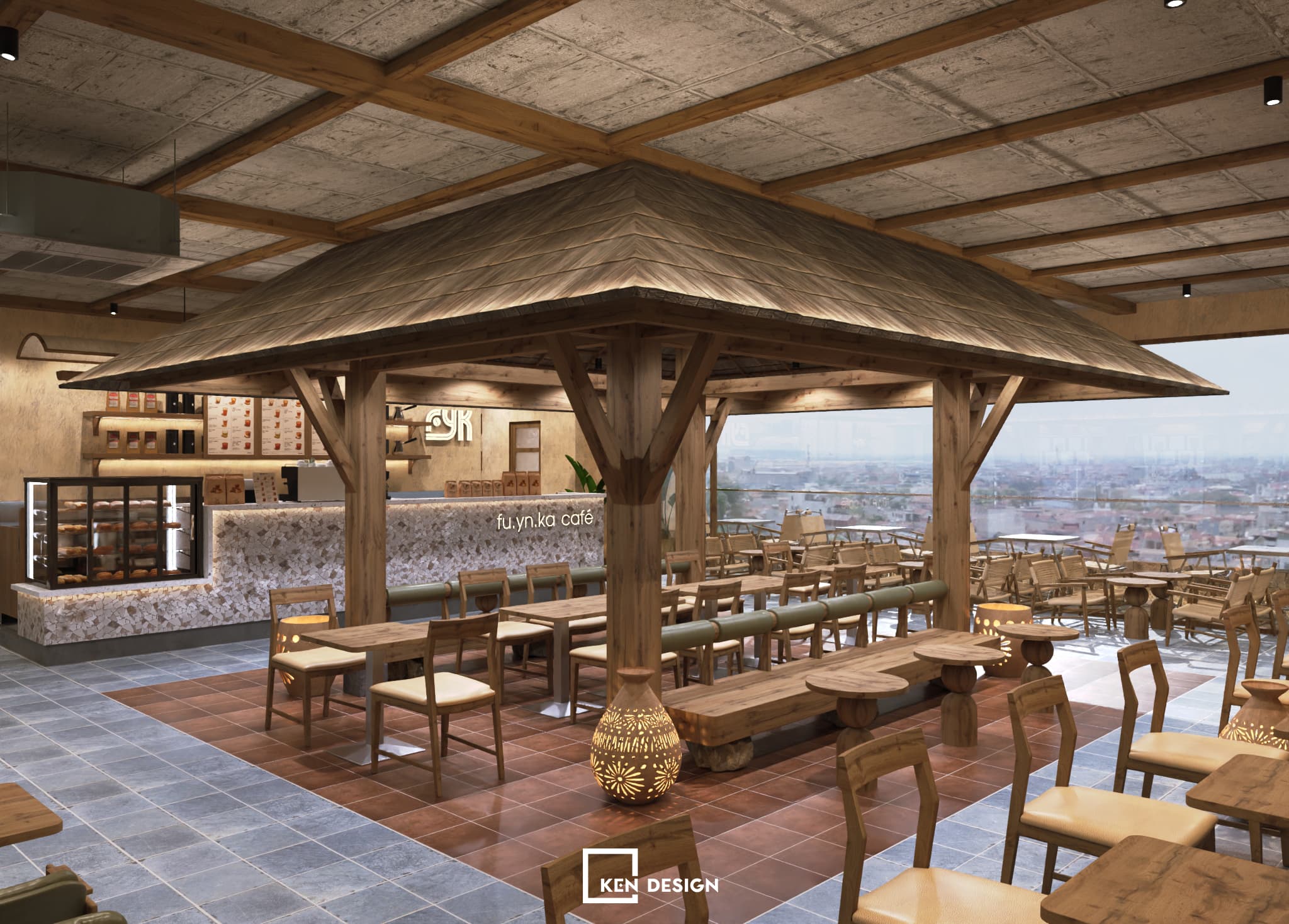
On both sides are smaller corners with various chair styles: high-back chairs, rattan chairs, and woven wooden chairs. These variations make the space feel natural, warm, and unforced.
5.2. Simple but Meaningful Decor
Rustic style does not mean cheap or careless decoration. On the contrary, every decorative detail is carefully selected to work harmoniously together:
-
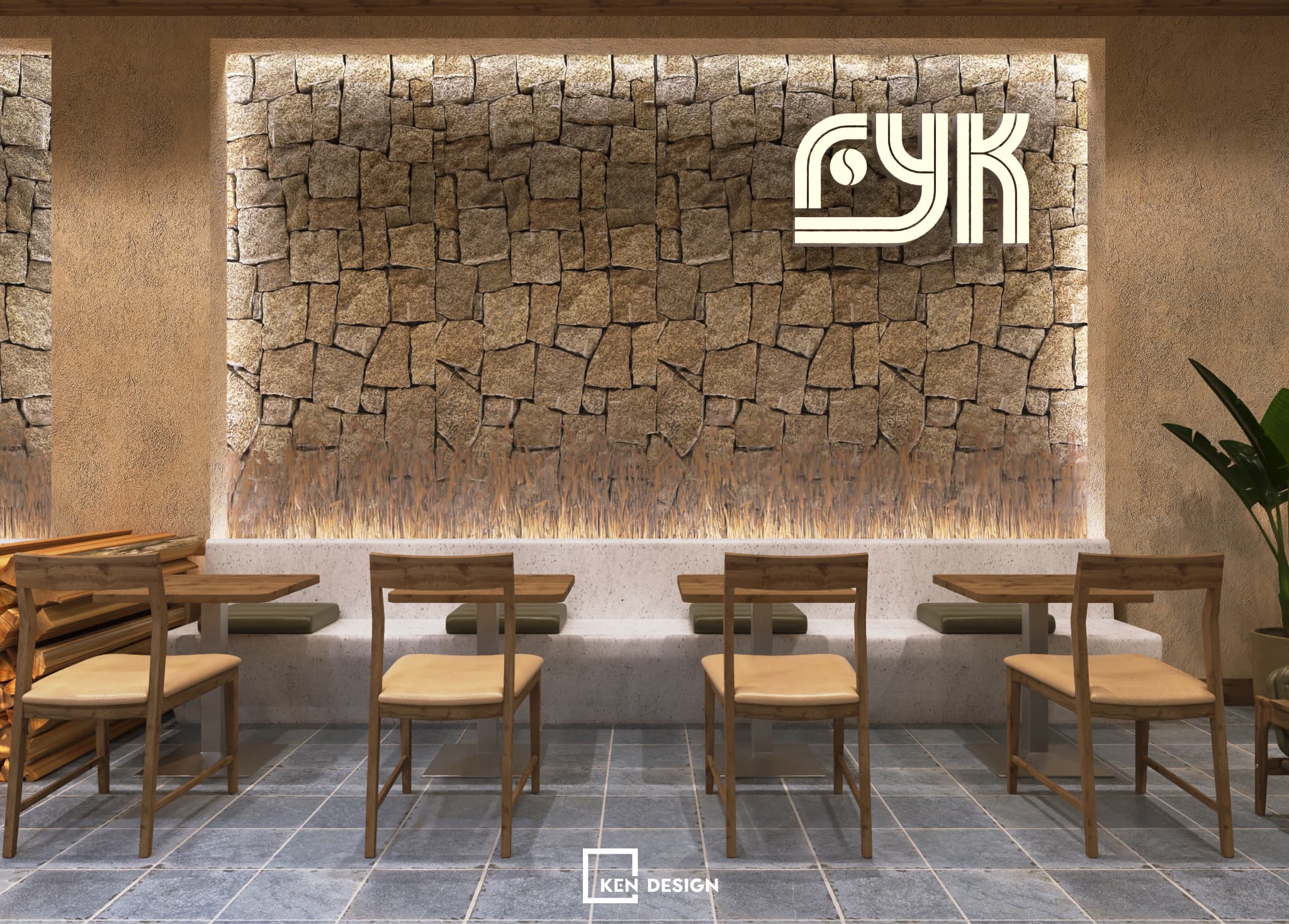
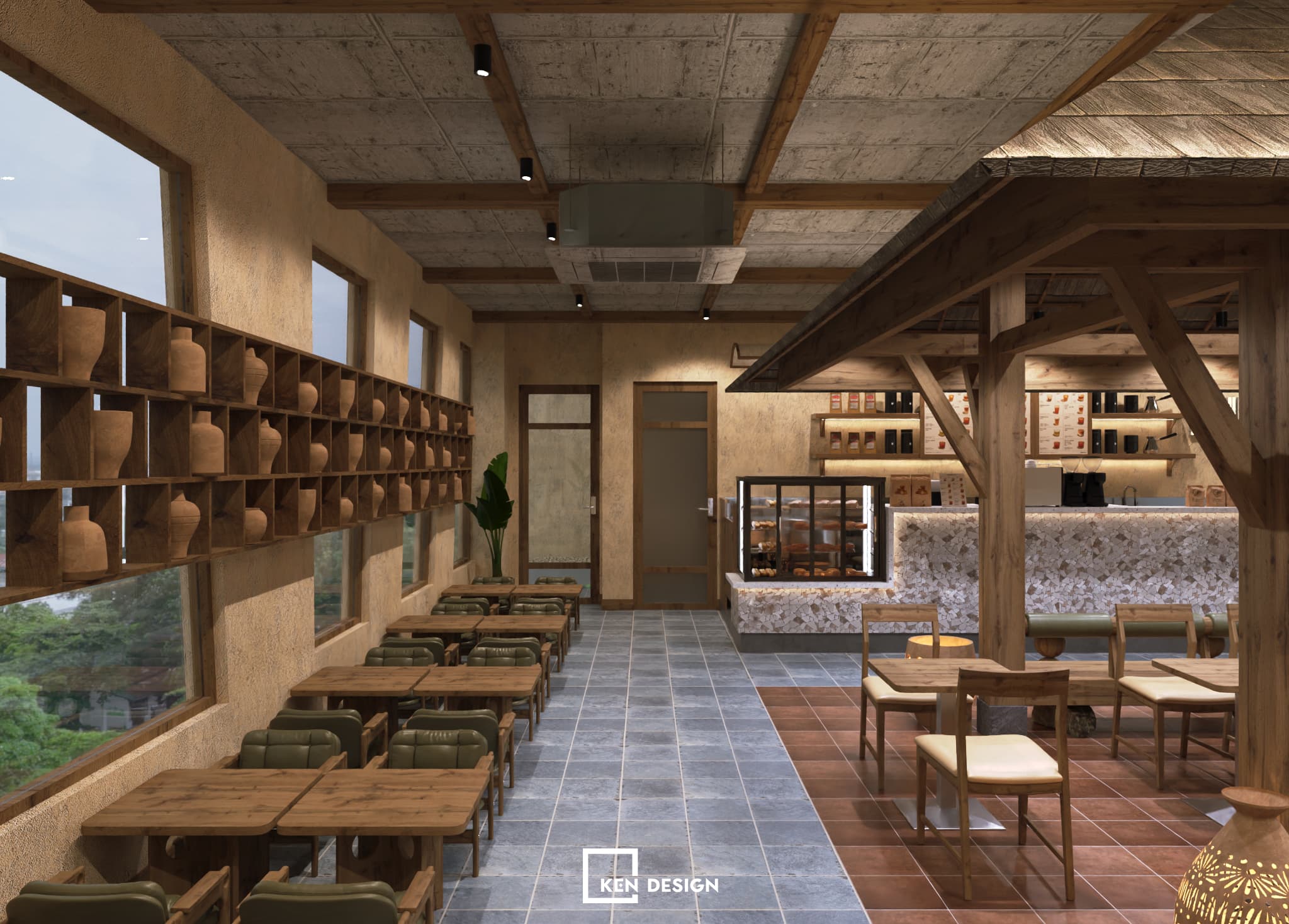
Rough stone wall cladding: The rugged stone surface creates visual depth and expresses the authentic spirit of the space.
-
Handcrafted ceramic vases: Earth-toned ceramic vases of different sizes are placed on rustic wooden shelves along the walls.
-
Perforated ceramic lamps: Gourd-shaped ceramic floor lamps allow light to pass through patterned holes, forming shimmering light patterns on the floor.
-
Pebble flooring on the rooftop: Part of the rooftop area is covered with pebbles instead of tiles.
6. Color & Lighting Solutions
6.1. Main Color Palette: Brown–Beige
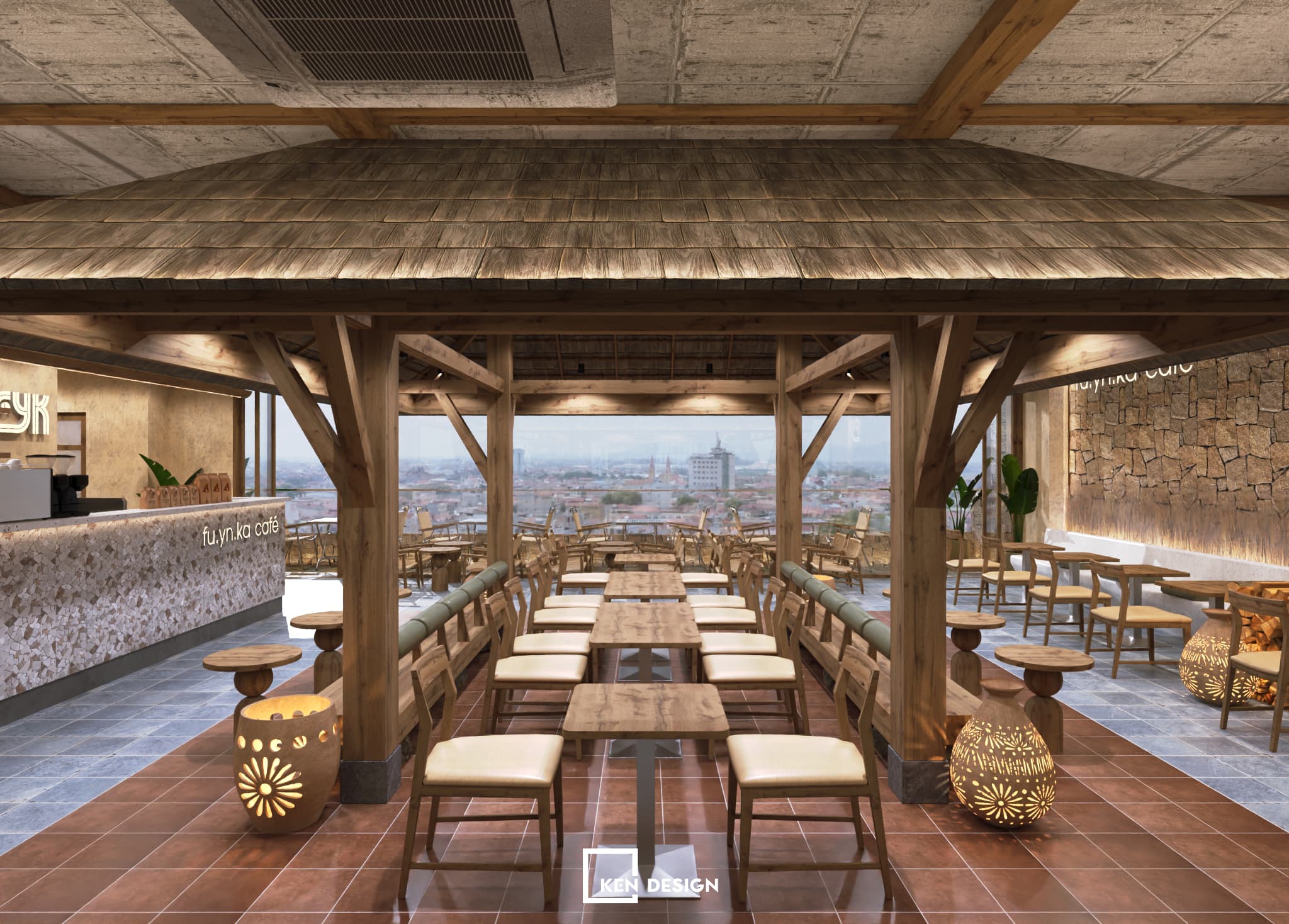
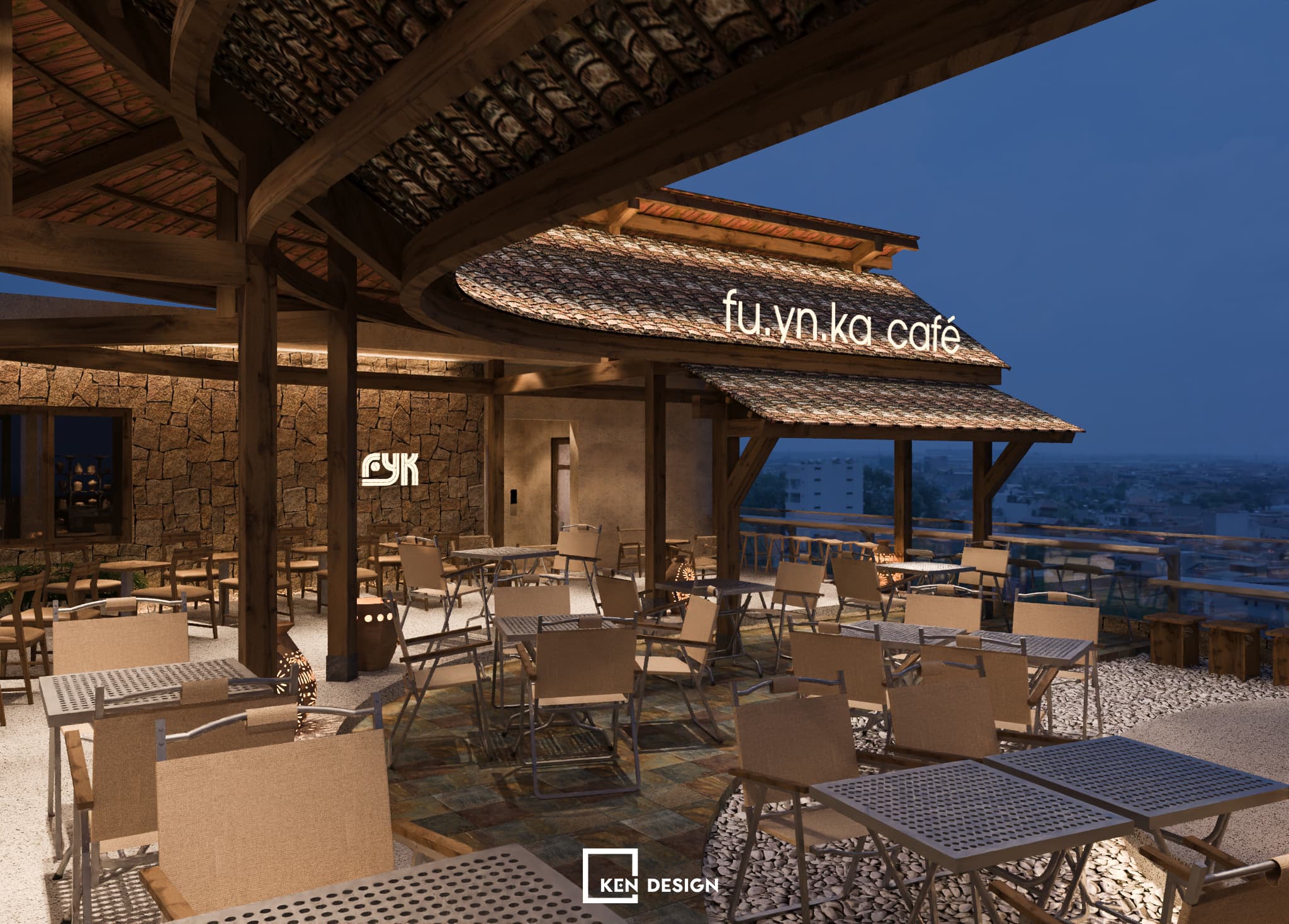
Brown and beige tones are used as the dominant color palette throughout the space, from raw wood, terracotta bricks, and rough stone to coarse fabrics and sand-colored pebbles. This is not a random choice but a deliberate one.
Earth tones create a sense of stability, warmth, and connection to nature, which is exactly the emotional quality a rustic-style café should convey. These tones are also very camera-friendly, making photos taken in the space naturally pleasing in color.
6.2. Lighting Strategy
Lighting in the design of Fu.yn.ka cafe in Phuc Yen, Vietnam is organized into three layers: ambient lighting, accent lighting, and decorative lighting. These layers work together to create an atmosphere that changes continuously depending on the time of day.
7. Design Highlights
7.1. Pơ Mu Wood Roof
The pơ mu wood roof is the most important architectural highlight of the entire 4th-floor space. It is built at the center, fully exposing the truss system, beams, and rafters.
Pơ mu wood is not only visually appealing but also emits a gentle natural fragrance. It becomes more beautiful over time, never goes out of style, and is always the first feature that draws customers’ attention upward.
7.2. Yin–Yang Tile Roof
The yin–yang tile roof is a traditional roofing material that once appeared on most Vietnamese houses before the modern era. In the context of a café on a high floor, it creates an interesting dialogue between tradition and contemporary design. What makes this choice truly special is the combination of yin–yang tiles with an open and modern café space.
7.3. Undulating Roof
The design of Fu.yn.ka cafe in Phuc Yen, Vietnam uses an undulating roof that resembles the horizon line of the northern midland region, creating small “valleys” and “peaks” within the rooftop area. Each seating position therefore offers a different view, a different photo angle, and a different experience.
The design of Fu.yn.ka cafe in Phuc Yen, Vietnam is clear evidence of one belief: a successful café does not start with tables, chairs, or lighting, but with a story that is told correctly. From the desire to bring the atmosphere of Da Lat to the northern midlands, to the choice of yin–yang tiles and pơ mu wood, every step of this project has a reason and a clear strategy. The result is a 400 m² space on upper floors that can become a favorite destination for customers, which is the true value of interior design.
Are you planning a café project with a distinctive style of your own? Let us listen to your story first, and then turn it into a real space together. Contact KenDesign today for a free design consultation.
Fanpage: KenDesign Interior Design