Within the increasingly diverse culinary and coffee landscape of Hanoi, the Design of Phieu Cafe in Hanoi, Vietnam emerges as a project that confidently follows its own path. Instead of chasing minimalist or industrial trends that have gradually become saturated, the project remains committed to a European classical design language rich in nostalgia, elegance, and emotional depth.
This design direction not only creates a distinctive identity for the space but also offers customers a completely different coffee experience in the capital. Let’s explore the design story behind this project.
1. Site evaluation
1.1. Key advantages of the location
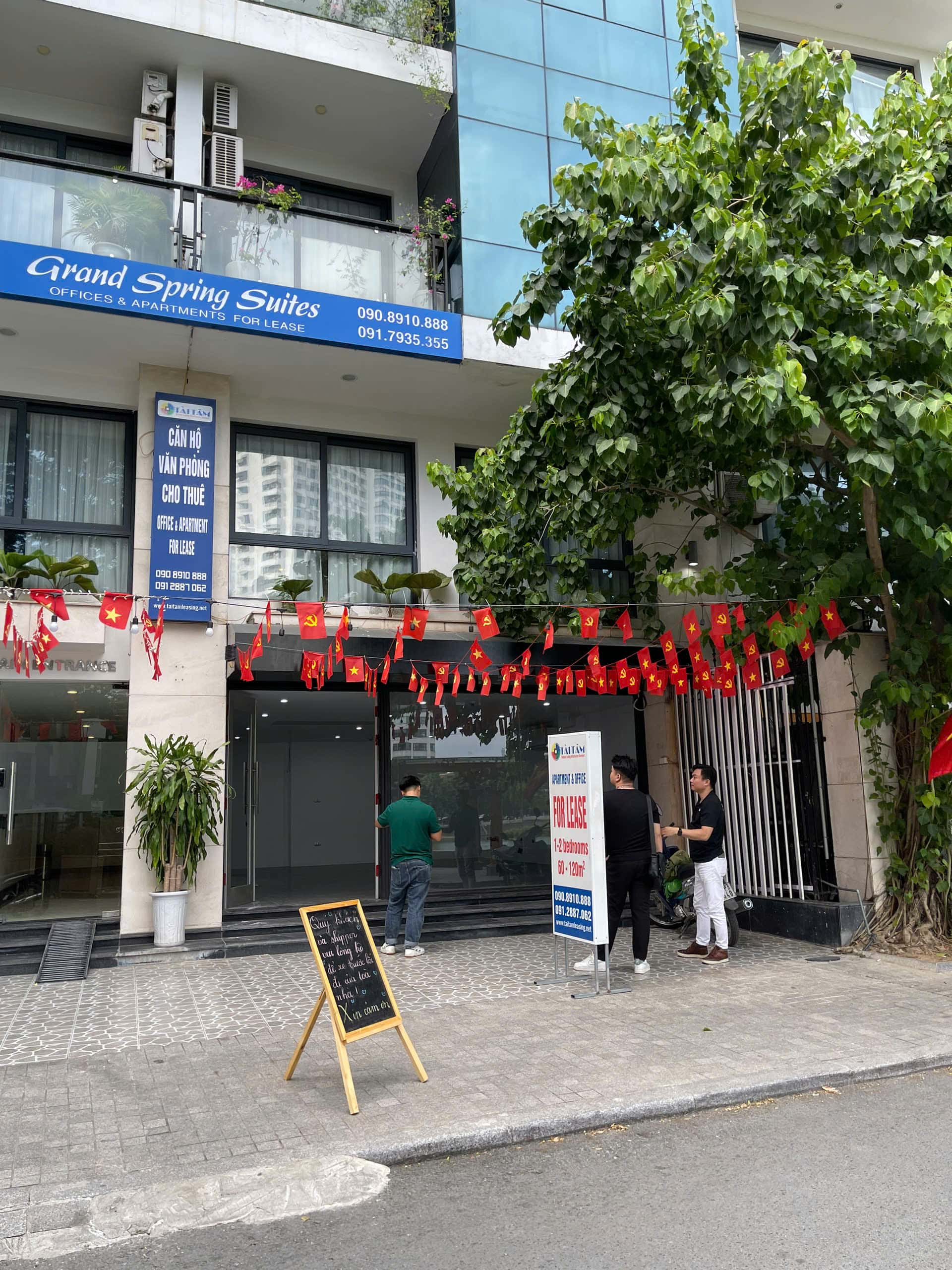
Phieu Cafe is located in Ba Dinh District, one of the areas in Hanoi with a high concentration of office workers, civil servants, and young intellectuals. This customer segment typically looks for cafes where they can work, hold small meetings, or simply relax after work. Such behavior aligns perfectly with the brand positioning that Phieu aims to build.
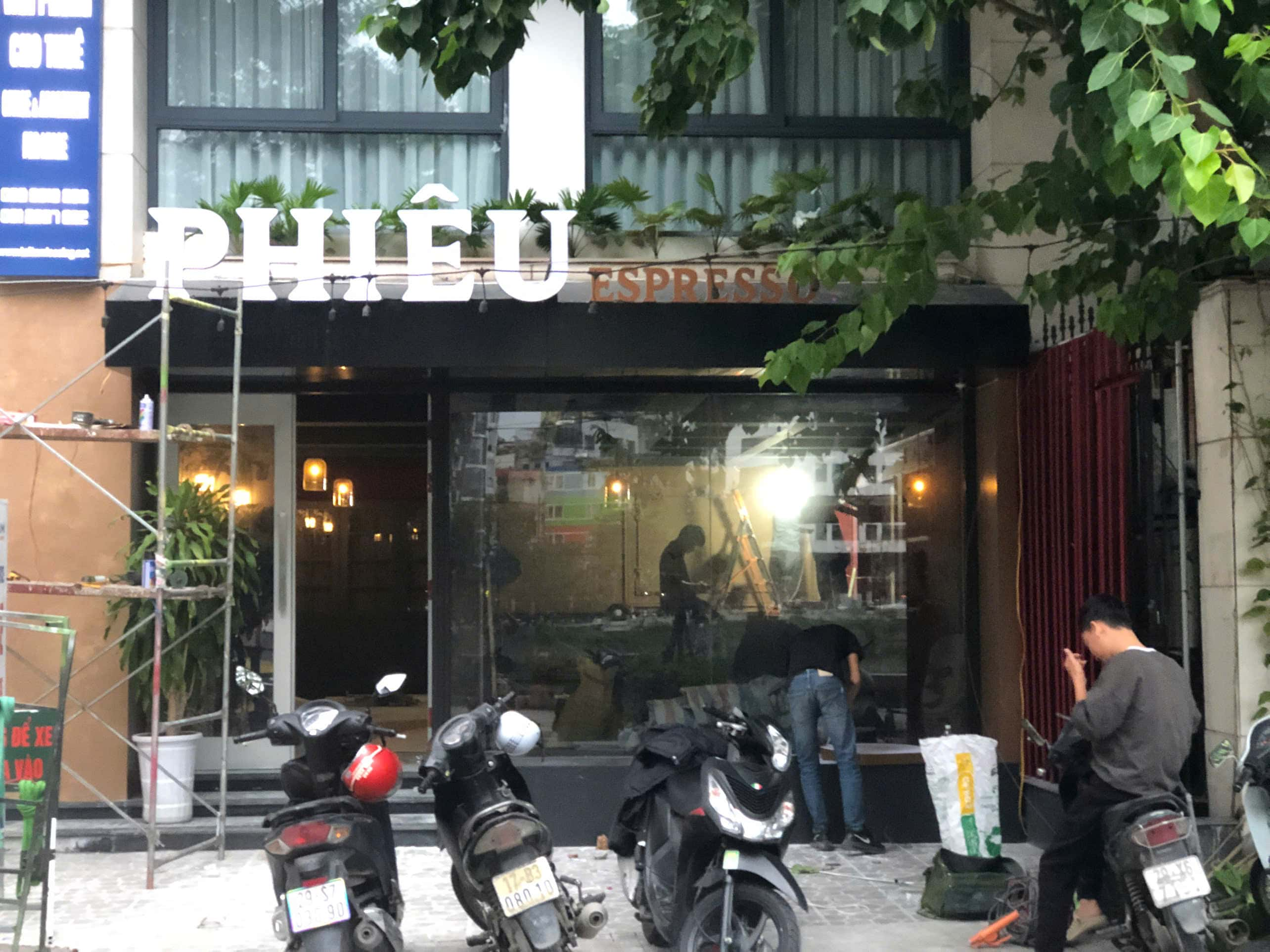
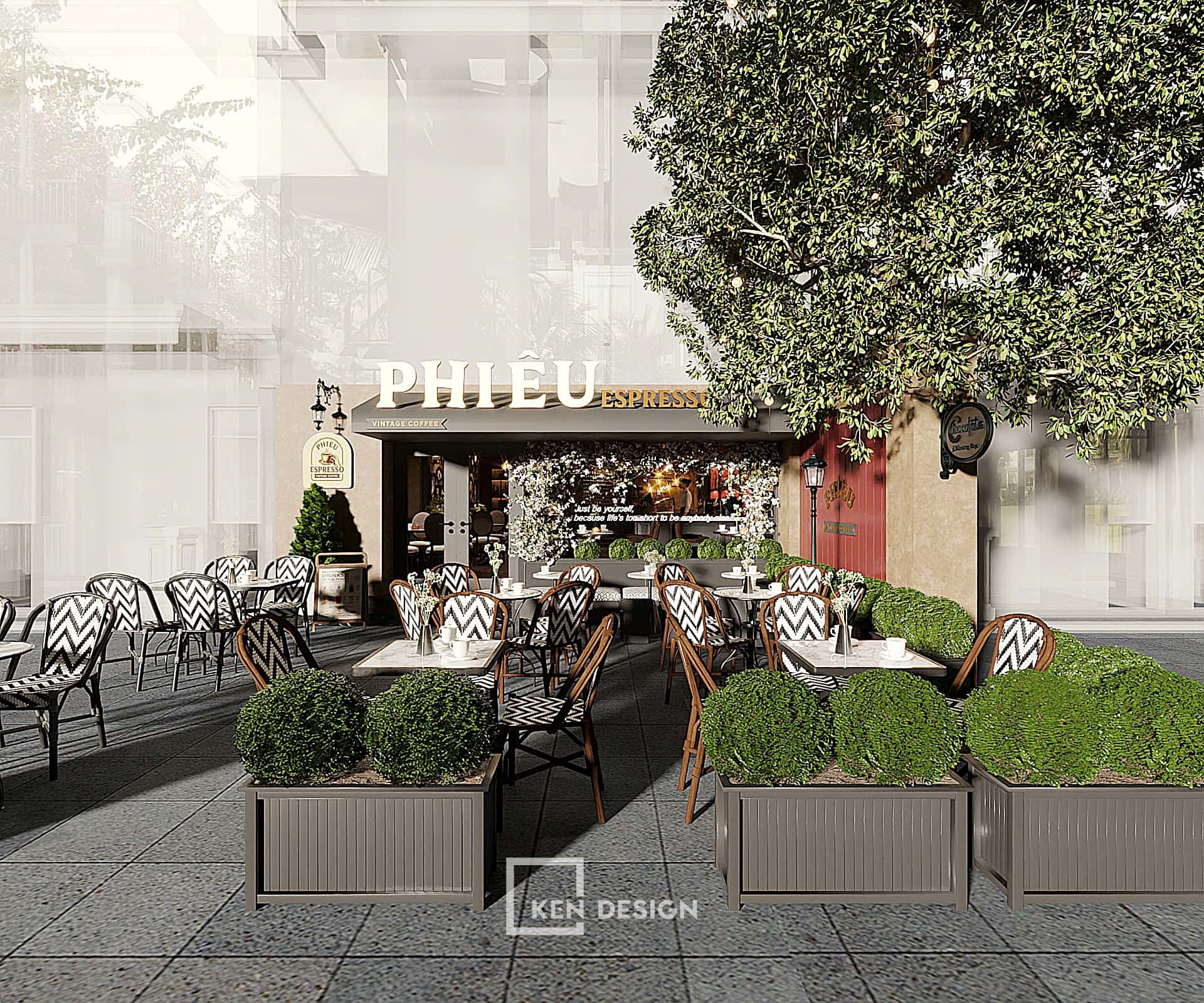
The cafe is situated along a street frontage with a clear view of the sidewalk, making it ideal for creating an outdoor seating area. This not only enhances visibility but also increases the chance of attracting passersby and improving brand recognition.
1.2. Design challenges
The site has a narrow frontage but a significant depth. This type of layout is common in Hanoi but also presents a classic design challenge. Without careful spatial planning, the interior can easily feel like a long and dark corridor, reducing the sense of warmth and comfort.
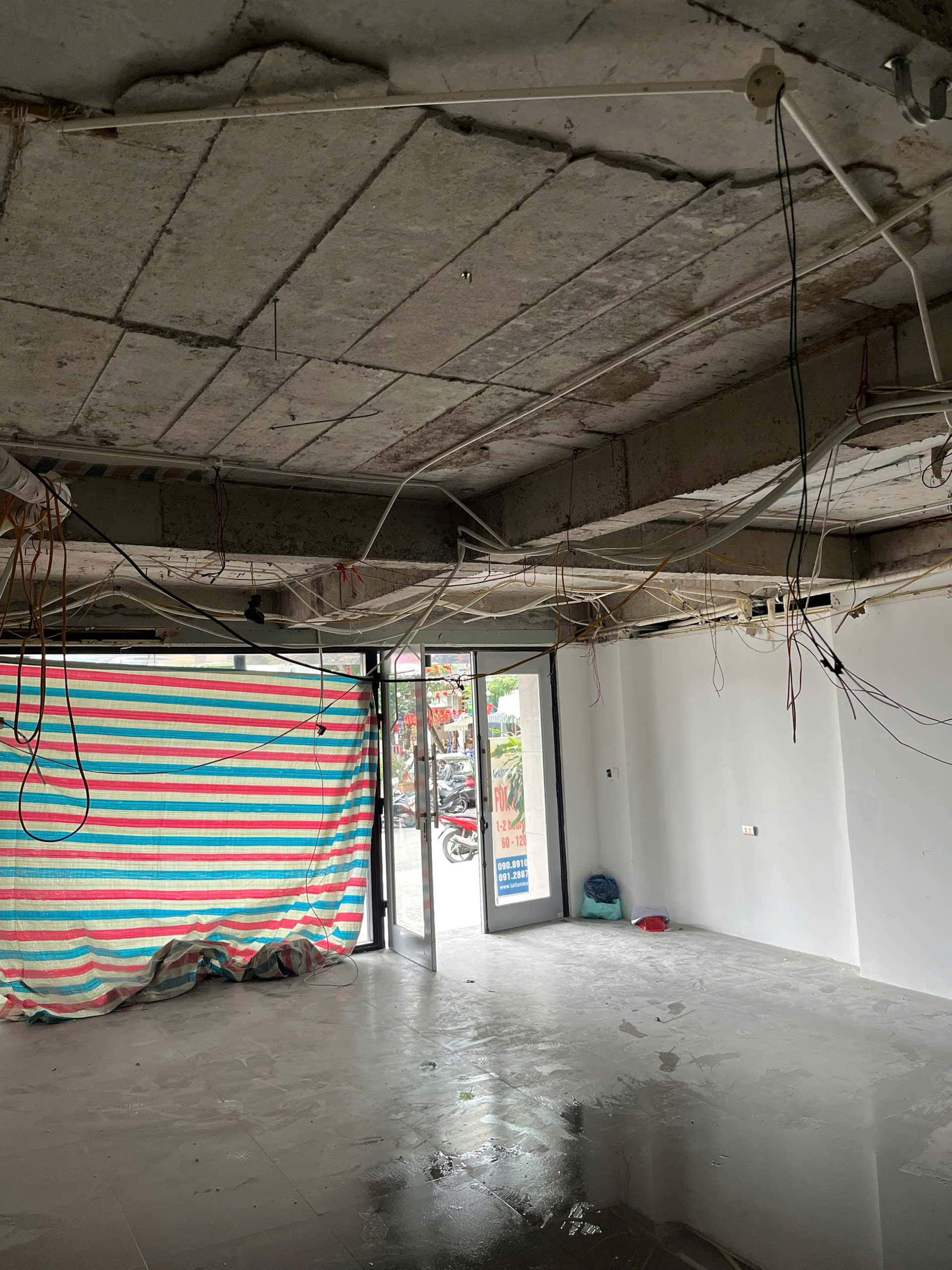
Another issue lies in the limited natural light toward the deeper part of the space. This requires a thoughtful artificial lighting strategy that does more than simply illuminate the space. It must also create atmosphere, guide the experience, and subtly divide different functional zones.
2. European classical design concept
In today’s Hanoi coffee market, many cafes adopt popular styles such as minimalism, Japandi, or industrial design. While these trends remain appealing, they are also becoming increasingly common. For the design team and the investor behind Phieu, an important question arose: What would make customers stop, walk in, and remember this cafe?
The answer was not modern minimalism but cultural depth and storytelling. European classical design, with its sophisticated moldings, portrait paintings, warm lighting reminiscent of candlelight, and dark wooden wall panels, offers a visual language that is rarely seen in Hanoi cafes. At the same time, it resonates strongly with modern customers who are constantly searching for new and unique experiences.
3. Spatial planning and layout solutions
3.1. Overall spatial organization
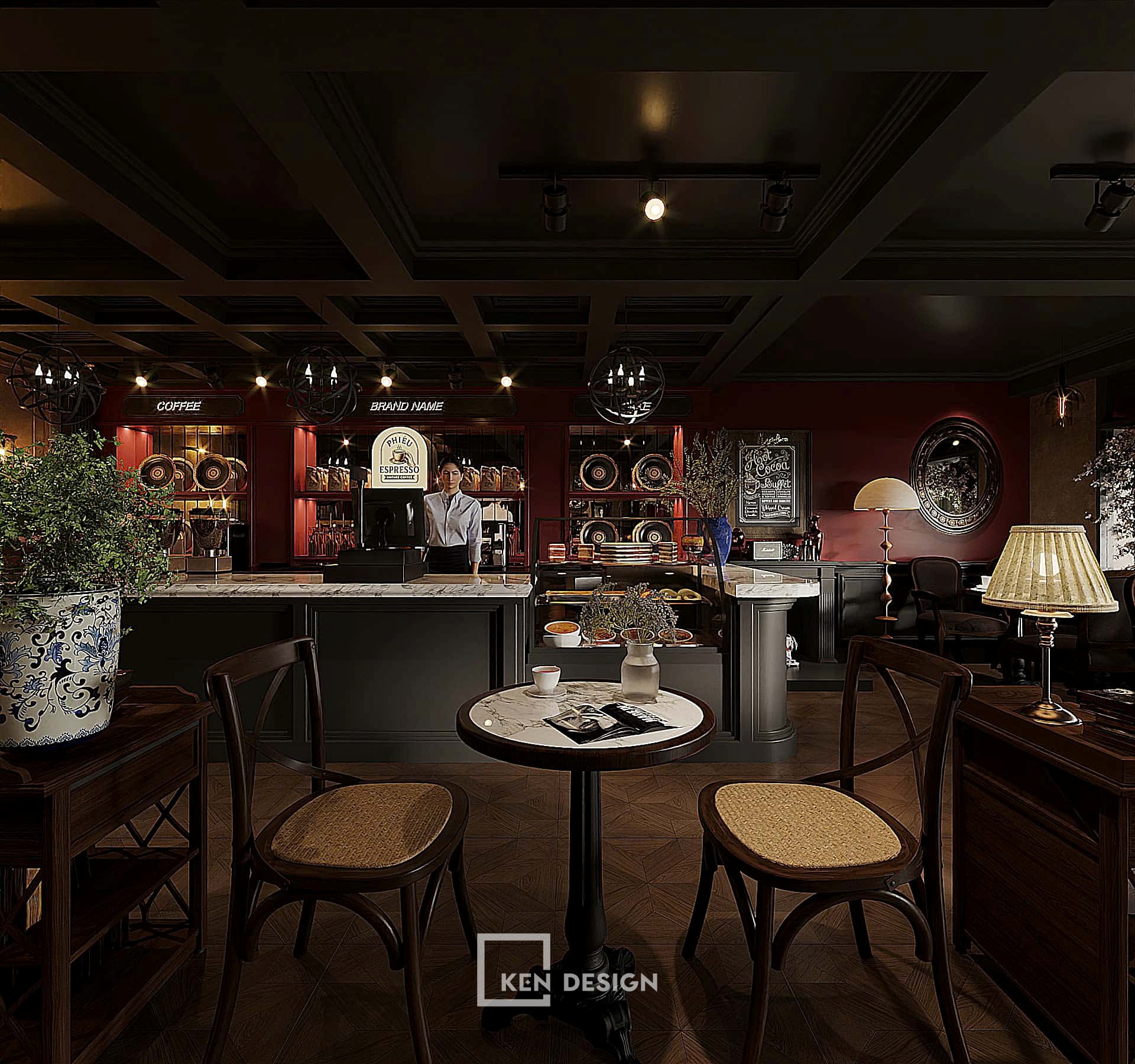
The entire cafe is organized into two primary functional zones: the bar service area and the customer experience area, extending from the entrance toward the back of the space. The transition between these zones is designed to be smooth and natural.
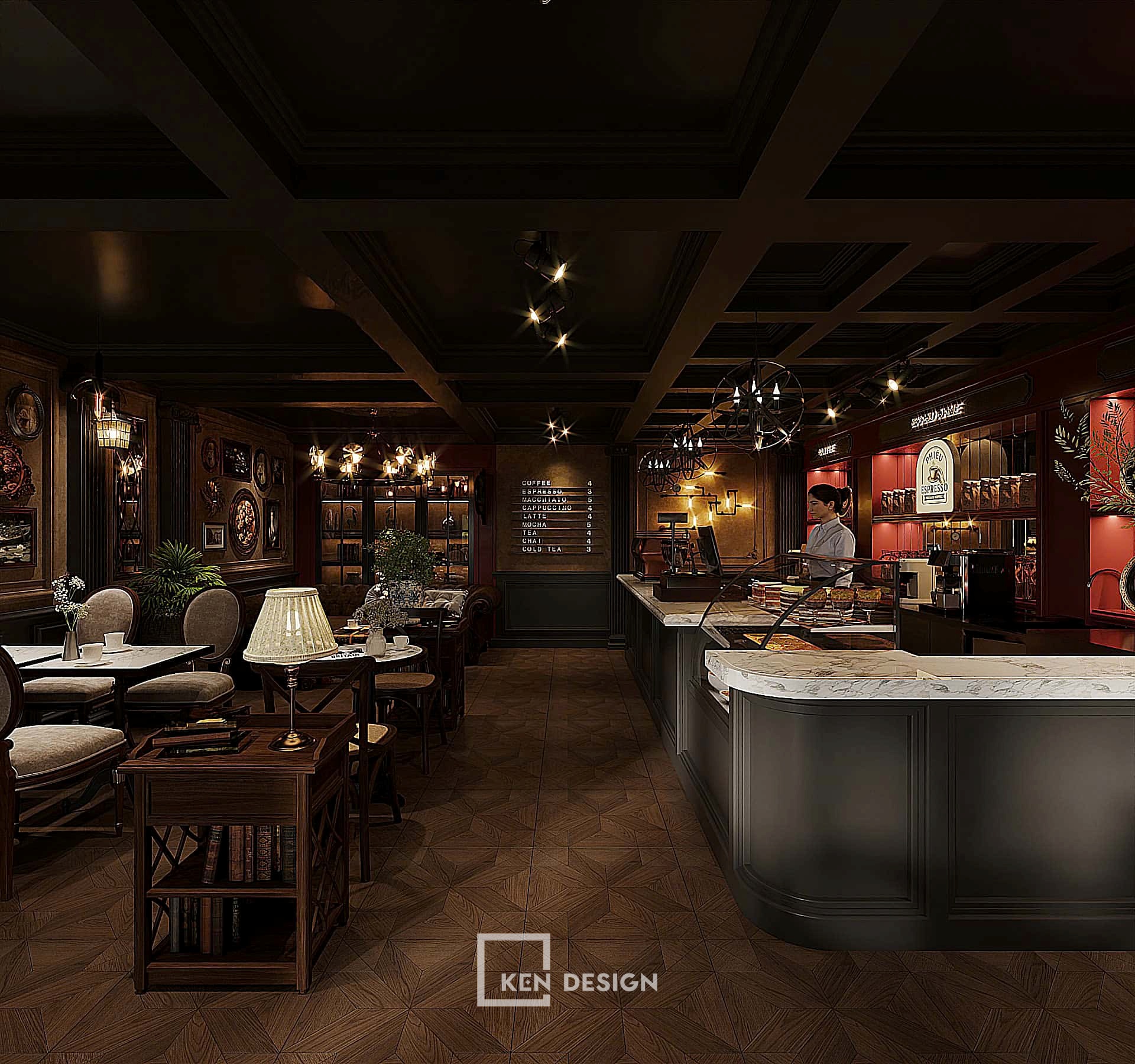
The bar counter is placed at the central position rather than being pushed completely to the back or to one side. This solution allows the barista team to oversee the entire space while also creating a strong visual focal point and improving service efficiency.

3.2. Entrance design and circulation flow
The entrance is conceived almost like a “time portal.” From the very first step inside, customers feel as if they are entering a different atmosphere from the outside world.
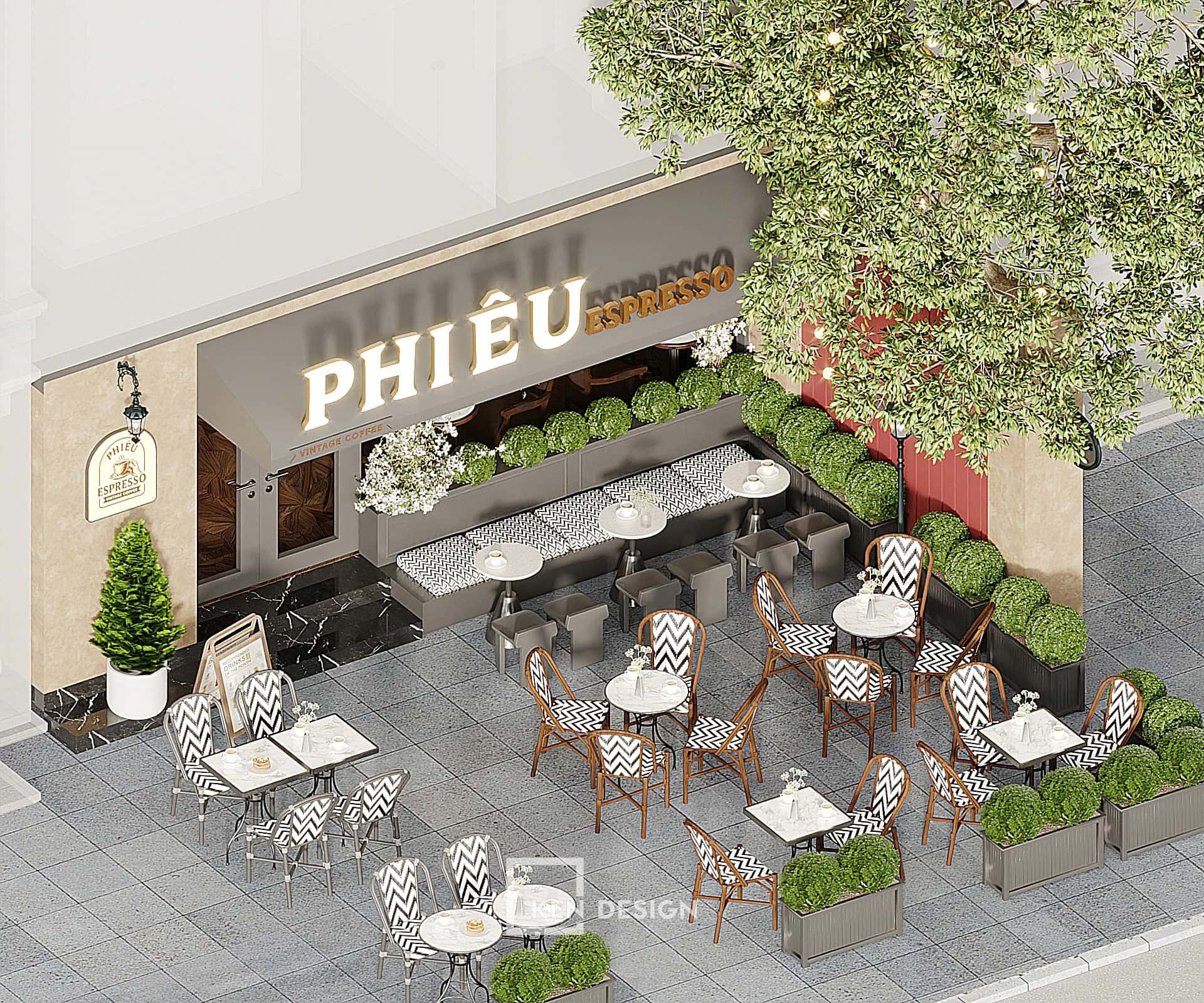
The transition from the bright outdoor seating area, furnished with black and white chevron rattan chairs, into the darker and warmer interior creates a strong contrast. This design approach immediately stimulates the senses and enhances the sense of discovery.
The circulation path follows a clear one-way flow: Entrance → Order counter → Table selection with staff guidance → Restroom at the end of the space.
This arrangement ensures that circulation does not interfere with the main seating area. Walkways are wide enough for two people to pass comfortably without crowding while still optimizing the available floor area.
3.3. Main seating zones
The seating area is divided into several layers to accommodate different types of customers:
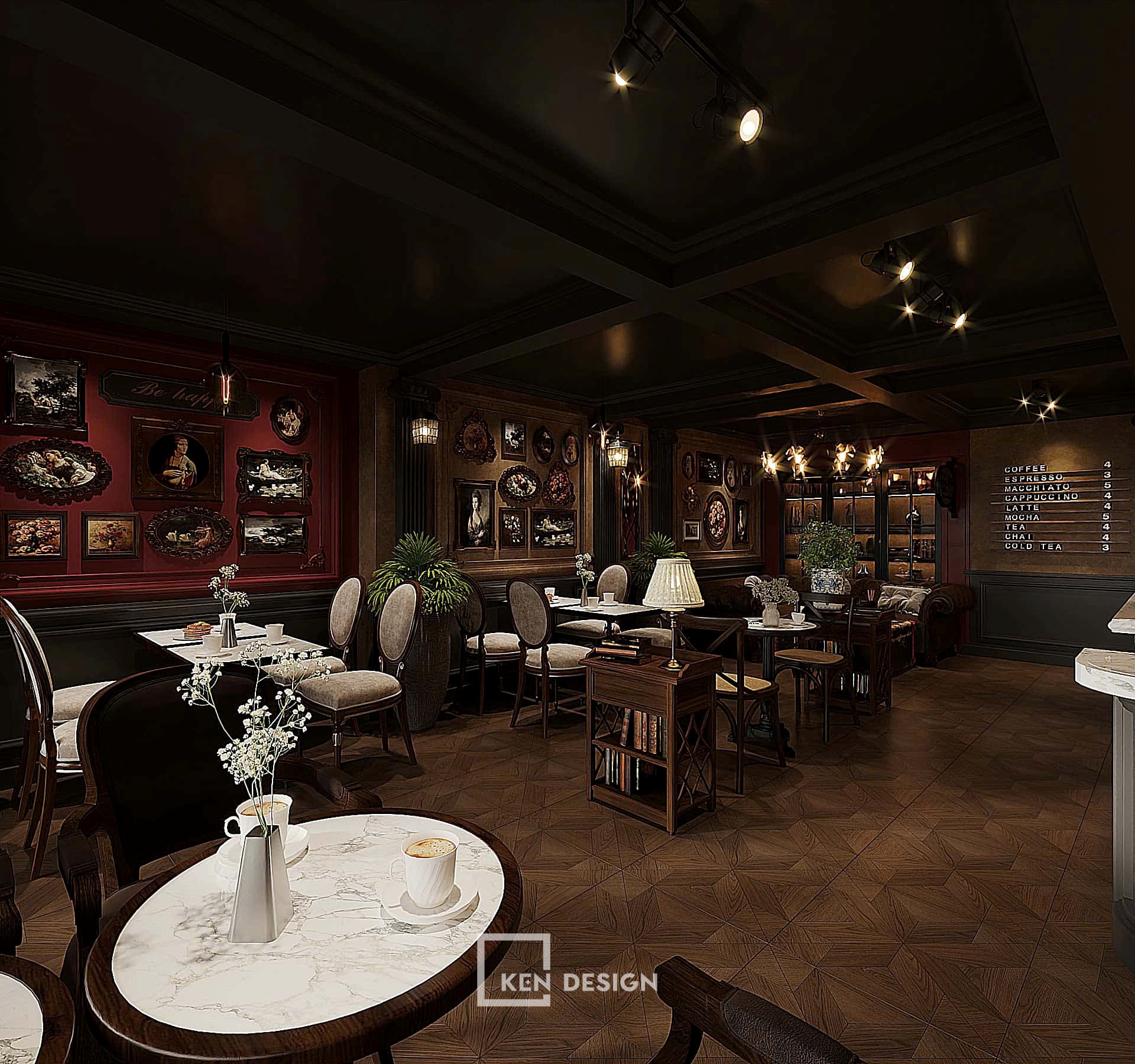
Tables for two near the entrance or windows are ideal for solo guests or couples, making the most of natural light from the facade.
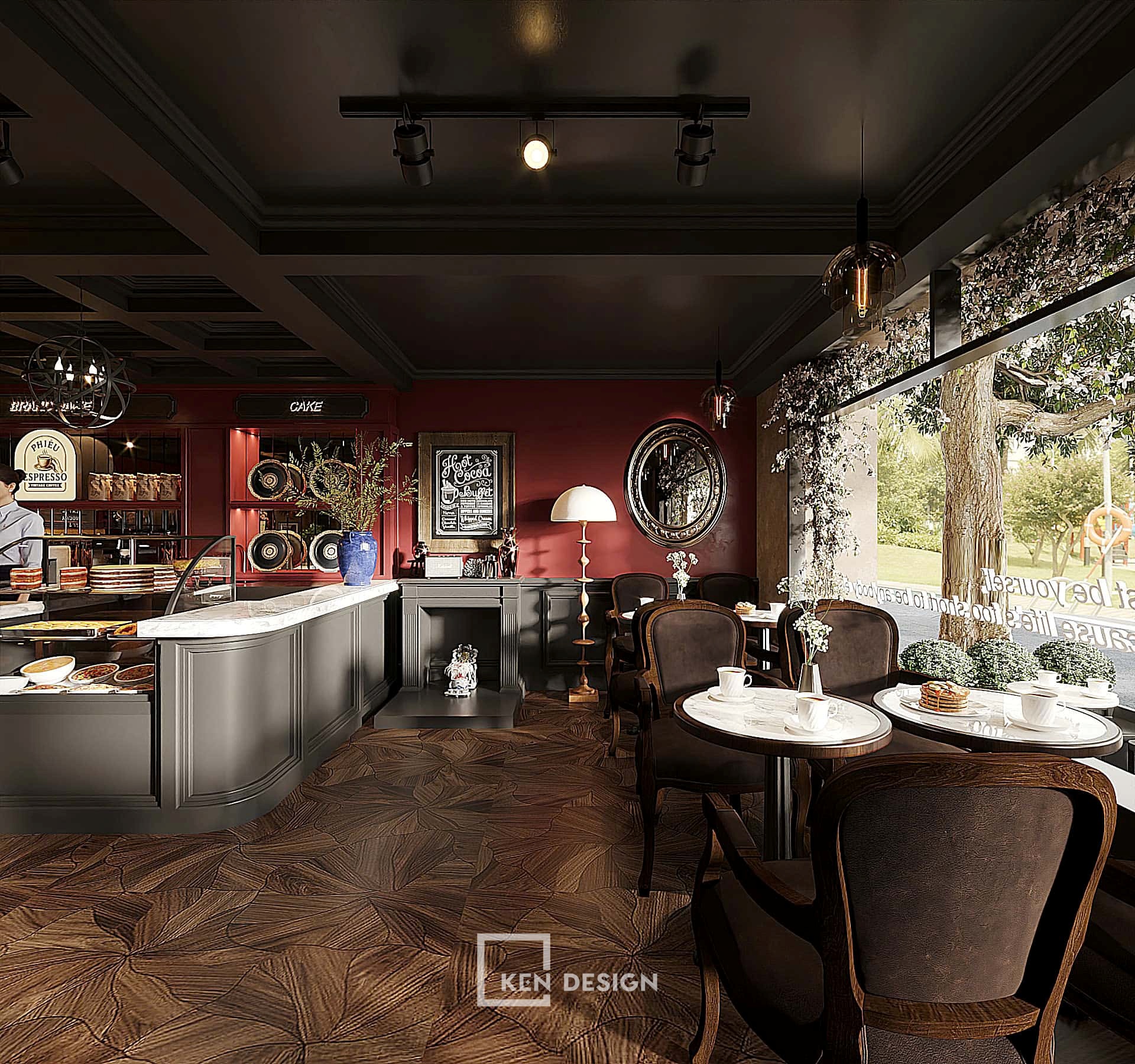
Round tables for two to four people are positioned in the central zone, offering flexibility for small groups or casual meetings.
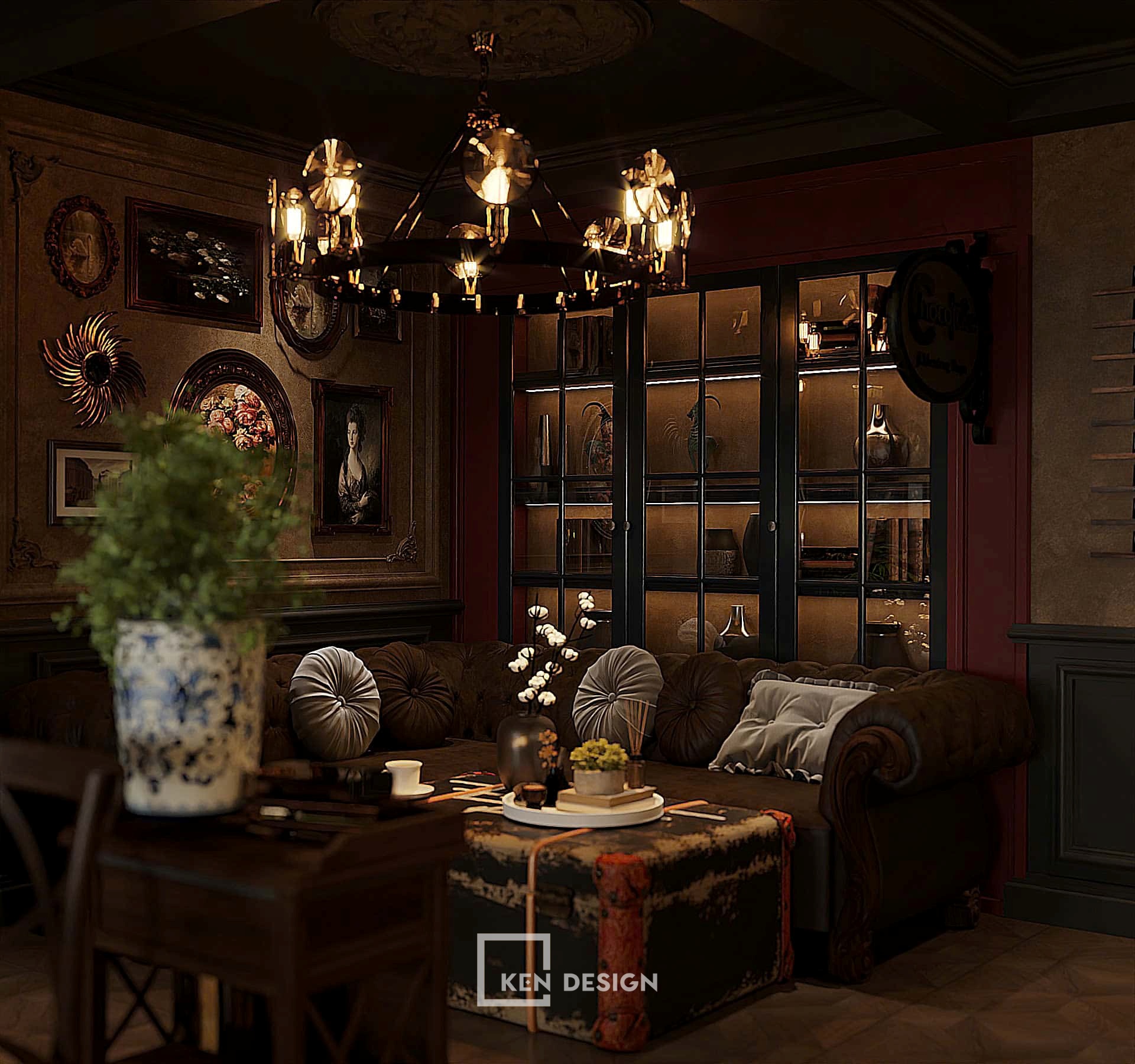
A sofa corner located deeper inside the cafe creates a cozy and more private environment for guests who wish to stay longer and fully enjoy the atmosphere.
This diversity in seating arrangement not only maximizes spatial efficiency but also creates a personalized experience, allowing every visitor at Phieu to find their own favorite corner.
3.4. Bar area design
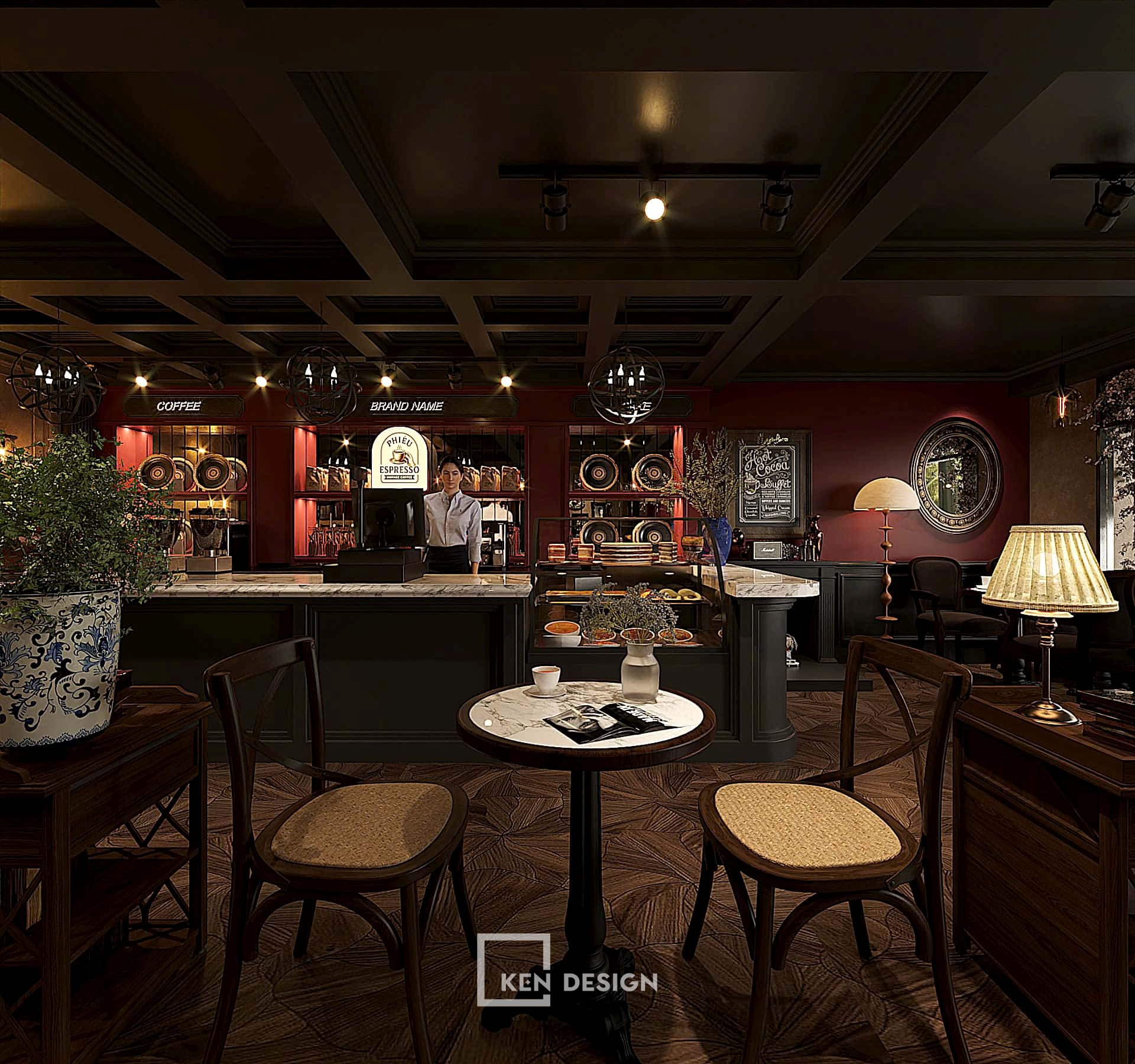
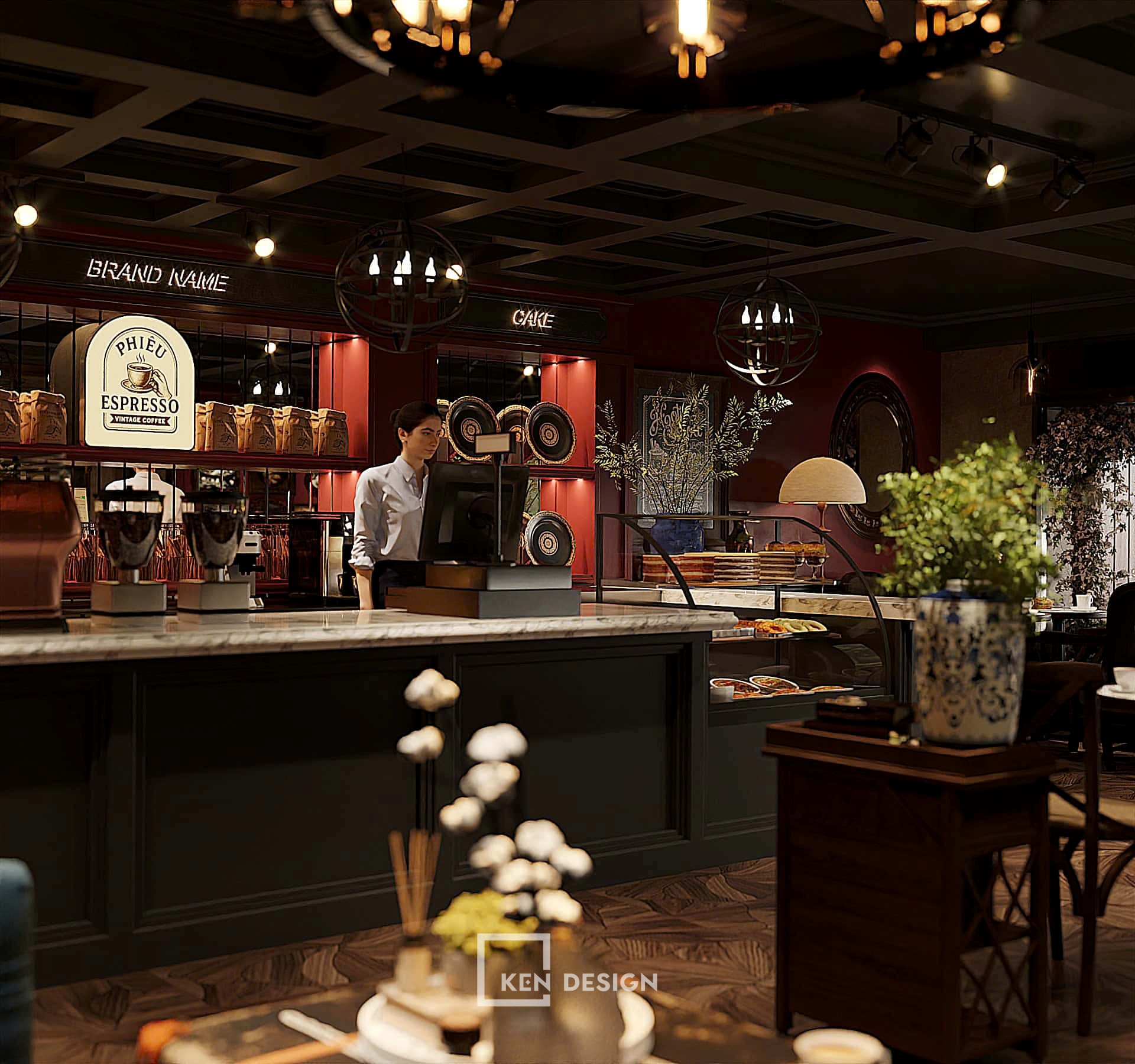
The bar counter serves as the operational heart of the cafe. The countertop features luxurious white marble with natural veining, while the counter body is finished with wood panels that create a subtle contrast against the deep red backdrop behind it.
Behind the bar, a multi-layer shelving system displays bottles, tools, and decorative elements. A glass display cabinet for pastries is positioned where customers can immediately see it when approaching the counter, helping stimulate visual appeal and impulse purchases.
4. Facade design
The facade of Phieu Cafe is one of the most carefully designed elements of the project.
The brand name appears in a large but balanced scale across the facade, ensuring strong brand presence without overpowering the surrounding greenery.
One of the most interesting aspects of the facade design is the intentional contrast between exterior and interior. While the indoor space immerses guests in deep, warm European tones, the outdoor seating area feels bright, light, and welcoming.
5. Interior materials
5.1. Furniture
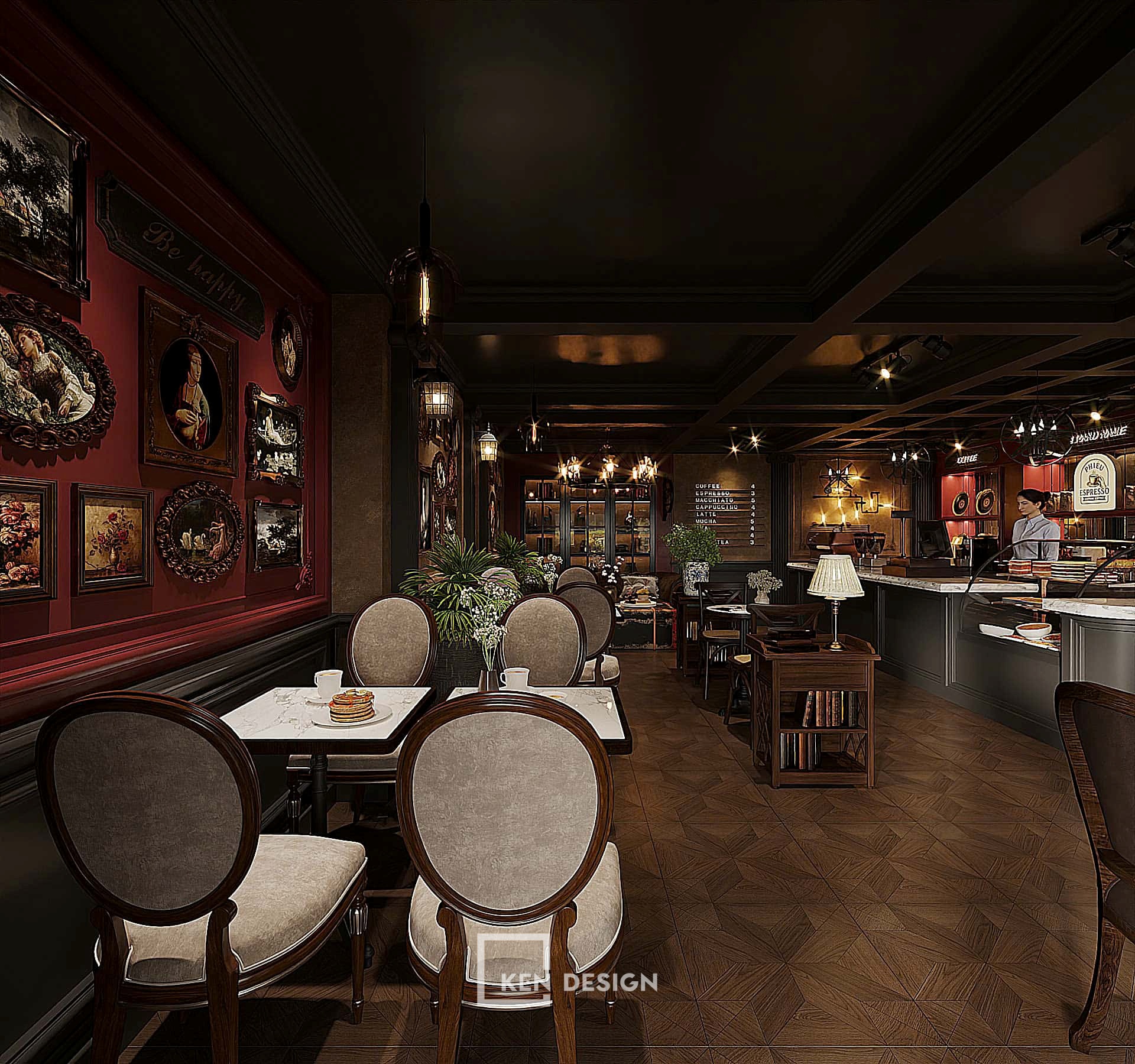
Oval-back chairs upholstered in fabric with wooden frames are the main seating type used in the primary seating area. This chair design reflects strong French classical influence while remaining comfortable for extended seating.
Cross-back wooden chairs with woven rattan seats are used near the bar and central seating areas.
Marble tables with natural white veining and black cast-iron bases provide durability, elegance, and easy maintenance.
Sofas and armchairs in the lounge area are upholstered with velvet or synthetic leather in deep brown and grey tones.
5.2. Decorative elements
Classical portrait paintings framed in brass gold or glossy black are densely arranged along the walls. These artworks become a key decorative feature within the Design of Phieu Cafe in Hanoi, Vietnam.
The space is also highlighted by black metal orrery-style chandeliers, adding a unique visual identity to the interior.
6. Color palette and lighting design
6.1. Main color palette
The color palette of Phieu revolves around three main groups of tones.
Deep red appears on key wall surfaces, especially behind the bar. It is used selectively to create strong focal points without overwhelming the space.
Dark blue and deep wood brown dominate the interior through wooden wall panels, coffered ceilings, and the bar counter.
Cream, brass gold, and marble white serve as highlight colors, appearing on lighting fixtures, decorative elements, and marble surfaces.
6.2. Lighting strategy and spatial experience
Lighting at Phieu is designed using a layered lighting strategy.
Ambient lighting is created through adjustable ceiling track lights that highlight important areas such as tables and the bar while keeping the rest of the space slightly dim.
Accent lighting uses spotlights to illuminate the portrait paintings as if they were displayed in an art gallery. This subtle design choice transforms the paintings from simple decoration into real artworks.
Functional lighting includes vintage table lamps placed on individual tables or bookshelves, forming small warm “light bubbles” that enhance privacy and intimacy.
Decorative lighting features Edison rope bulbs, orrery chandeliers, and oil-lamp-style wall lights.
7. A signature design element: the portrait gallery wall
One of the most striking design elements is the dense arrangement of portrait paintings covering the walls from floor to ceiling. Frames of different sizes, including oval and rectangular shapes, are mixed together to create a dramatic gallery effect.
This feature quickly becomes the visual signature of the space, leaving a strong impression on visitors.
The Design of Phieu Cafe in Hanoi, Vietnam clearly demonstrates Kendesign’s philosophy: design should not be considered a cost but a profitable investment.
In today’s highly competitive coffee market, a good cup of coffee is essential but not enough. What truly makes customers return is the emotional experience of the space. The European classical interior of Phieu has been carefully designed to evoke curiosity, warmth, and the joy of discovering beauty.
If you are planning to open a cafe and wish to create a space with a distinctive identity that not only looks beautiful but also supports your business goals, Kendesign is ready to accompany you from site evaluation to concept development and complete design and construction.
Contact for free consultation:
Fanpage: KenDesign Interior